
CPT Code for Wound Vac Placement: A Clinician’s Guide
You've just debrided a plantar diabetic foot ulcer, the wound bed looks ready, and you decide to place NPWT. Then the charting screen stares back with four nearly identical CPT codes. That's where claims start going bad. Most wound vac denials aren't caused by exotic coding rules. They come from bedside decisions that never made […]
Denuded Wound Care: Assessment & Coding Guide
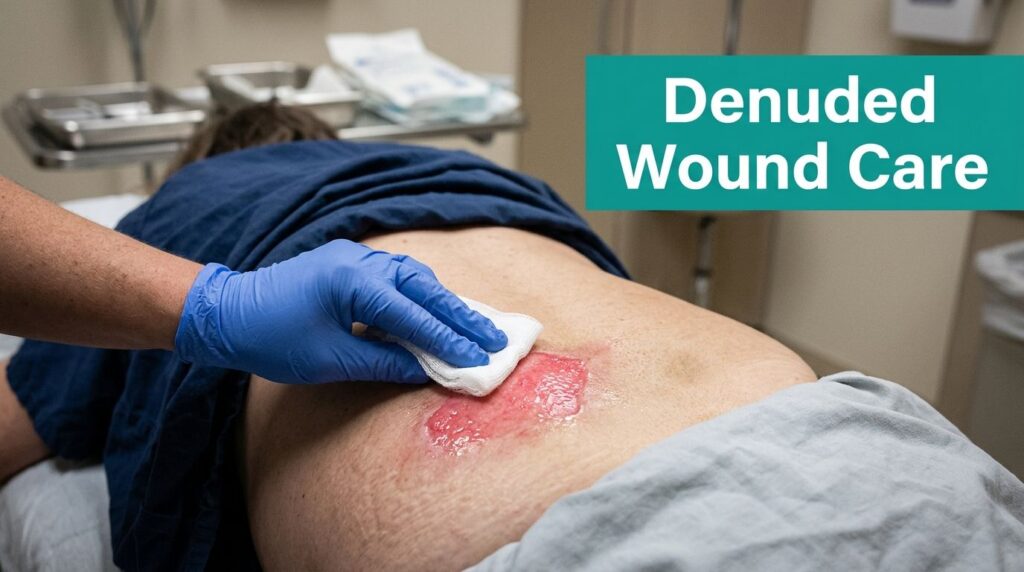
A nurse calls it a “red open area” on the sacrum, charts Stage 2 pressure injury, starts the usual dressing plan, and moves on. Two weeks later the payer rejects the claim, the MDS team is irritated, and the chart doesn't support what was billed. The skin breakdown was real. The staging was wrong. That […]
The 99211 CPT Code: A Wound Care Clinician’s Guide

Your RN has a patient on the schedule for a venous leg ulcer wrap change. Established patient. Compression is in place. Drainage is about what it was last visit. No pain spike, no odor, no new erythema, no call to the physician, no plan change. The nurse removes the old wrap, looks at the wound, […]
Diabetic Foot Ulcer ICD 10 Coding Your Complete 2026 Guide
Getting the coding right for a diabetic foot ulcer in ICD-10 is a critical two-part process that directly impacts both patient care and revenue cycle management. It's not just about finding a single code; you must start with the patient's specific type of diabetes (like E11.621 for Type 2) and then add the corresponding ulcer […]
Mastering Modifier 25 CPT Your Definitive Guide

In medical billing, one of the most frequently used—and often misunderstood—tools is CPT Modifier 25. Think of it as a way to tell a payer, "Hold on, there was more to this visit than just the planned procedure." It's your signal that you performed a significant, separately identifiable Evaluation and Management (E/M) service on the […]
What is an e&m code? Quick Guide to Wound Care Billing and Reimbursement
An Evaluation and Management (E&M) code is how we get paid for our cognitive work—the thinking, assessing, and planning that goes into every patient visit. Think of it less as a billing code and more as a receipt for your intellectual labor. This is especially true in wound care, where managing chronic, complex cases demands […]
Place of Service: Master Wound Care Billing Guide

Think of a place of service (POS) code as the GPS coordinate for your medical claim. It’s a simple two-digit number that tells payers exactly where a patient received care, but its impact is anything but simple. Getting it right is often the difference between a fully paid claim and a costly, time-consuming denial. This […]