
A Clinician’s Guide to Granulation Tissue Definition and Assessment
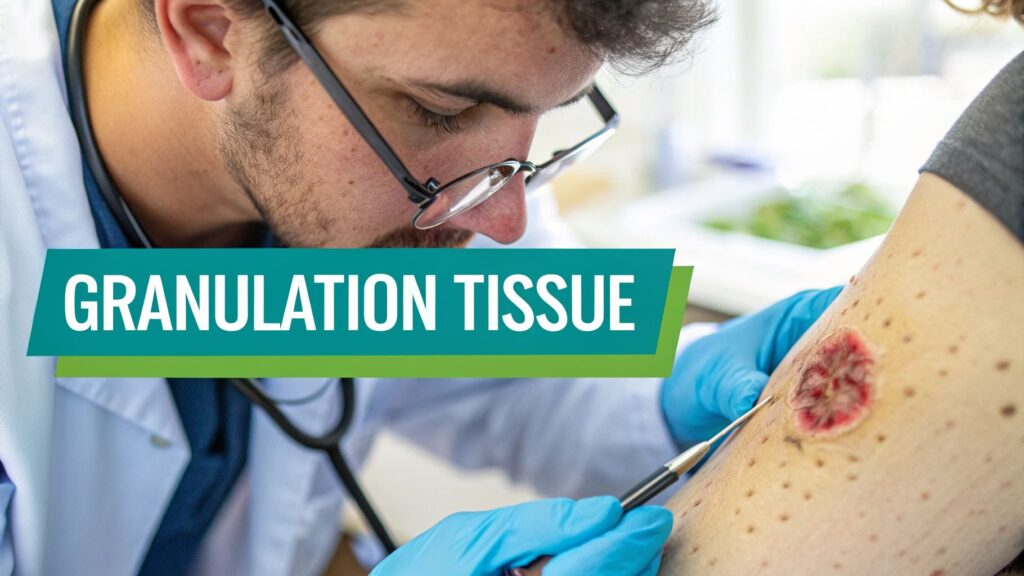
To really get a handle on wound care, you have to know what you’re looking at in the wound bed, and that starts with a clear understanding of granulation tissue. Simply put, this is the living proof that your patient's body is actively working to repair an open wound. Seeing it is a good sign—it […]
Mastering Drainage From Wound Assessment and Management
When you see fluid seeping from a cut, scrape, or surgical site, you're looking at what we in the clinical world call exudate. This drainage is a completely normal part of the healing process. But what it looks, feels, and smells like offers a wealth of information about how that wound is doing. Understanding this […]
How to tell a wound is infected: Signs, Causes, and Next Steps
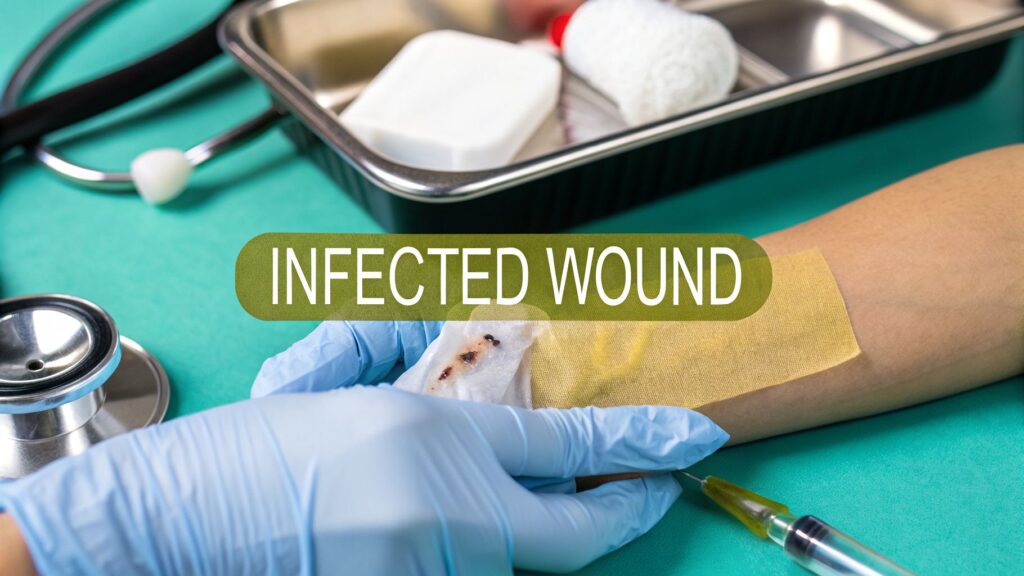
When a wound isn't healing right, your body sends out some pretty clear signals. Recognizing an infected wound really boils down to spotting five classic signs: increasing pain, spreading redness, new or worsening swelling, localized warmth, and any colored or foul-smelling discharge (pus). An infection disrupts the natural healing process, turning what should be a […]
A Clinician’s Guide to the Stages of Normal Wound Healing
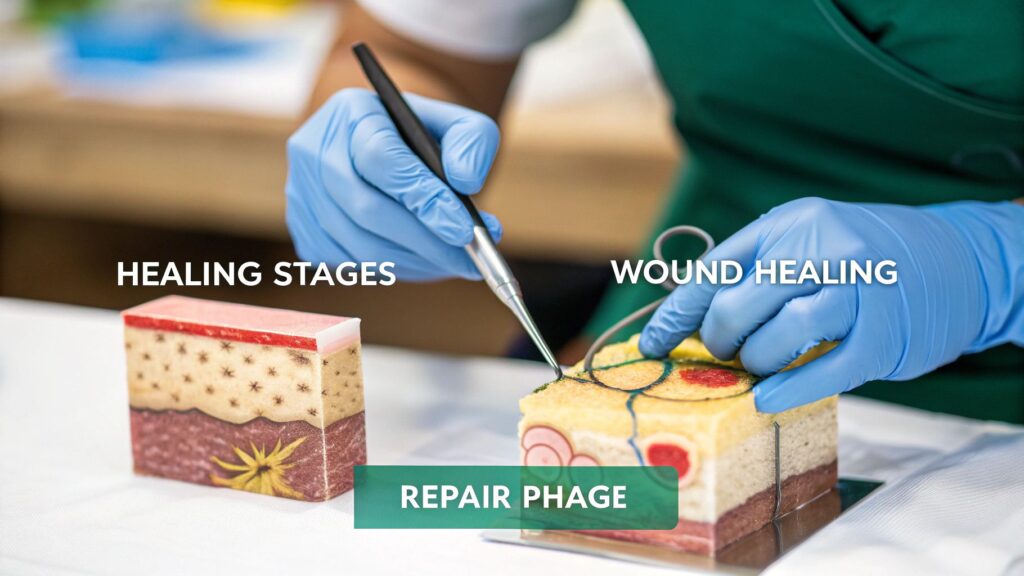
Normal wound healing isn't a single event; it's a beautifully complex biological process that unfolds in four distinct stages: hemostasis, inflammation, proliferation, and maturation. Think of it less like a simple patch-up and more like a highly coordinated construction project. Each phase has to happen in the right order, building on the work of the […]