
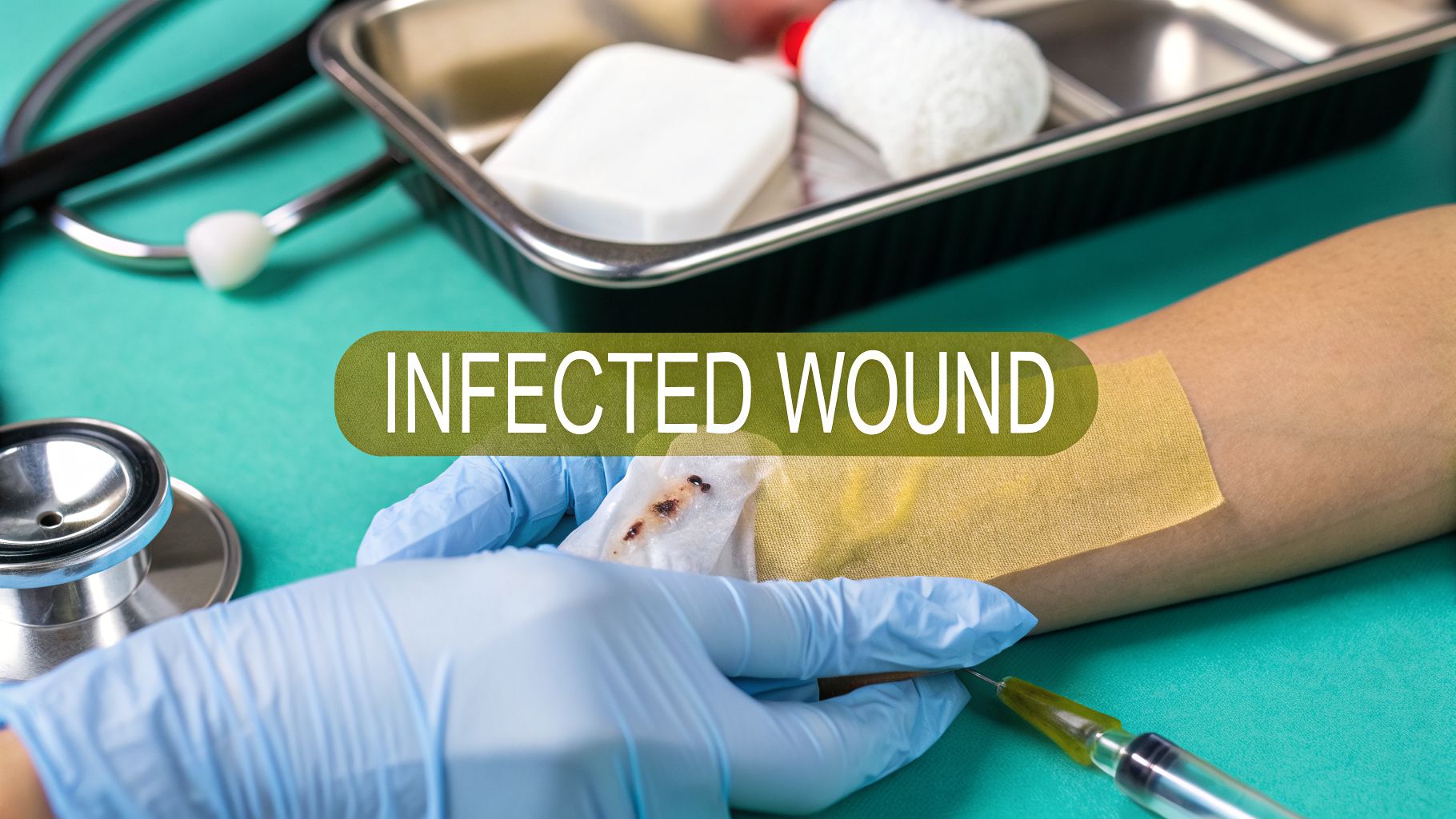
When a wound isn't healing right, your body sends out some pretty clear signals. Recognizing an infected wound really boils down to spotting five classic signs: increasing pain, spreading redness, new or worsening swelling, localized warmth, and any colored or foul-smelling discharge (pus). An infection disrupts the natural healing process, turning what should be a straightforward recovery into a potentially serious medical issue. If a wound seems to be getting worse instead of better, that’s your cue to take a closer look and understand the underlying battle between your body's defenses and invading bacteria.
A simple cut should improve daily, but an infection reverses this progress. Understanding the subtle and overt signs is the first and most critical step in preventing complications. This guide will walk you through everything you need to know, from the initial warning signs to the systemic red flags that demand immediate medical attention. We will explore not just what to look for, but why these signs appear and what they mean for the healing journey.
Spotting the First Signs of a Wound Infection
When you get a cut or scrape, your body kicks off a four-stage healing process almost immediately. A little inflammation is totally normal at first—some mild redness, slight swelling, and a bit of clear or pinkish fluid are just signs that your body is on the job, sending resources to the injury site. This initial inflammatory response is essential for cleaning the wound and setting the stage for repair. It's a controlled, beneficial process designed to protect and rebuild.
The real trick to knowing when a wound is infected is learning to spot when these normal signs cross a line and become indicators of trouble. An infection occurs when bacteria overwhelm the body's local defenses, leading to a much more aggressive and damaging inflammatory reaction.
A healing wound should feel a little better each day. The initial sting should fade, the redness should stay put right at the wound's edge, and any puffiness should start to go down. An infection is basically this whole process in reverse. The pain gets more intense, the redness starts to creep outward, and the area becomes more swollen and hot to the touch. This shift from controlled healing to uncontrolled inflammation is the hallmark of an infection taking hold.
Healing Progress vs. Infection Warning Signs
One of the most valuable skills in wound care is telling the difference between the body's normal healing work and the destructive signs of infection. The distinction can be subtle, but it's critical for timely intervention. For example, a small amount of thin, clear fluid (serous exudate) is a positive sign of a moist healing environment. However, thick, cloudy pus—especially if it's yellow or green—is a textbook sign of infection, representing an accumulation of dead bacteria, white blood cells, and cellular debris.
Understanding these nuances helps you know when to act. For clinicians seeking to refine their diagnostic skills, a deeper dive into professional evaluation techniques is invaluable. You can check out our overview of modern wound assessment tools for nurses to learn more about advanced methods used in clinical practice.
To help you see the difference clearly, here’s a side-by-side comparison of what to watch for.
Normal Healing vs Potential Infection
This table breaks down what you can expect from a wound that's healing properly versus the red flags that might signal an infection. Monitoring these indicators daily can help you catch a problem before it escalates.
| Indicator | Normal Healing Process | Potential Sign of Infection |
|---|---|---|
| Pain | Discomfort that gradually decreases over a few days. The pain is localized and manageable. | Pain that worsens, becomes throbbing, or feels much worse than the injury looks. It may spread beyond the wound site. |
| Redness | Mild redness right around the wound edges that doesn't spread and diminishes over time. | Redness that expands outward from the wound, sometimes creating red streaks moving up the limb (lymphangitis). The red area is often firm and tender. |
| Swelling | Minor swelling around the injury that goes down after a few days as the initial inflammation subsides. | Significant, firm, and increasing swelling around the wound site. The area feels tight and puffy. |
| Temperature | The area may feel slightly warm at first but quickly cools to normal skin temperature within a day or two. | The wound and the skin around it are noticeably hot to the touch. This localized heat persists and may intensify. |
| Discharge | Small amounts of clear or slightly pinkish, thin fluid (serous fluid). This is part of the normal inflammatory phase. | Thick, cloudy discharge (pus) that is yellow, green, or brown and may have a bad smell. The amount of drainage may increase significantly. |
By keeping these signs in mind, you can better monitor a wound's progress and identify potential problems early. The trajectory of symptoms is key.
The most important thing to remember is to trust the trend. A wound that's healing will show slow but steady improvement. A wound that gets more painful, red, or swollen day after day is waving a major red flag for infection. Don't dismiss worsening symptoms as part of the healing process; they are a call to action.
A Closer Look at Local Infection Indicators
While things like increasing pain and swelling are your first clues, really knowing how to tell if a wound is infected means you have to look closer—right at the wound bed itself. From years of experience, I can tell you that a wound that just stops getting better is one of the biggest red flags. This is often referred to as a "stalled wound." If healing stalls out for more than two weeks or, worse, starts going backward, it’s a strong sign the bacterial load is too much for the body to handle, a condition known as critical colonization or early infection.
Think of it this way: you’re looking for specific changes that tell you the balance has tipped from healing to infection. The wound environment provides a direct window into this battle.
Changes in Wound Discharge or Exudate
The fluid a wound produces, which we call exudate, tells a story. A little bit of clear or pale-yellow, watery fluid is perfectly normal during the healing process. This fluid helps transport healing cells to the site. What you need to watch for are significant changes in the amount (volume), consistency (viscosity), and color.
An infected wound often starts weeping much more. The discharge might go from thin and watery to thick, creamy, or even chunky. That's usually pus, which is a messy combination of dead bacteria, white blood cells, and cellular debris. The presence of pus is a definitive sign of infection. We have a whole guide that dives into what it means when you see pus and its role as a sign of infection.
The color can also give you important clues about the specific type of bacteria that might be growing in there:
- Yellow or Tan: This often points toward a staph infection (Staphylococcus aureus), one of the most common culprits in wound infections.
- Greenish-Blue: Frequently a hallmark of Pseudomonas bacteria. This type of infection also comes with a strangely sweet, almost grape-like smell that is quite distinctive.
- Brown or Gray: This can signal a more serious anaerobic infection, which thrives without oxygen. This is often associated with deeper, more complex wounds.
Unhealthy Tissue and Foul Odor
A healthy wound bed that's on the right track should have what we call granulation tissue—it looks pink or red, a bit like ground beef, and is a great sign of new tissue growth. It's the foundation for new skin.
When infection sets in, that healthy tissue can become friable. This means it's fragile, turns a dark, dusky red, and bleeds at the slightest touch (e.g., during a dressing change). You might also notice more debris that the body isn't clearing away, like slough (yellowish, stringy gunk) or eschar (thick, black, leathery tissue). These are signs of tissue death (necrosis) and create a perfect breeding ground for bacteria.
Finally, and this is a big one: trust your nose. While most wounds have a mild, slightly earthy smell, an infected wound often develops a powerful, foul odor. That smell is caused by the waste products of the multiplying bacteria. Don't ignore a bad smell; it's a very reliable indicator of infection.
Clinical data from wound-related hospital visits really drives this home. Foul odor was noted in 16.29% of cases, and significant changes to the skin around the wound were seen in 47.1%. On top of that, abnormal exudate was documented in nearly 48% of these patients, confirming these are absolutely critical signs to watch for. You can see the full analysis of these clinical patterns in wound infection in the research.
Remember, these signs can show up differently depending on the person and the wound. In a diabetic foot ulcer, for instance, nerve damage (neuropathy) might eliminate pain as a symptom, making a change in odor or discharge the first and only clue. But for a healthy person with a post-op surgical wound, a sudden spike in sharp, localized pain and that bright red, friable tissue might be the most obvious signs something is wrong.
Recognizing When an Infection Is Spreading
We've covered what to look for right at the wound site, but what happens when the infection decides to travel? This is when you have to shift your assessment from the wound itself to the person as a whole. A localized infection is a problem; a spreading, or systemic, infection is an emergency.
When bacteria break out of that localized area and enter the surrounding tissues (cellulitis), lymph system (lymphangitis), or bloodstream (sepsis), they can trigger a full-body inflammatory response. It's no longer a simple skirmish at the wound bed; it's a systemic crisis that can lead to organ failure and death if not treated urgently.
This is where the game changes, and your approach has to change with it. A contained, local infection might clear up with some targeted wound care and a course of oral antibiotics. A systemic infection, on the other hand, almost always means a trip to the hospital for more aggressive treatment, like IV antibiotics and supportive care. That’s why listening to what your patient says about how they feel is every bit as critical as what you see on their skin.
Beyond the Wound Bed: Systemic Red Flags
When an infection gets into the bloodstream or surrounding tissues, your body sounds the alarm. These systemic signs are urgent red flags that tell you the problem has escalated beyond the wound.
A helpful acronym some clinicians use to remember these is STONEES (Size, Temperature, Os [exposed bone], New breakdown, Exudate, Erythema/Edema, Smell), but the most immediate and common systemic signs you'll encounter are a trio of classic symptoms:
- Fever: A temperature climbing over 100.4°F (38°C) is a textbook sign the body is mounting a major defense. It's one of the primary ways the body tries to make itself inhospitable to pathogens.
- Chills and Shakes: You'll often see this alongside a fever. Uncontrollable shivering (rigors) is the body's way of generating heat to raise its core temperature and fight off the invaders.
- General Malaise: This isn't just feeling a bit tired. Patients will describe a profound sense of feeling "sick all over," weak, and completely wiped out. It's a deep, constitutional sickness that comes from the body-wide inflammatory response. They may also experience nausea, vomiting, or a rapid heart rate.
These symptoms flare up because the immune system has released a flood of chemicals (cytokines) to fight the infection, and those chemicals are now affecting the entire body. The battle has gone system-wide.
A spreading infection has a massive impact on healthcare resources. One study showed a huge leap in documented infections from 5.95% in patients with wounds to 19.19% in patients whose wounds were severe enough to require hospitalization or an ER visit. This highlights the critical need for early detection. You can dig into the data on how infection severity correlates with healthcare use on jamanetwork.com.
Watching for Changes in Mental Status
One of the most dangerous, and often overlooked, signs of a systemic infection is a change in mental state. This is especially critical to watch for in elderly patients or those who are already frail.
An older adult may not mount a high fever due to an aging immune system. Instead, the first—and sometimes only—clue that a simple wound infection has spiraled into sepsis can be a sudden neurological change.
Look for a patient who is suddenly confused, disoriented (can't tell you where they are or what day it is), or seems unusually drowsy and lethargic. An abrupt decline in cognitive function is a major red flag. If you have an older patient with a wound who exhibits this kind of abrupt mental shift, treat it as a medical emergency. It often is, signaling that the infection is severely affecting the brain and other vital organs.
Distinguishing Between Colonization and Infection
Here's something that surprises a lot of people: nearly every wound has bacteria in it. That’s right. The simple presence of microorganisms on a wound surface isn't an automatic red flag for infection. The real skill in wound care is learning to tell the difference between a wound that is simply colonized and one that is truly infected.
Think of it like having neighbors versus having invaders. Any open wound, from a minor scrape to a major surgical site, will be exposed to bacteria from the skin and the environment. This is completely normal and expected.
When those bacteria settle in and multiply but don't cause any harm or trigger a significant immune response from the host, we call it colonization. These bacterial "neighbors" are just living there without disrupting the healing process. The wound keeps healing, the granulation tissue looks healthy, and the person feels fine.
The Wound Infection Continuum
The shift from harmless colonization to a full-blown infection isn't like flipping a switch. It happens along a spectrum, known as the wound infection continuum, as the bacterial presence (bioburden) and the body’s reaction escalate.
- Contamination: This is just the initial landing of microbes on the wound surface. It's brief, unavoidable, and the microbes don't multiply.
- Colonization: The microbes have set up shop and are multiplying, but they're not causing any trouble for the host. The wound is healing normally, and there are no signs of infection.
- Critical Colonization: This is the tricky middle ground. The bacterial load gets heavy enough to slow down or even stop the healing process. You might notice the wound has stalled or the new tissue looks weak and pale, but the classic signs of infection (pain, heat, pus) are still missing. This is often the stage where proactive intervention can prevent a full infection.
- Infection: Now, the bacteria have become invaders. They are actively multiplying, damaging healthy tissue, and the body is launching a full-scale immune response. This is when you see those clear, classic signs we discussed—spreading redness, increased pain, warmth, and pus.
Understanding these stages is absolutely fundamental to proper wound management. For a deeper dive into how the body is supposed to handle repairs, our guide on the wound healing process is a great resource. It helps put into context what's going right versus what's going wrong.
Treat the Patient, Not the Swab
This brings us to a core principle of modern wound management. You might take a wound swab and the lab report comes back positive for bacteria. It’s tempting to immediately reach for antibiotics, but that's often the wrong move if there are no clinical signs of infection.
If the patient shows no clinical signs of infection—no fever, no spreading redness, no worsening pain, and the wound is healing—you're likely just looking at a colonized wound. Treating it with powerful systemic antibiotics is not only unnecessary but can also fuel the growing problem of antibiotic resistance, disrupt the patient's microbiome, and cause side effects.
Your clinical assessment is what truly matters. If the wound looks clean and is healing well, you trust your eyes and the patient's feedback, regardless of what a culture says. On the flip side, if a wound is screaming infection with all the classic signs, you must treat it as one, even before the lab results are in. The diagnosis of a wound infection is clinical, not microbiological.
The goal is to pinpoint when that bacterial load crosses the line from colonization to infection and starts actively harming the patient. Your clinical judgment, based on a direct assessment of the wound and the patient as a whole, is far more valuable than a lab test alone. Always focus on the patient's symptoms, not just the test results.
Knowing When to Escalate Patient Care
Recognizing the signs of a spreading infection is one thing, but knowing the precise moment to escalate care is a skill that truly saves lives. Some situations are absolute red lines that demand immediate medical attention. Your clinical judgment is always your best guide, but having a clear set of triggers helps you act decisively when it matters most.
If you're a patient or caregiver, the signs below mean it's time to call a professional. For clinicians, these are the signals that your current wound care plan isn't cutting it anymore and a higher level of intervention is needed—right now. Delay can lead to irreversible tissue damage, systemic complications, or worse.
Urgent Medical Triggers
Some symptoms are a clear signal that the infection is either steamrolling the body's local defenses or has already gone systemic. There's no time to waste in these scenarios.
You need to escalate care immediately if you see any of the following:
- Rapidly Spreading Redness: This isn't just a little pinkness around the edges. Look for redness that shoots out more than two centimeters from the wound or, even more concerning, red streaks moving away from the site (lymphangitis). This indicates the infection is traveling through the lymphatic system.
- High Fever: A persistent temperature over 100.4°F (38°C) is a major warning sign, especially if it comes with chills, body aches, or a rapid heart rate. This points to a systemic response.
- Uncontrolled Pain: We're talking about severe, throbbing pain that feels completely out of proportion to the injury itself and doesn't respond to standard pain medication. This can signal a deep infection or tissue death.
- Deep Tissue Exposure: Any sign that the wound is deeper than it looks is a serious problem. This includes visible bone or tendons, or a foul-smelling, brownish discharge that suggests something is decaying deeper inside (necrotizing fasciitis).
- Sudden Changes in Mental Status: As mentioned earlier, sudden confusion, lethargy, or disorientation is a sign of sepsis and constitutes a medical emergency.
These are not "wait and see" scenarios. Any one of them should trigger an immediate call to a healthcare provider or a trip to an urgent care center or the emergency room.
High-Risk Patients and Clinical Judgment
While those red flags apply to everyone, you need to have a much lower threshold for concern with high-risk individuals. Patients with diabetes, a compromised immune system (due to HIV, chemotherapy, or immunosuppressant drugs), peripheral vascular disease, or poor circulation can go downhill incredibly fast from a seemingly minor wound.
In these patients, even subtle changes can point to a major problem. For example, a diabetic patient with neuropathy might not feel the escalating pain of a worsening infection. For them, a new odor, a slight increase in drainage, or a minor discoloration of the surrounding skin might be the only early warning you get. Don't underestimate these subtle signs in a high-risk person.
Decisive action isn't just about better patient outcomes; it's also about managing the enormous strain infections put on the healthcare system. The financial and clinical fallout from wound infections is exactly why catching them early is a top priority for healthcare providers and systems worldwide.
The economic burden is staggering. Surgical site infections alone cost the U.S. healthcare system a whopping $3.3 billion and add 1 million extra inpatient days every year. And with chronic wounds affecting up to 2% of people in developed nations, knowing when to escalate care is a core competency. You can learn more about this growing issue by exploring the research on the public health concern of chronic wounds at WoundsAsia.com.
Ultimately, if your gut tells you something is seriously wrong, listen to it. When it comes to infection, early and assertive action is always the safest bet. It's better to be overly cautious than to miss a window for effective intervention.
Answering Your Top Questions About Wound Infections
When you're dealing with a wound, a lot of questions can pop into your head, especially when things don't seem to be healing right. Here are some quick, practical answers to the questions I hear most often from both patients and fellow healthcare professionals.
Can a Wound Be Infected Without Pus?
Yes, definitely. We’re all trained to look for thick, yellow-green pus as the classic sign of infection, but it’s not always present. A wound can absolutely be infected without it, particularly in the early stages or in certain types of infections.
Think of it this way: you might see other red flags first. Spreading redness (cellulitis), intense pain that’s out of proportion to the injury, and a feeling of heat are all serious warning signs that can show up long before any pus appears. With deeper wounds or abscesses, pus can also get trapped under the skin, so you wouldn't see it anyway. Always trust the full picture—pain, heat, swelling, and redness are just as telling.
What's the Difference Between Normal Drainage and Pus?
Knowing whether you’re seeing normal healing fluid or pus is one of the most important skills in wound assessment. It really comes down to looking at the color, consistency, amount, and odor of the fluid.
- Normal Wound Fluid (Serous Fluid): This is the good stuff. It’s thin, watery, and usually clear or a very pale yellow (like straw). You expect to see a small amount of this in the first few days as the body naturally cleans the wound. Sometimes it can be pink-tinged (serosanguinous), which is also normal.
- Pus (Purulent Exudate): This is the troublemaker. Pus is a clear sign of infection. It's thicker, opaque, and cloudy, and can be yellow, green, or even brownish. It’s made of dead bacteria, white blood cells, and tissue debris, and it often comes with a foul odor.
If you notice the fluid from a wound shifting from thin and clear to thick and colored, that’s a major signal that an infection is brewing.
How Fast Can a Wound Get Infected?
Infections can take hold surprisingly quickly, sometimes within just 24 to 72 hours of the injury. How fast this happens depends on a few key things: the type and amount of bacteria introduced, the severity and type of the wound, and the person’s overall health.
A deep puncture from a contaminated object (like an animal bite or a rusty nail) has a much higher risk of a fast-moving infection than a simple scrape on clean skin. People with compromised immune systems or conditions like diabetes are also far more susceptible to rapid infections because their body's defenses are weaker. This is exactly why cleaning a wound properly right away is so non-negotiable—it gets rid of the bacteria before they have a chance to multiply and establish a foothold.
Don't fall into the "wait and see" trap. If you spot any of the early warning signs of infection, acting within the first day or two can be the difference between a minor hiccup that's easily treated and a major medical problem requiring hospitalization.
Are Antibiotic Ointments Always the Answer?
Not at all. In fact, their overuse can contribute to antibiotic resistance. For a minor, clean cut, good old-fashioned soap and water followed by a clean bandage is usually all you need. The main goal is to keep the wound clean and protected.
Over-the-counter antibiotic ointments can be useful right at the beginning for a contaminated wound (like a scrape from a fall outside) to help prevent an infection from starting. But they are not a treatment for a full-blown infection that has already set in. More importantly, they shouldn't be used on chronic wounds without a doctor's direction, as they can sometimes lead to contact dermatitis or hinder healing. A great rule of thumb in wound care is, "If it's wet, dry it; if it's dry, moisten it." The goal is a balanced healing environment, not just slathering everything with ointment.
Can an Infected Wound Heal on Its Own?
It's extremely risky to bet on it. While a very minor, superficial infection in a very healthy person might be handled by their immune system, a true, established infection needs medical help. The risks of inaction are far too great.
Left untreated, an infection can spiral into much more serious complications. These can include:
- Cellulitis: A painful bacterial skin infection that can spread rapidly through the skin layers.
- Abscess: A deep pocket of pus that builds up in the tissue and almost always needs to be professionally drained to heal.
- Osteomyelitis: An infection that spreads to the bone, which can be very difficult to treat and may require long-term antibiotics or surgery.
- Sepsis: A life-threatening emergency where the infection spills into the bloodstream, triggering a massive, body-wide inflammatory reaction that can lead to organ failure and death.
If you even suspect a wound is infected, please don't wait. See a medical professional. Getting the right treatment, whether it’s oral or IV antibiotics, proper debridement (cleaning) of the wound, or specialized dressings, is the only safe path to healing.
At Ekagra Health AI, we're dedicated to supporting clinicians with tools that simplify wound care management from start to finish. Our AI-powered platform reduces documentation time and streamlines billing, allowing you to focus on what matters most—your patients. Discover how our "voice to claim" system can improve your practice's efficiency and outcomes at https://ekagrahealth.ai.
