
Unna Boot: Application, Patient Selection & Documentation
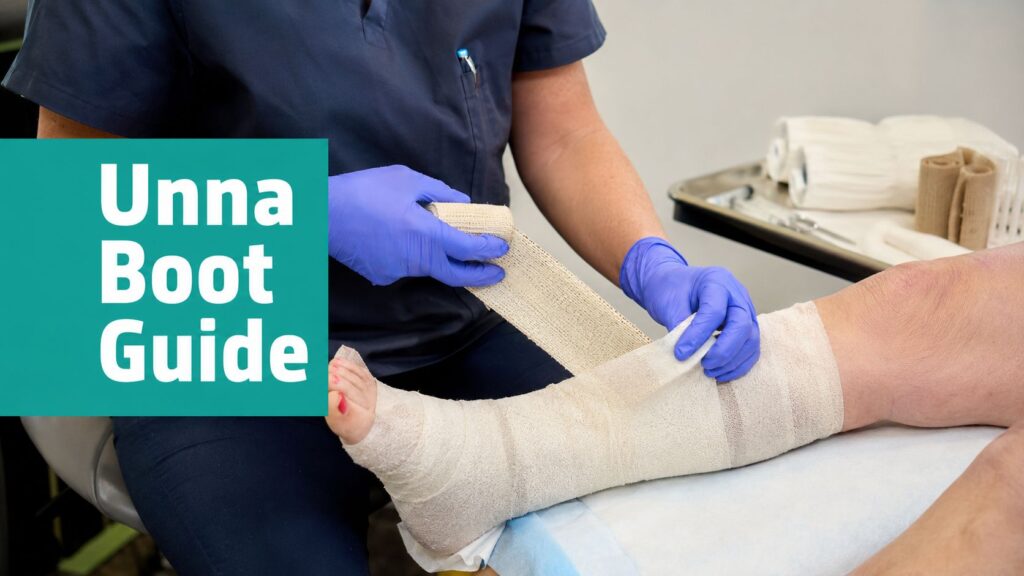
The first thing I check is the foot, not the dressing cart. If the leg is hot, swollen, and draining around the medial ankle, an Unna boot may be exactly the right compression. If the same leg has rest pain, a weak pulse, or a wound pattern that doesn't fit venous disease, putting paste gauze […]
Wound Vac White Foam vs Black a Clinical Guide

A debrided diabetic foot ulcer with an exposed Achilles tendon will teach a new clinician this lesson fast. If you pack that wound with the wrong foam, the next dressing change becomes a fight. The tissue is angry, the patient remembers the pain, and your note won't explain why you made that choice in the […]
What Are Open Wounds? Types, Healing, and AI Assessment for Clinicians
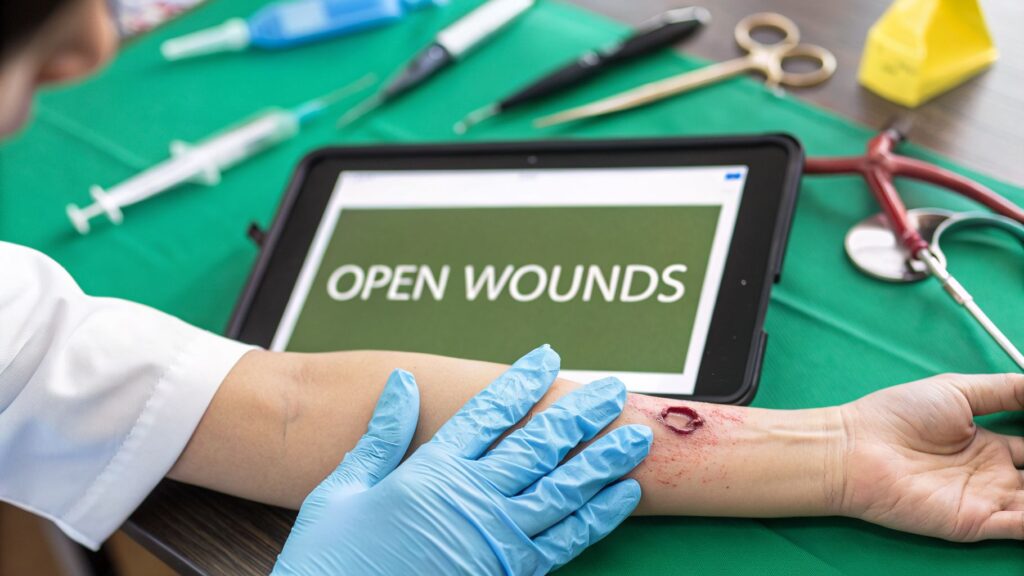
An open wound is technically any injury that breaks the skin, exposing internal tissue to the outside world. But in a clinical setting, that simple definition doesn't even begin to cover it. We're not just talking about a cut; we're talking about a complex physiological event, a potential gateway for serious infection, and a major […]
DFU Medical Abbreviation: A Comprehensive Guide to Diabetic Foot Ulcers

When you see the DFU medical abbreviation in a patient’s chart, it stands for Diabetic Foot Ulcer. But for any experienced clinician, those three letters represent far more than just a sore on the foot. They signify a severe complication of diabetes and one of the most challenging, high-stakes conditions managed in wound care, often […]
A Clinician’s Guide to Purulent Drainage Color and Meaning

When you see purulent drainage, the wound is trying to tell you something important. The specific color—be it yellow, green, or brown—offers a vital clue about what’s happening beneath the surface, especially which bacteria might be causing trouble. This thick, cloudy fluid is one of the classic signs of infection, and learning to interpret what […]
Mastering ICD10 and CPT Codes in Wound Care for 2026

If you want to get paid correctly in healthcare, you have to master two distinct "languages": ICD-10 and CPT codes. Think of it this way: ICD-10 codes explain why the patient is there (the diagnosis), while CPT codes describe what you actually did for them (the procedure). Getting this “why vs. what” relationship right is […]
Hospital acquired pressure injuries: Prevention and Care Essentials

A hospital acquired pressure injury (HAPI) is a specific type of wound that develops after a patient is admitted to the hospital. You might know them as bedsores, but the term HAPI highlights a critical point: they are often preventable and serve as a direct measure of care quality. These injuries are caused by sustained […]
A Clinician’s Guide to Modern Chronic Wound Care
Chronic wound care isn't just about dressings and debridement. It's the complex, long-term management of wounds that stubbornly refuse to heal. It demands a deep dive into root causes, a command of advanced treatments, and—critically—painstaking documentation to get patients on the road to recovery and ensure the clinic gets paid for its work. This is […]
Voice Recognition in Healthcare Your Ultimate Guide to 2026

Picture this: a clinician in a wound care clinic finishes a patient visit, and by the time they walk out of the room, the entire encounter is documented, coded, and ready for billing. It sounds futuristic, but this is exactly what modern voice recognition in healthcare makes possible. We've moved far beyond simple dictation tools […]
Wound measurement examples: 8 key methods for accurate clinical docs in 2026
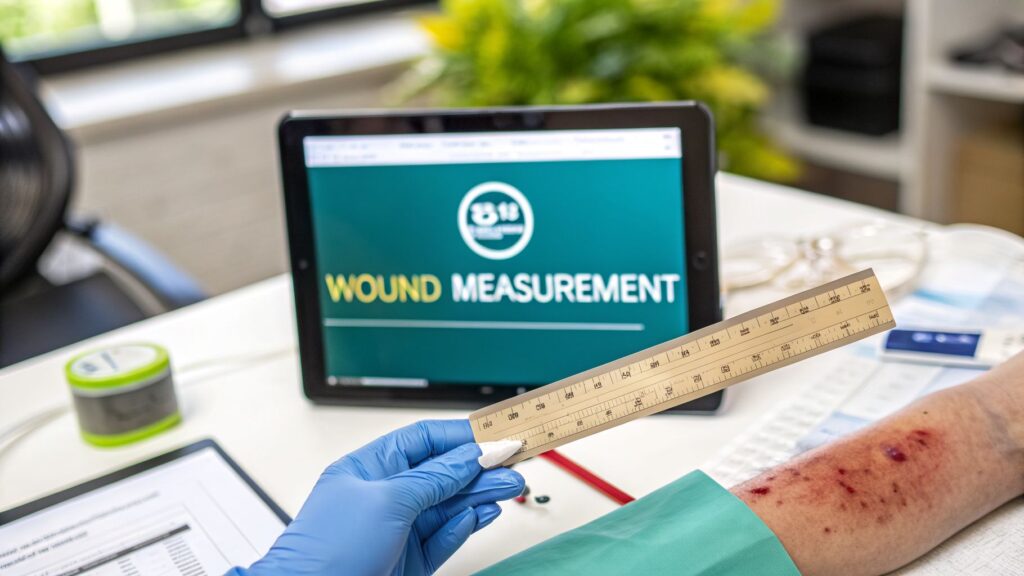
Accurate wound measurement is the cornerstone of effective wound care, yet it remains one of the most challenging aspects of clinical documentation. Inconsistent methods lead to flawed data, stalled healing, and compliance risks. This guide moves beyond basic techniques to provide a deep dive into eight critical wound measurement examples, complete with strategic analysis and […]