
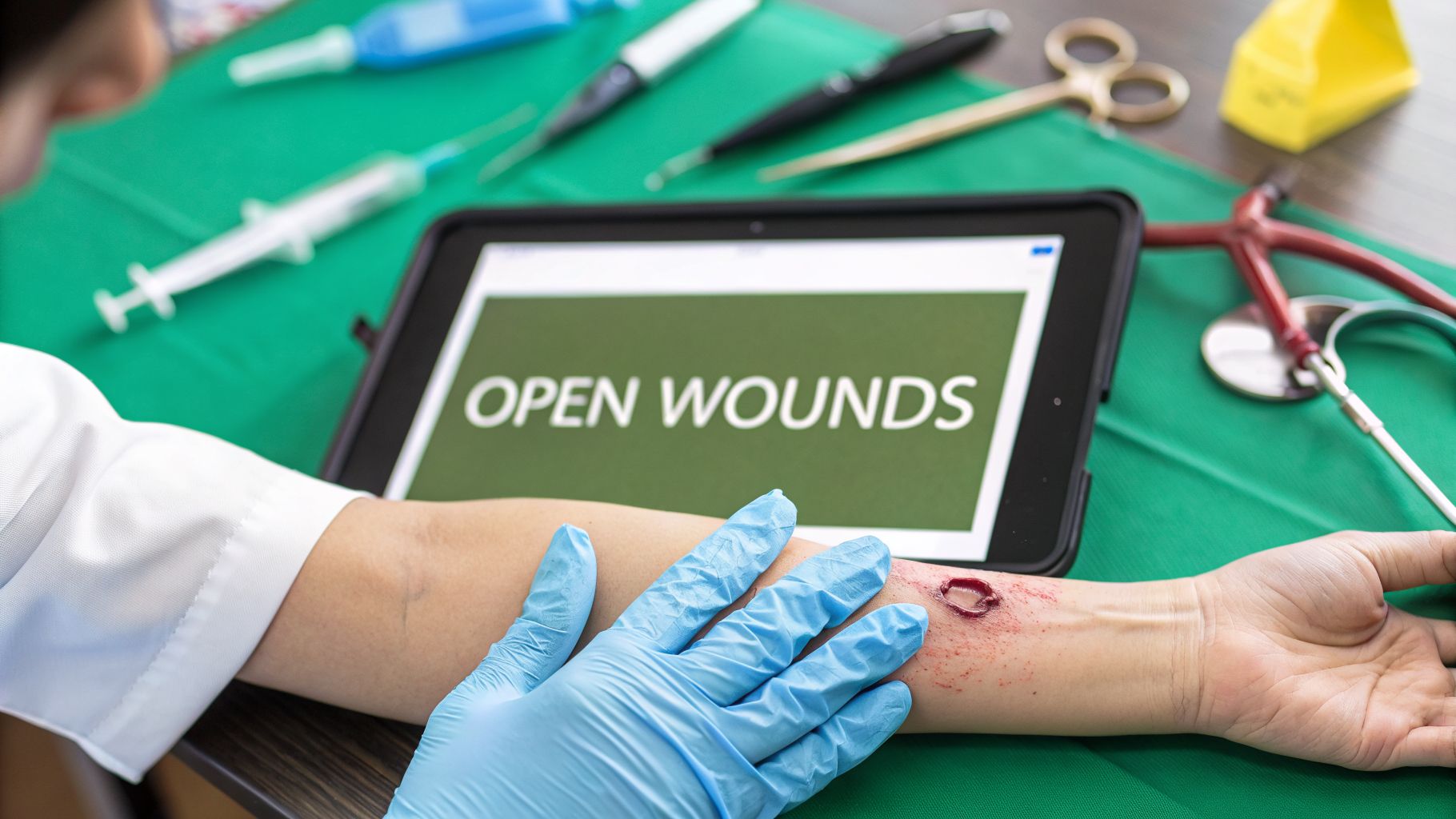
An open wound is technically any injury that breaks the skin, exposing internal tissue to the outside world. But in a clinical setting, that simple definition doesn't even begin to cover it. We're not just talking about a cut; we're talking about a complex physiological event, a potential gateway for serious infection, and a major challenge for healthcare providers. For clinicians, understanding the nuances of what are open wounds is the first step toward effective treatment, accurate documentation, and successful reimbursement. This comprehensive guide will explore the types of open wounds, the stages of healing, and how modern technology is revolutionizing wound care assessment and management in 2026.
Defining Open Wounds in Clinical Practice
Think of the skin as your body’s most important line of defense—a seamless, flexible shield. An open wound is any breach in that shield. This is fundamentally different from a closed wound, like a bruise, where the damage happens under intact skin. The moment the skin barrier is compromised, the body is exposed to a host of potential threats.
When that barrier is broken, the injury is immediately visible, often with bleeding. More importantly, it creates a direct pathway for bacteria and other contaminants to get inside. Understanding an open wound means looking past the obvious and seeing its potential to impact patient health, clinical workflows, and even your facility's financial stability. A precise initial diagnosis and classification are non-negotiable for effective management.
More Than Just a Break in the Skin
The scale of this issue is staggering. In the United States alone, we see an estimated 95 million traumatic wounds every single year. The global wound care market is projected to swell to $35.6 billion by 2032, reflecting just how much demand there is for effective wound management. You can see more details in reports on the growing wound care market. This isn't just about minor cuts; it's a significant public health concern.
This isn't just a problem at the patient's bedside. It's a system-wide concern with far-reaching consequences:
- Patient Outcomes: The risk of infection, delayed healing, and the development of chronic conditions skyrockets with open wounds. Without proper care, what starts as a minor injury can lead to severe complications, including amputation or systemic infection (sepsis).
- Operational Strain: Managing these wounds consumes an enormous amount of clinician time, energy, and resources. From daily dressing changes to debridement procedures, the care is labor-intensive and requires specialized knowledge.
- Financial Impact: Inaccurate documentation or poor treatment choices can quickly lead to denied claims and lost revenue. In a value-based care model, outcomes are directly tied to payment, making effective wound management more critical than ever.
A precise definition and accurate classification of an open wound are the foundational first steps. This initial assessment directly influences every subsequent action, from choosing the right treatment protocol to justifying medical necessity for reimbursement.
A Framework for Understanding
To get a handle on open wounds, clinicians first need a clear way to categorize them. This simple step provides a framework for everything that follows, from diagnosis to treatment planning. To help with this initial classification, we can group open wounds by their cause and their expected healing timeline. This structured approach helps ensure no detail is overlooked.
Quick Overview of Open Wound Categories
This table provides a high-level summary to help you start thinking about wounds in distinct categories, which is the first step toward a more detailed and accurate assessment. Each category requires a different lens and often a different set of interventions.
| Category | Description | Common Examples |
|---|---|---|
| Acute | A wound that heals in a predictable and timely manner, following the normal stages of healing without major complications. | Surgical incisions, lacerations, abrasions, simple punctures. |
| Chronic | A wound that fails to heal within an expected timeframe (typically >3 months), often due to underlying health issues. | Diabetic ulcers, pressure injuries, venous stasis ulcers. |
| By Cause | Wounds defined by the object or event that created them, which helps predict contamination risk and tissue damage. | Punctures, lacerations, abrasions, avulsions, burns. |
This initial classification sets the stage for a care plan that truly aligns with the wound’s specific nature. By framing an open wound not just as an injury but as a complex event with clinical, operational, and financial dimensions, you can build far more effective and defensible care strategies. The rest of this guide will build on this foundation, diving into the critical distinctions and best practices essential for modern wound care.
The Critical Difference Between Acute and Chronic Wounds
When we talk about open wounds, the first and most important distinction we make as clinicians is whether a wound is acute or chronic. This isn't just clinical jargon; it's a fundamental fork in the road. That one distinction determines everything that follows: our treatment plan, what we tell the patient to expect, and even how we code for reimbursement. Getting this right from the start is the bedrock of good wound care.
An acute wound is one that behaves itself. It follows the predictable, orderly stages of healing right on schedule. Think of a clean surgical incision or a simple kitchen knife cut. It’s like a well-run construction project: the cleanup crew arrives, the foundation is laid, the structure goes up, and the finishing touches are applied, all according to a clear blueprint and timeline.
A chronic wound, on the other hand, is a project that has ground to a halt. It’s a wound that has failed to progress in an orderly way and remains unhealed for longer than 30 days. For some reason, the healing process has become stuck, usually in the inflammatory phase. The workers have walked off the job, leaving the site in disarray. This failure to heal is a sign of a deeper underlying problem that must be addressed.
Acute Wounds: A Predictable Path to Healing
Acute wounds are the "textbook" injuries. They follow the healing cascade we all learned about, moving from one stage to the next without a hitch. They’re almost always caused by some form of external trauma in a person who is otherwise healthy, which allows the body’s repair systems to kick in and work as designed. This predictable nature makes them easier to manage, but they still require careful monitoring to ensure they don't deviate from this path.
You can usually spot an acute wound by a few key features:
- A Clear Cause: The patient can point to a specific event—a cut, a scrape, or a surgical procedure. The mechanism of injury is known.
- An Orderly Process: The wound progresses through hemostasis, inflammation, proliferation, and remodeling without getting stuck. Each stage is completed in a timely fashion.
- Timely Healing: It resolves within a few weeks, depending on its size and depth. For example, a minor laceration may heal in 7-10 days, while a larger surgical wound may take 3-4 weeks.
Take a healthy patient who just had their appendix removed. Their surgical incision will close up cleanly, heal predictably, and leave a minimal scar. All the body's systems are firing on all cylinders to get the job done. That's the ideal outcome we hope for with any open wound.
Chronic Wounds: When Healing Goes Off-Track
Chronic wounds are a different beast altogether. They represent a fundamental failure of the body to heal itself. The wound bed has become a hostile environment, sabotaged by underlying problems that stop any forward progress. These wounds are not just a local problem; they are a manifestation of a systemic issue.
An acute wound tells a story of successful repair. A chronic wound tells a story of systemic failure, where the body’s healing capacity has been overwhelmed by underlying issues like disease, poor circulation, or persistent infection.
The moment a wound transitions from acute to chronic is a major red flag. It tells us that standard wound care isn't going to cut it anymore. Catching this shift early is crucial for preventing serious complications and justifying the need for more advanced, specialized treatments. Early intervention can prevent months or even years of suffering for the patient.
Several key factors can derail the healing process and create a chronic wound:
- Underlying Disease: Conditions like diabetes or vascular disease starve the wound of oxygen and nutrients by impairing blood flow. These comorbidities are the primary drivers of chronic wounds.
- Poor Perfusion: Without good blood supply, the body can't get immune cells, growth factors, and other essential resources to the site of injury. Hypoxia is a major barrier to healing.
- Persistent Infection: If a wound is colonized by biofilm or has a deep infection, it gets locked in a constant state of inflammation. This prolonged inflammation prevents the transition to the proliferative (rebuilding) phase.
- Sustained Pressure: For bedbound or immobile patients, unrelenting pressure on one spot can cause tissue to break down, creating a pressure injury that simply refuses to close. Offloading this pressure is the cornerstone of treatment.
A diabetic foot ulcer is the classic example of a chronic open wound. High blood sugar damages nerves and blood vessels, crippling circulation and the ability to fight infection. What might be a tiny cut for a healthy person can quickly escalate into a non-healing ulcer, putting the patient at serious risk. Identifying these underlying roadblocks is the first step toward building a treatment plan that actually works.
A Clinician's Guide to Common Open Wound Types
Once you've determined whether a wound is acute or chronic, the real clinical detective work begins. Nailing down the specific type of open wound is more than just a diagnostic exercise; it's the foundation for every decision you'll make, from treatment and dressings to documentation.
Getting this right from the start is the difference between a care plan that works and one that stalls. Think of it like a mechanic listening to an engine. It's not enough to say "it's making a weird noise." Is it a squeal, a knock, or a grind? Each sound points to a different problem and a different solution. The same is true for wounds. The etiology of the wound dictates the treatment protocol.
Abrasions and Lacerations
Abrasions and lacerations are probably the most common injuries you'll see, but they’re far from the same thing. Mistaking one for the other can lead to suboptimal cleaning and closure techniques.
Abrasions: We've all seen these. Think "road rash" from a fall or a scrape from sliding on turf. The skin is literally scraped away by friction, usually just affecting the top layer (the epidermis). Bleeding is often minimal, more of an ooze, but because a large surface area can be involved, they can be surprisingly painful and are notorious for getting contaminated with dirt and debris. Thorough cleaning and irrigation are paramount to prevent infection and "tattooing" from embedded particles.
Lacerations: This is a classic cut or tear in the skin. Unlike a clean surgical incision, a laceration is often caused by blunt trauma that splits the skin open, leaving jagged, messy edges. They can be deceptively shallow or terrifyingly deep, potentially slicing through muscle, tendons, or even nerves, which can lead to some serious bleeding. Assessment must include checking for underlying structural damage and deciding on the best closure method (sutures, staples, or adhesive strips).
Punctures and Avulsions
Moving into more severe territory, punctures and avulsions present a different set of challenges, often with dangers lurking beneath the surface. These are high-risk injuries that require a high index of suspicion for complications.
A puncture wound is a small entry with big potential for trouble. It's caused by a sharp, pointed object—like stepping on a nail, an animal bite, or even a splinter. The tiny opening is a trap. It seals quickly, locking bacteria deep inside the tissue where there's little oxygen.
This is a perfect recipe for infection. That narrow, deep channel creates an anaerobic playground for nasty pathogens like Clostridium tetani. This is why checking a patient's tetanus status is non-negotiable with these injuries.
An avulsion is a much more dramatic and violent injury where a chunk of skin and tissue is torn away from the body. This could be a "skin tear" on the fragile arm of an elderly patient or a catastrophic "degloving" injury from a piece of machinery. Your immediate priorities are controlling the bleed and figuring out if the torn tissue is even salvageable. These almost always require a trip to the OR for repair or grafting. The key is to assess the viability of the avulsed flap and preserve as much tissue as possible.
Ulcers: The Chronic Wound Challenge
While the injuries above are usually acute, ulcers are a different beast entirely. They are almost always chronic, acting as a flashing red light for a deeper, systemic issue. They're also a massive burden on the healthcare system. In 2022, the global cost of managing open wounds hit a staggering $148.65 billion, and chronic wounds are the main driver of that expense. Affecting 2-2.5% of the U.S. population, they are projected to account for a 65% market share of wound care costs by 2025. This detailed study on the economic impact of non-healing wounds paints a sobering picture of the scale of this problem.
Here’s a look at the most common culprits:
Diabetic Foot Ulcers (DFUs): The bane of every podiatrist's existence. These ulcers pop up on the feet of patients with diabetes, fueled by a perfect storm of nerve damage (neuropathy), poor blood flow, and constant pressure. The scariest part is that patients often don't feel them until they're already in serious trouble. Management requires a multidisciplinary approach including glucose control, offloading, debridement, and infection management.
Pressure Injuries (Bedsores): Anyone working in a hospital or home health setting is all too familiar with these. They form over bony areas like the tailbone or heels when sustained pressure chokes off blood supply, causing the tissue to die. Staging them accurately is absolutely critical for proper care and compliant documentation. Prevention through regular repositioning and specialized support surfaces is key.
Venous Stasis Ulcers: Often seen in patients with poor leg circulation, these ulcers typically appear around the ankles. They're the result of veins struggling to pump blood back to the heart, causing it to pool in the lower legs. You'll recognize them by their weeping, shallow appearance and the stained, discolored skin surrounding them. The cornerstone of treatment is compression therapy to improve venous return, combined with local wound care.
Each of these ulcers demands a strategy that looks beyond the hole in the skin. You have to tackle the root cause—whether that means offloading pressure, getting blood sugar under control, or improving venous return—if you ever hope to achieve healing.
The Four Stages of Wound Healing Explained
When the skin is broken, the body doesn't panic. It initiates a precise, highly coordinated process to repair the damage. This isn’t a chaotic scramble; it's a biological cascade that moves through four overlapping stages.
Imagine a construction crew arriving at a disaster site. First, the emergency team stops the immediate danger. Then, a cleanup crew clears the debris. After that, the builders frame a new structure, and finally, the finishers reinforce and remodel it. The body's healing process works in much the same way.
As a clinician, understanding this progression is crucial. It’s how you know if healing is on schedule or if a wound is stuck, threatening to become chronic. Watching a wound move through these stages gives you the objective feedback needed to guide treatment and know when to intervene.
Stage 1: Hemostasis – The Emergency Response
The second an injury occurs, the first priority is to stop the bleeding. This is hemostasis, the body's rapid-response team, and it gets to work immediately.
Blood vessels at the site clamp down (vasoconstriction) to reduce blood flow. At the same time, platelets swarm the area, sticking to each other to form a temporary plug. This activates the "coagulation cascade," a chain reaction of proteins that creates a strong fibrin clot. This clot effectively seals the breach.
But the clot does more than just stop bleeding. It also provides a provisional matrix, a sort of scaffolding that sets the stage for the next phase of repair and acts as a reservoir for growth factors.
This initial stage is all about damage control. The body’s primary goal is to achieve stability, stop hemorrhaging, and prevent pathogens from invading deeper tissues.
Stage 2: Inflammation – The Cleanup Crew
With the bleeding contained, the cleanup crew arrives. This is the inflammatory stage, which kicks in shortly after injury and lasts for a few days. You'll recognize its handiwork by the classic signs: redness, warmth, swelling, and pain around the wound. These are signs that the body's immune system is at work.
First on the scene are specialized white blood cells called neutrophils. They are the frontline workers, tasked with destroying bacteria and removing debris. They are soon followed by macrophages, which continue the cleanup but also play a dual role. These cells release critical growth factors that essentially call in the "building crew" for the next stage.
Inflammation often gets a bad rap, but it is an absolutely vital part of healing. Without this diligent cleanup, the wound would remain contaminated, and the rebuilding couldn't begin. The clinical challenge is that this phase must be just right—too little, and infection takes hold; too much, and the wound can stall, leading to a chronic state.
For a deeper dive into this intricate biological dance, our guide on the stages of normal wound healing provides additional clinical context.
Stage 3: Proliferation – The Building Crew
Now that the site is clean and prepped, the rebuilding begins. The proliferation stage, which can last for several weeks, is all about filling in the gap and covering the surface. This is when you can physically see the progress of healing.
Three key activities happen in parallel:
- Granulation: The body lays down a new foundation of connective tissue and tiny blood vessels (angiogenesis). This new tissue, called granulation tissue, is bright red, bumpy, and bleeds easily. It’s the groundwork for the new surface.
- Contraction: The wound's edges begin to pull inward, almost like a purse string, making the area to be repaired smaller. Myofibroblasts are the cells responsible for this process.
- Epithelialization: Skin cells from the wound margins start to migrate across the granulation bed, creating a new epidermal layer that closes the wound from the outside in. A moist wound environment is critical for this migration.
Stage 4: Maturation – The Finishing Crew
The final stage is maturation, also known as remodeling. This phase starts as the wound closes and can continue for a year or more. Think of this as the finishing crew, coming in to strengthen and refine the newly built structure.
During maturation, the collagen that was laid down quickly in the proliferative stage (Type III collagen) is replaced and reorganized into a stronger, more resilient type (Type I collagen). This process increases the tensile strength of the new scar tissue, though it will only ever regain about 80% of the original skin's strength.
You’ll see the scar, which was once red and raised, gradually flatten, soften, and fade in color. This long-term remodeling ensures the repaired area is as durable as it can be, marking the end of an incredible biological construction project.
Modern Best Practices for Wound Assessment
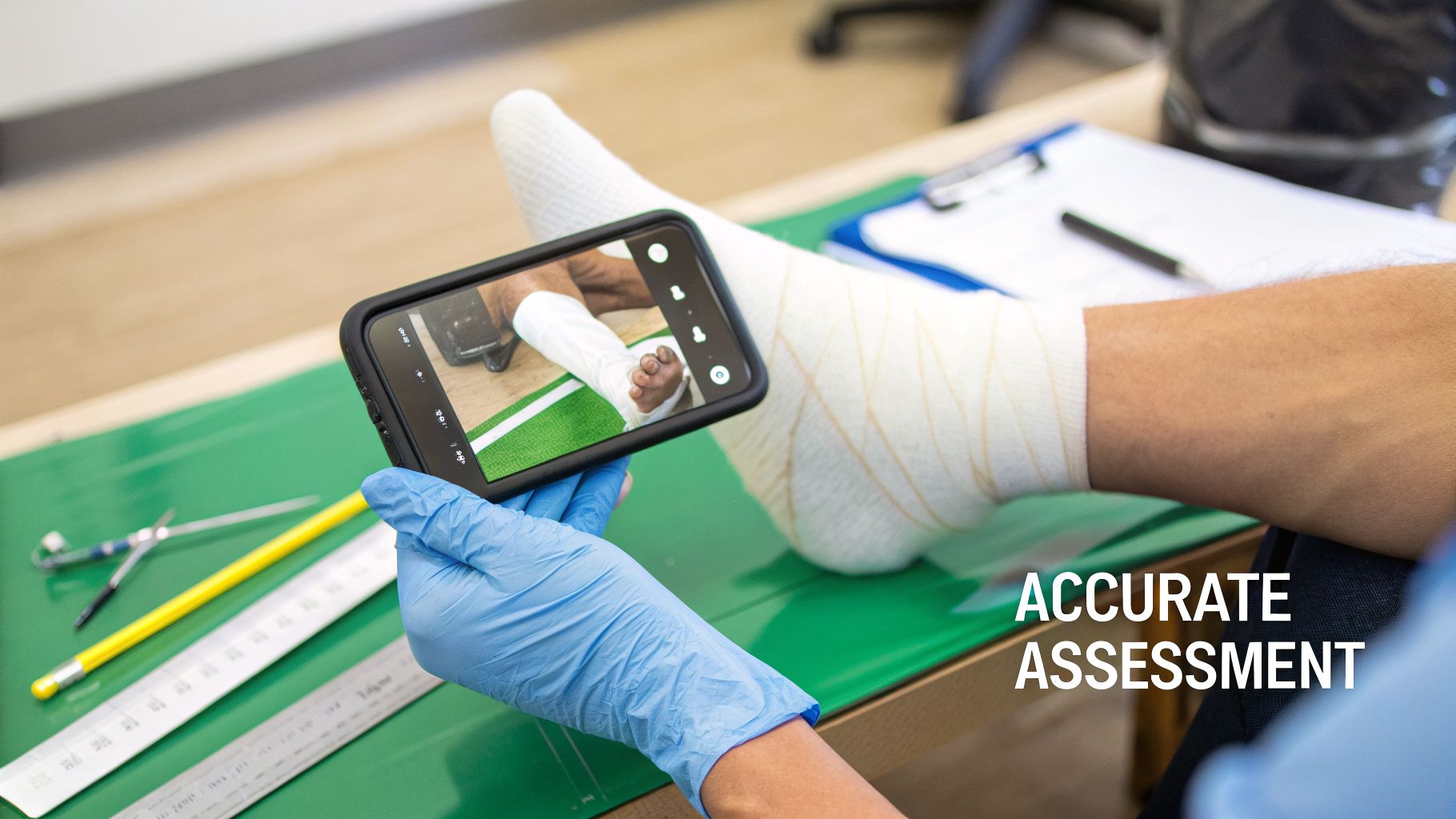
A solid wound assessment is the absolute foundation of good wound care. It's the moment we pause, gather the facts, and lay the groundwork for every decision that follows—from choosing a dressing to knowing when to call in a specialist. This isn't just about taking a quick look. It's about systematically decoding the wound's story.
Without that initial, detailed assessment, our treatment plans are really just educated guesses. We lose the objective data needed to track progress, and our documentation becomes too vague to support reimbursement or ensure seamless care transitions. A standardized, comprehensive assessment is the only way to provide evidence-based care.
Core Components of a Wound Assessment
A truly comprehensive assessment breaks the wound down into its key characteristics. Each piece of information acts as a clue, helping us build a complete clinical picture of the wound’s health and trajectory. This disciplined approach is what separates guesswork from evidence-based care.
Every thorough evaluation should document the following:
- Location: Pinpointing the wound's anatomical position often tells you a lot about its cause, like a pressure injury over the sacrum or a diabetic ulcer on the foot.
- Dimensions: This means getting accurate measurements for length, width, and depth. These numbers are critical for calculating the wound’s surface area and volume to track healing or decline.
- Wound Bed: What does the tissue inside the wound actually look like? Note the percentages of healthy granulation tissue versus unhealthy slough or dead eschar.
- Exudate: Describe the amount, color, and consistency of any drainage. Is it clear and minimal (serous), or thick, green, and heavy (purulent)?
- Periwound Skin: The condition of the skin surrounding the wound is just as important. Look for redness (erythema), swelling (edema), maceration (pruning from moisture), or other signs that trouble is brewing.
Think of a comprehensive assessment as building a detailed case file for the wound. Each piece of information—from precise measurements to the color of the wound bed—serves as objective evidence to track healing, justify interventions, and build a defensible medical record.
This level of detail is more important than ever. Globally, an estimated 2.21 per 1,000 people live with chronic open wounds, many of which are incredibly difficult to heal. In response, the advanced wound care market is set to grow from $16.33 billion in 2025 to $60.68 billion by 2034, largely driven by technologies that help us manage these complex cases. You can explore the top global leaders in the wound care market to see who is driving this innovation.
The Shift from Manual to AI-Powered Methods
For decades, the ruler was the undisputed king of wound measurement. We all learned the "length times width" technique, but we also know its flaws. Two clinicians can measure the same wound and get different numbers, a classic problem called inter-rater variability. Those small discrepancies add up, corrupting our healing data over time.
Today, we have a much better way. AI-powered wound imaging is moving assessment from a subjective art to an objective science. A simple smartphone photo is all it takes for advanced algorithms to automatically and accurately calculate a wound’s dimensions, tissue types, and more. This brings a level of objectivity that was previously unattainable.
Wound Assessment Methods: Manual vs AI-Powered
The differences between the old and new methods are stark. While the ruler is familiar, it simply can't compete with the consistency and detail offered by modern technology.
| Feature | Manual Assessment (Ruler-Based) | AI-Powered Assessment (e.g., Ekagra Health AI) |
|---|---|---|
| Accuracy | Prone to human error and variability. | Highly accurate, sub-millimeter precision. |
| Consistency | Low inter-rater reliability; measurements vary between clinicians. | High consistency; standardized results regardless of who takes the photo. |
| Tissue Analysis | Subjective visual estimate of granulation, slough, etc. | Objective, colorimetric analysis provides precise tissue percentages. |
| Documentation | Manual data entry is time-consuming and risks transcription errors. | Automated; data flows directly into the EHR, saving time and eliminating errors. |
| Healing Trends | Difficult to visualize progress accurately with inconsistent data. | Generates clear, visual charts showing healing or decline over time. |
| Audit Trail | Relies on handwritten notes, which can be difficult to defend. | Creates a secure, time-stamped visual and data record for every assessment. |
Ultimately, adopting AI isn't just about getting better measurements. It's about building an unshakeable data foundation that supports your clinical judgment, proves medical necessity, and holds up under the scrutiny of an audit. If you’re ready to bring this level of precision to your practice, take a look at our guide to modern wound assessment tools for nurses.
Connecting Wound Documentation to Reimbursement
You can provide the best wound care in the world, but if your documentation doesn't tell that story, you won't get paid for it. It’s a frustrating reality in healthcare that excellent clinical work and financial reimbursement are often worlds apart. Your most powerful tool for closing that gap is meticulous, consistent documentation.
Think of your clinical notes as the official record that proves your treatments were justified, demonstrates medical necessity, and gives payers every reason to approve your claim. Without that solid proof, even the most effective care plan can get bogged down in denials and delayed payments. Every entry should paint a clear picture of the patient's condition and the rationale for your interventions.
From Clinical Notes to Clean Claims
The path from seeing a patient to getting a claim paid is littered with potential roadblocks. Incomplete notes, missing wound measurements, and vague descriptions of a treatment's progress are all weak points a payer can easily challenge. This is where modern, end-to-end platforms are completely changing the game.
Imagine a workflow that flows directly from the sound of your voice in the exam room to a fully coded, submitted claim. This “voice-to-claim” approach uses advanced tools to capture the entire patient interaction, finally automating the documentation tasks that used to eat up so much of your day. This shift from manual entry to automated capture is a paradigm shift in medical administration.
Think of it this way: everything said and seen in the exam room becomes the rock-solid proof for your claim. This isn't just about saving time—it's about creating an unbreakable chain of evidence that connects the care you delivered directly to the billing codes you submit.
How AI Automates the Revenue Cycle
So, how does this actually work? Modern platforms use AI to listen, interpret, and organize information as it's happening. This kind of sophisticated assistance provides a few key advantages that directly strengthen your reimbursement cycle.
- Automated Note Generation: Ambient listening technology captures the natural conversation during a patient visit. It then automatically arranges that dialogue into a comprehensive clinical note, making sure no important details are ever missed. The clinician then just needs to review and sign off.
- Accurate Code Suggestions: Based on what it heard and structured, the AI can suggest the most appropriate CPT and ICD codes. This takes the guesswork out of coding and helps you avoid the simple errors that so often lead to denials.
- Integrated Wound Metrics: When you add AI-powered image analysis to the mix, precise wound measurements are automatically pulled into the patient's chart. This gives payers the objective, quantifiable data they need to see and approve a patient's healing progress.
For example, instead of manually typing out wound dimensions and tissue percentages, a clinician just needs to take a photo. The AI analyzes the image, records the data, and places it directly into the note that will support the final claim. You can explore how these pieces fit together by looking at a quality wound care documentation template.
The Financial Impact of Better Documentation
Adopting this integrated approach does more than just make the clinical team's life easier. It has a direct, measurable impact on the financial health of any practice, clinic, or hospital department dealing with open wounds. When every claim is backed by robust and detailed documentation, organizations can expect to see real improvements.
The bottom-line benefits are clear:
- Minimizing Claim Denials: Clean, complete notes leave little room for payers to question medical necessity, which can dramatically reduce your denial rate.
- Accelerating the Revenue Cycle: With fewer denials and less time wasted on manual rework, payments are processed much faster, leading to healthier cash flow.
- Ensuring Financial Stability: A reliable reimbursement process keeps the practice on solid financial ground, freeing you up to focus on providing high-quality care to the patients who depend on you.
Frequently Asked Questions About Open Wounds
Even with a solid grasp of the fundamentals, certain questions about wound care come up time and time again. From the clinic floor to the billing office, these are some of the most common issues that practitioners face. Let’s tackle them head-on.
What Is the Most Important Factor in Preventing an Open Wound from Becoming Chronic?
Hands down, it's early and accurate assessment. You have to get ahead of the problem.
If you can quickly pinpoint and manage the root causes—like poor circulation, hidden infection, or constant pressure—you can steer the wound toward healing. Acting decisively in the initial stages is what stops a wound from getting stuck in that persistent inflammatory phase and turning into a chronic headache. This includes addressing patient comorbidities, optimizing nutrition, and choosing the appropriate local wound care.
How Can I Improve the Accuracy of My Wound Measurements?
Using consistent manual techniques is the bare minimum, but if you're serious about accuracy, it's time to look at digital tools. Think of it like a GPS versus just using your car's odometer; both measure distance, but one is far more precise.
AI-powered imaging systems provide that GPS-level precision. They remove the guesswork and the natural variation that happens between one clinician and the next. More importantly, they create a clear, time-stamped visual record that proves how a wound is—or isn't—progressing.
By shifting from subjective estimates to objective data, you build a stronger foundation for clinical decisions. AI tools provide the consistent, reliable metrics needed to track healing trends accurately and prove the effectiveness of your care plan.
Why Are So Many Wound Care Claims Denied?
It almost always comes down to documentation. Claims are frequently rejected because the paperwork is incomplete, inconsistent, or just doesn't prove medical necessity.
Payers see the same issues repeatedly: wound dimensions that change with each measurement, vague descriptions of the wound bed, or no clear, objective evidence showing that the treatment is actually working. They need to see a detailed, consistent story over time to justify the costs of advanced treatments and ongoing care. Vague phrases like "wound appears better" are red flags; payers need objective data like "wound surface area decreased by 15% over 2 weeks."
At Ekagra Health AI, we designed our platform to solve this exact problem by connecting clinical work directly to the reimbursement process. Our "voice-to-claim" system automates your documentation, suggests the right codes, and embeds objective wound data into every note. This builds an unbreakable audit trail that slashes denial rates and gets your facility paid faster. See how our end-to-end solution can bring clarity and efficiency to your wound care practice by visiting https://ekagrahealth.ai.
