
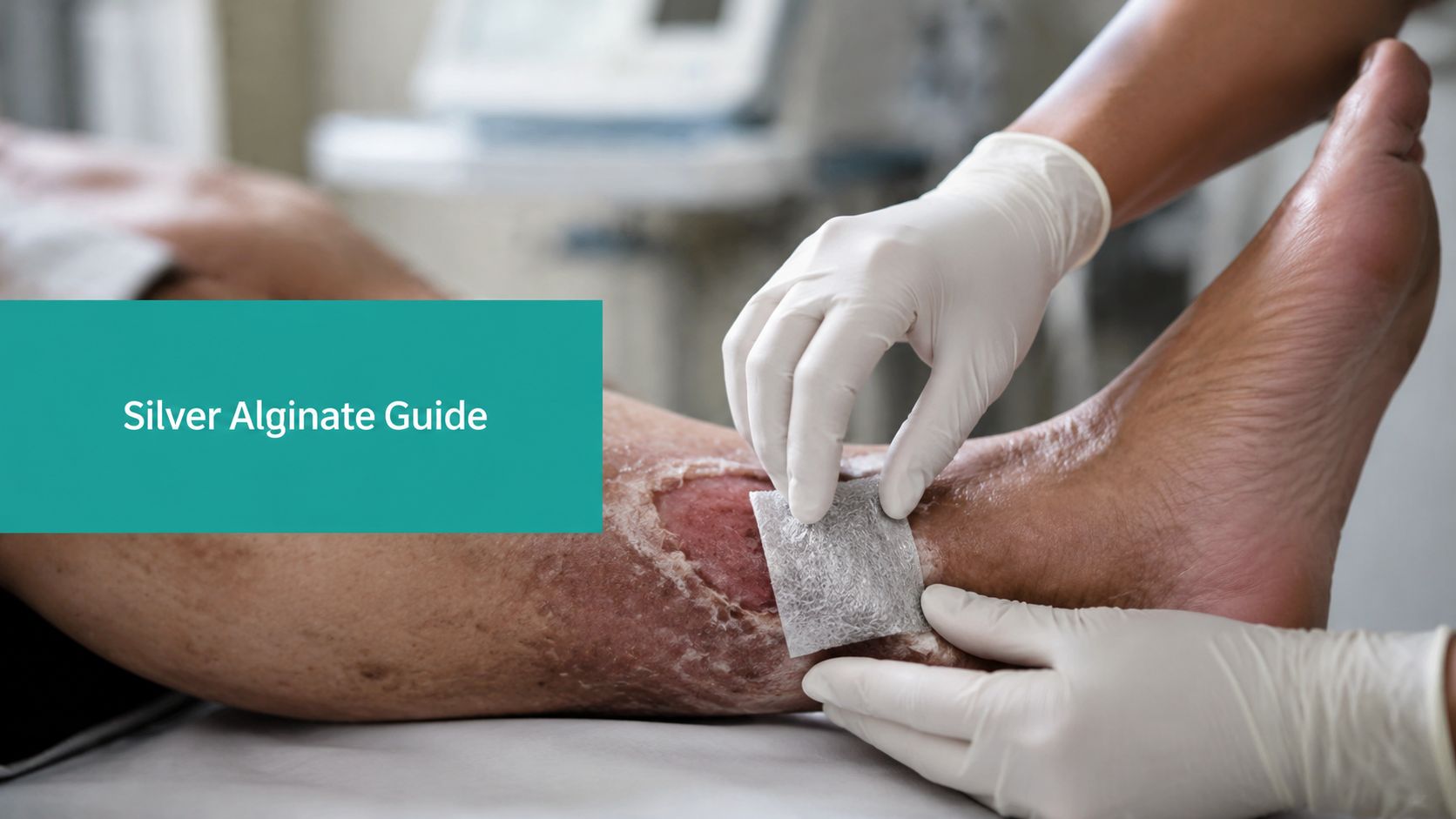
Two weeks into treatment, the wound still looks annoyed. The Wagner 2 plantar ulcer has pale granulation, slough that keeps coming back, moderate serosanguinous drainage, and that faint sweet odor that makes you think about local bioburden. The foam is saturating early, the periwound is whitening at the edges, and every note in the chart says some version of “continue current care.”
That's the moment when an alginate dressing with silver earns its place. Not because silver is somehow stronger or more advanced in the abstract, but because the wound has shifted into a very specific phenotype: wet, stalled, and locally contaminated enough that plain absorption isn't doing the job. The bigger mistake isn't failing to start silver. It's starting it without defining the off-ramp.
In real practice, the full lifecycle matters. The dressing choice, the change interval, the wound narrative, the debridement note if you performed one, and the stop date all affect whether the patient improves and whether the claim survives review. If your team is coordinating dressing changes across clinic, home health, and facility staff, tight communication matters too. A structured workflow for Call Loop for HIPAA compliant messaging can help avoid the usual “wrong dressing, wrong frequency, wrong wound” handoff failures. If you need a broader refresher on matching products to wound type, this wound healing dressings overview is a useful starting point.
Table of Contents
- Choosing the Right Tool for the Job
- The Mechanism Behind Silver Alginate
- Clinical Indications for Silver Alginate
- Correct Application and Removal Technique
- Documenting Medical Necessity for Payers
- Contraindications and Your De-Escalation Strategy
Choosing the Right Tool for the Job
A wet diabetic foot ulcer can fool people. The wound isn't always grossly infected, the patient may not be systemically ill, and the dimensions may be unchanged rather than dramatically worse. But if the secondary dressing is repeatedly saturated, the periwound is macerating, and granulation has stalled, the current plan has already failed.
That's where I reach for silver alginate with a purpose, not as reflex. Alginate dressings came into mainstream use because they absorb exudate and form a gel on contact with wound fluid. Silver was later added for antimicrobial activity in wounds at risk of infection. A review of silver and alginate dressings described laboratory data showing microbiocidal activity for up to 21 days, more than 90% loss of viability in bacteria and yeast after 16 hours of contact, and sustained antibiofilm effect for at least 7 days in testing, including activity against organisms such as Pseudomonas aeruginosa and Candida albicans (review of silver and alginate dressings).
That history matters because it tells you what kind of wound this dressing was built for.
Practical rule: Silver alginate is for the wet wound with local bioburden concerns. It is not a “premium version” of plain absorbent care.
The classic fit is the ulcer with moderate to heavy exudate, local odor, stalled healing, and recurrent slough despite appropriate cleansing, offloading, compression, or pressure relief. In that setting, the dressing is doing two jobs at once. It handles drainage and supports local bioburden control.
The part many clinicians skip is the exit plan. If you start silver because the wound is wet and colonized, you should also know what improvement will let you stop. That's what separates targeted treatment from habit.
The Mechanism Behind Silver Alginate
Two materials, one clinical job
If you don't understand how the dressing works, you'll misuse it.
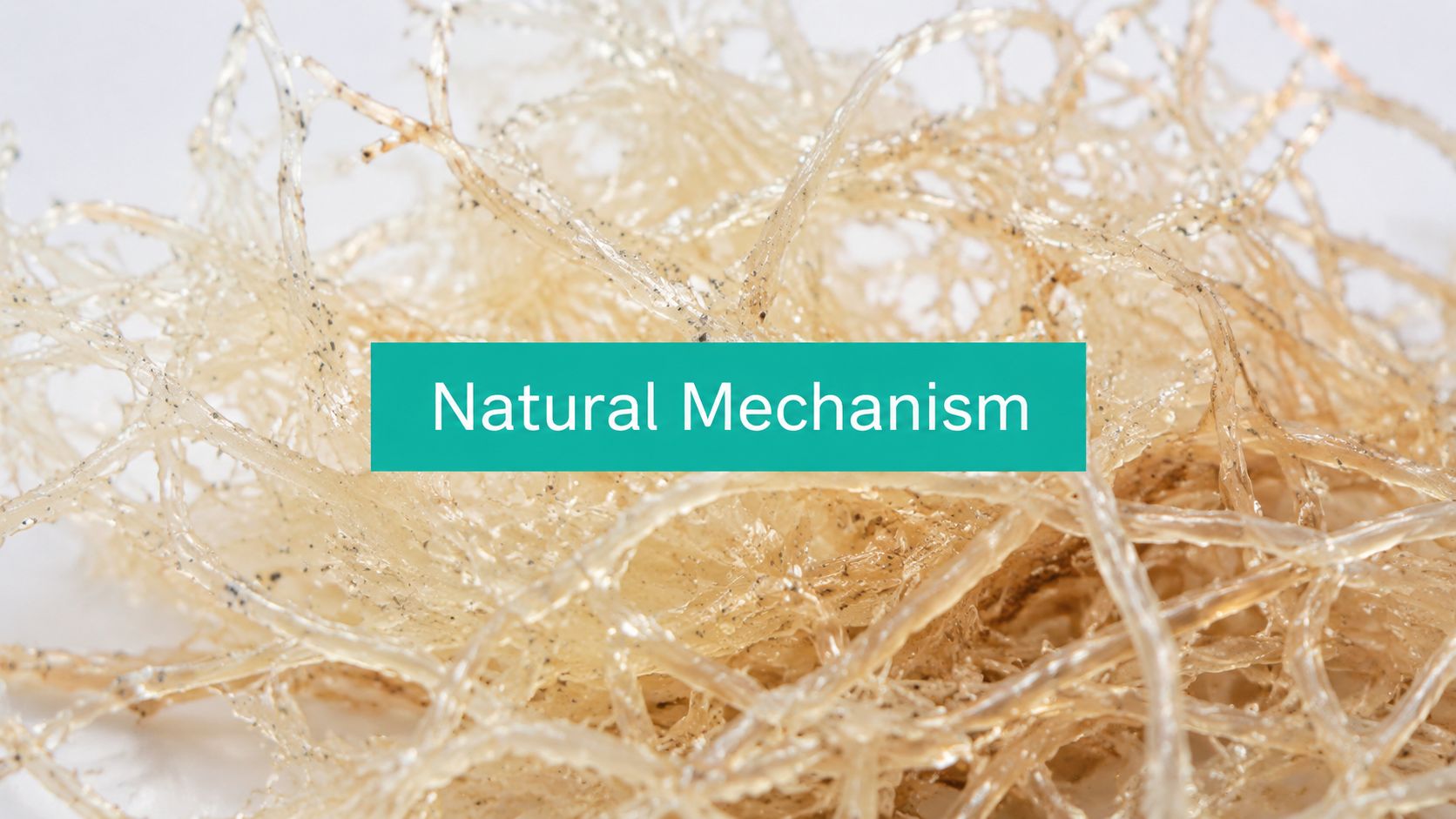
The alginate portion is a seaweed-derived fiber that reacts to wound fluid by forming a gel. That gel improves conformability and fluid handling. In wound-fluid studies summarized in the literature, alginate dressings can absorb up to 20 times their weight in fluid, which is why they're useful in sloughy diabetic foot ulcers and draining venous ulcers when exudate control is a major problem (summary of silver alginate dressing benefits and effects).
The silver portion isn't just sprinkled in for marketing. In a mechanistic review, silver ions were released by ion exchange with sodium and calcium in wound fluid, dissolution of embedded silver particles, and detachment of surface particles. That release can continue for up to 7 days after contact with exudate (mechanistic review of silver ion release).
That combination is why an alginate dressing with silver can keep working between changes in a wound that stays wet.
Why wet wounds respond and dry wounds don't
The key point is activation. The dressing needs wound fluid.
If the wound bed is producing moderate or heavy exudate, the alginate gels, conforms, and creates the environment that lets silver ions release into the wound surface. If the wound is dry or barely draining, the dressing doesn't activate well. Then you're left with poor contact, potential adherence, and an antimicrobial that isn't being delivered in the way the dressing was designed to deliver it.
That's why I teach newer clinicians to stop calling these “silver dressings” as if silver is the whole story. The fluid handling is half the mechanism. The antimicrobial action depends on it.
A lot of wound bed confusion clears up once you frame it that way:
- Wet, sloughy, malodorous wound: often a good fit
- Clean but draining wound: maybe alginate, but not necessarily silver
- Dry wound with stable eschar or scant drainage: poor fit
- Narrow tunnel with minimal output: poor primary choice unless the wound characteristics clearly support it
For a quick refresher on why chronic wounds stall when surface contamination organizes into a persistent layer, this review of biofilm on skin and wound surfaces is useful context.
The dressing doesn't “treat all wounds.” It solves a narrow problem well.
Clinical Indications for Silver Alginate
The phrase “moderate to heavy drainage” is too vague to guide good practice. A lot of bad dressing choices get justified with that phrase.
What the wound has to look like
Silver alginate generally makes sense when the wound has both of these features:
- Enough exudate to activate and justify alginate
- Infection or meaningful risk of local infection
Teaching materials and practical wound guidance are fairly consistent on this point. Silver alginate is generally reserved for wounds with moderate to heavy exudate and either infection or high infection risk. Dressing changes are commonly every 2 to 4 days depending on drainage and strike-through, and the dressing should extend at least 1 to 2 cm beyond the wound edge. The same guidance also says not to place it on dry wounds or over exposed tendon, muscle, bone, or fascia, and it distinguishes silver alginate from plain calcium alginate by indication. Use silver when antimicrobial action is needed, and plain alginate when the wound is clean and mainly needs absorption (practical guidance on silver alginate use).
That distinction matters in common wound types:
- Diabetic foot ulcers: Appropriate for a wet Wagner 2 or Wagner 3 with slough, recurrent bioburden, or local infection risk. Poor fit for a dry, superficial, stable ulcer.
- Venous leg ulcers: Often useful when the leg is weeping, the dressing is striking through, and the wound shows odor or heavy surface contamination.
- Pressure injuries: Works better in Stage 3 or 4 wounds with substantial drainage than in a heel pressure injury with scant output.
- Some burns and post-operative wounds: Reasonable when drainage is high and contamination risk is part of the clinical picture.
For a practical review of how exudate level should drive dressing selection and charting, this guide on drainage from wound assessment is worth keeping handy.
Silver Alginate Decision Guide
| Wound Characteristic | Use Silver Alginate | Consider Alternative |
|---|---|---|
| Moderate to heavy exudate with odor or recurrent slough | Yes. Good match for fluid handling plus local antimicrobial coverage | |
| Clean wound with moderate drainage but no signs of local bioburden concern | Plain alginate is usually the better choice | |
| Dry wound or scant exudate | Avoid silver alginate as primary dressing | |
| Wet Wagner 2 or 3 diabetic foot ulcer with stalled granulation | Yes, if local infection risk or colonization is part of the picture | |
| Venous leg ulcer with copious drainage and strike-through | Yes, especially if local wound bed contamination is limiting progress | |
| Exposed tendon, muscle, bone, or fascia | Choose another primary strategy | |
| Narrow tunnel or undermining with low output | Consider a different approach based on depth and moisture needs | |
| Periwound maceration caused by oversaturation of current dressing | Yes, if the wound is also wet and bioburden control is needed |
The mistake I see most often is using silver alginate because the wound is “not healing,” without documenting the actual phenotype. Stalled healing alone is not the indication. A wet, contaminated wound bed is.
Correct Application and Removal Technique
Technique can make a good dressing fail. Most problems aren't about the product. They're about overpacking, poor secondary coverage, or removing a dried dressing like it's standard gauze.
How to apply it without sabotaging it
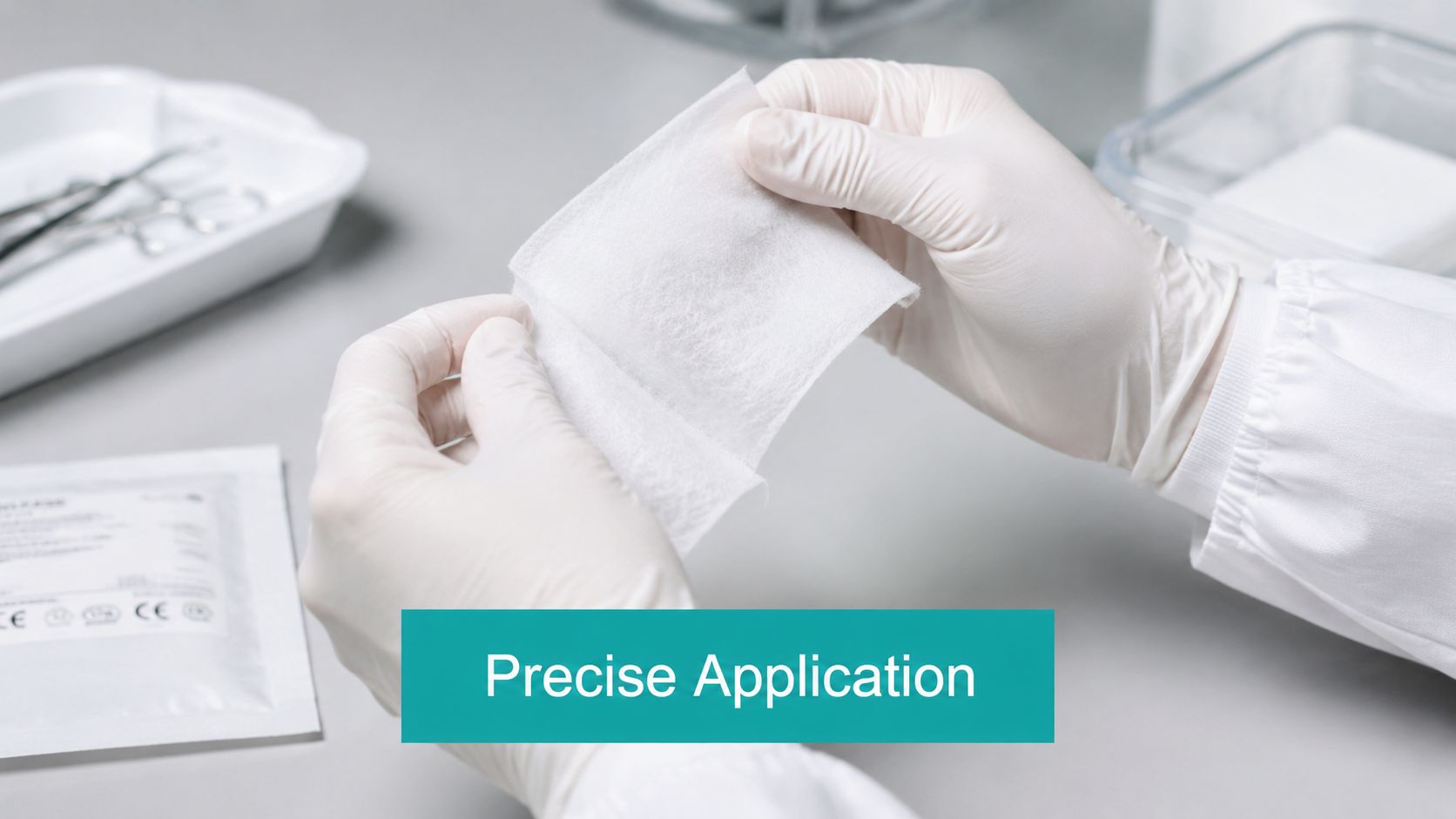
Start with basic wound bed prep. Cleanse the wound, assess the tissue mix, inspect the periwound, and decide whether debridement is needed before you place the new dressing. If you performed debridement, document depth and tissue removed clearly, especially if you're billing codes in the 11042 to 11047 range.
Then apply the dressing to fit the wound, not your habit.
- Match the format to the wound shape. Flat sheet for a surface ulcer. Rope form for a cavity or deeper contour.
- Lay it in gently. If using rope, fluff it into the space. Don't pack tightly. Tight packing creates pressure and can impair the very tissue you're trying to support.
- Cover but don't smother. The dressing should conform to the wound bed. Avoid sloppy overlap onto fragile intact skin if the area is already macerated.
- Use a secondary dressing every time. Foam, gauze, or an absorbent cover is what manages strike-through and secures the primary layer.
If the primary dressing is handling the wound but the secondary dressing is failing, the patient still loses.
Don't pre-moisten the dressing just to make placement easier. Its job is to absorb wound fluid and activate in that environment. Starting with a wet dressing undermines that logic.
How to remove it without undoing progress
Removal should be atraumatic. If the dressing has dried out, irrigate generously with normal saline first so the gel rehydrates and releases more cleanly from the wound surface.
A few practical rules help:
- If drainage is heavy early on: You may need frequent changes at first.
- If the secondary dressing shows strike-through: Change sooner.
- If the periwound is whitening or fragile: Reassess whether your interval is too long, your cover dressing is insufficient, or the wound needs a different moisture plan.
- If fibers appear retained in a dry wound: That's usually a sign the wound wasn't a good fit for alginate in the first place.
I'd rather shorten the change interval than let a heavily draining wound sit under a saturated cover and macerate the edges. The dressing only works when the whole moisture system works.
Documenting Medical Necessity for Payers

The note has to explain why this wound needed silver alginate instead of a simpler absorbent dressing. “Dressing changed” won't get you there. Neither will “continue wound care as ordered.”
What payers need to see in the note
Your documentation should show the chain of medical necessity in plain clinical language:
- The wound type and severity. Include location, etiology, staging or Wagner grade when relevant, and current measurements.
- The exudate profile. Serous, serosanguinous, purulent, thin, thick, increasing, saturating, causing strike-through.
- The local wound concerns. Odor, recurrent slough, stalled granulation, friable tissue, periwound erythema, maceration.
- What failed before. Prior dressing approach, response, and why it's no longer adequate.
- Why silver is being used. Local bioburden control in a wet wound bed. Not vague “better healing.”
- The plan to reassess. Follow-up interval and response markers.
Charting standard: Write the note so an auditor can understand why a more expensive antimicrobial absorbent dressing was reasonable on that date.
If you also performed debridement, connect it to the dressing choice. A selective or excisional debridement note that documents slough or devitalized tissue, followed by a plan for silver alginate because the wound remains moderately draining and locally contaminated, is a coherent story. A debridement code billed with a generic dressing statement is an invitation for scrutiny.
The coding side matters too. Staff who are newer to reimbursement workflows often benefit from a basic overview of how diagnosis, procedure, and supply coding connect. OMOPHub's medical coding guide is a decent plain-language reference for that foundation.
Common denial triggers
Most denials around advanced dressings are predictable.
- No wound response narrative: The chart repeats the same supply use with no change in drainage, tissue quality, odor, or periwound status.
- No indication for silver: The note documents absorption need only, but the supply billed implies antimicrobial necessity.
- No reassessment after initiation: Silver starts and then quietly becomes chronic routine.
- Mismatch between wound and dressing: Dry wound, scant exudate, or exposed deep structures with no explanation.
- Poor frequency logic: Dressing use implies one change pattern while nursing notes suggest another.
In US practice, this also affects more than supply coverage. It influences whether your E/M level is defensible and whether the broader medical decision-making appears thoughtful or templated. Surveyors and auditors tend to look for consistency across clinician notes, nursing documentation, and the actual wound trajectory.
A concise note can still be strong. It just has to be specific.
Contraindications and Your De-Escalation Strategy
The hardest part of using an alginate dressing with silver well is not starting it. It's stopping it on time.
When silver alginate is the wrong choice
Some contraindications are straightforward. Don't use it in a patient with known sensitivity to silver or alginates. Don't put it on a dry wound and expect it to behave like a moisture donor. Don't make it your primary answer for exposed tendon, muscle, bone, or fascia.
There's also a practical failure list that doesn't get taught clearly enough. Consumer-facing education often underexplains where silver alginate performs poorly. Dry wounds don't gel well, retained fibers can stick if the wound bed is too dry, and high-output wounds may still need frequent changes when periwound maceration is a threat. The same commentary also notes that “antimicrobial” doesn't automatically mean better healing across every wound type, and evidence from one post-operative setting doesn't generalize cleanly to chronic ulcers in outpatient, SNF, or home-health practice (discussion of alginate dressing benefits and limitations).
Another issue is duration. Public education often tells clinicians when to start silver, but not when to stop. One review notes risk of silver toxicity with extended use, and practical commentary emphasizes that silver isn't meant for indefinite use. A key gap is documentation of a short, individualized trial followed by de-escalation once exudate and local infection improve.
Building a clear silver off-ramp
This is the part I want newer colleagues to get right from the start. Don't order silver alginate as open-ended routine care. Order it as a time-limited intervention with explicit response markers.
A practical framework looks like this:
- At initiation: Document why the wound qualifies now. Moderate or heavy exudate, signs of local bioburden, stalled progress on the previous regimen.
- At each follow-up: Reassess drainage level, odor, tissue quality, periwound condition, and whether the secondary dressing is still saturating.
- When improved: Step down once the wound is cleaner, less wet, and no longer needs local silver exposure.
Common exit criteria include:
- Lower exudate burden: The wound is no longer moderately or heavily draining.
- Improved local wound environment: Odor resolves, periwound erythema settles, slough burden decreases.
- Healthier wound bed: Granulation predominates and the wound isn't behaving like a locally contaminated wet cavity anymore.
Don't make the payer guess why you stopped silver. Document the improvement and the reason for de-escalation just as clearly as you documented the start.
That note can be simple: the wound had required antimicrobial absorbent coverage because it was wet and locally burdened; now drainage has decreased, the local signs that supported silver have improved, and a non-silver absorptive option is more appropriate. That protects the patient and the claim.
It also protects you from a very common audit problem. Continued use of an antimicrobial dressing after the wound no longer shows the phenotype that justified it in the first place starts to look medically unnecessary. Surveyors notice that. Payers notice it too.
If you're managing these transitions across multiple sites or clinicians, consistency in notes, coding, and supply rationale is where practices usually break down. EkagraHealth AI helps wound teams capture the wound story at the point of care, support accurate CPT and ICD-10 mapping, and document both escalation and de-escalation in a way that's easier to defend when claims are reviewed.
