
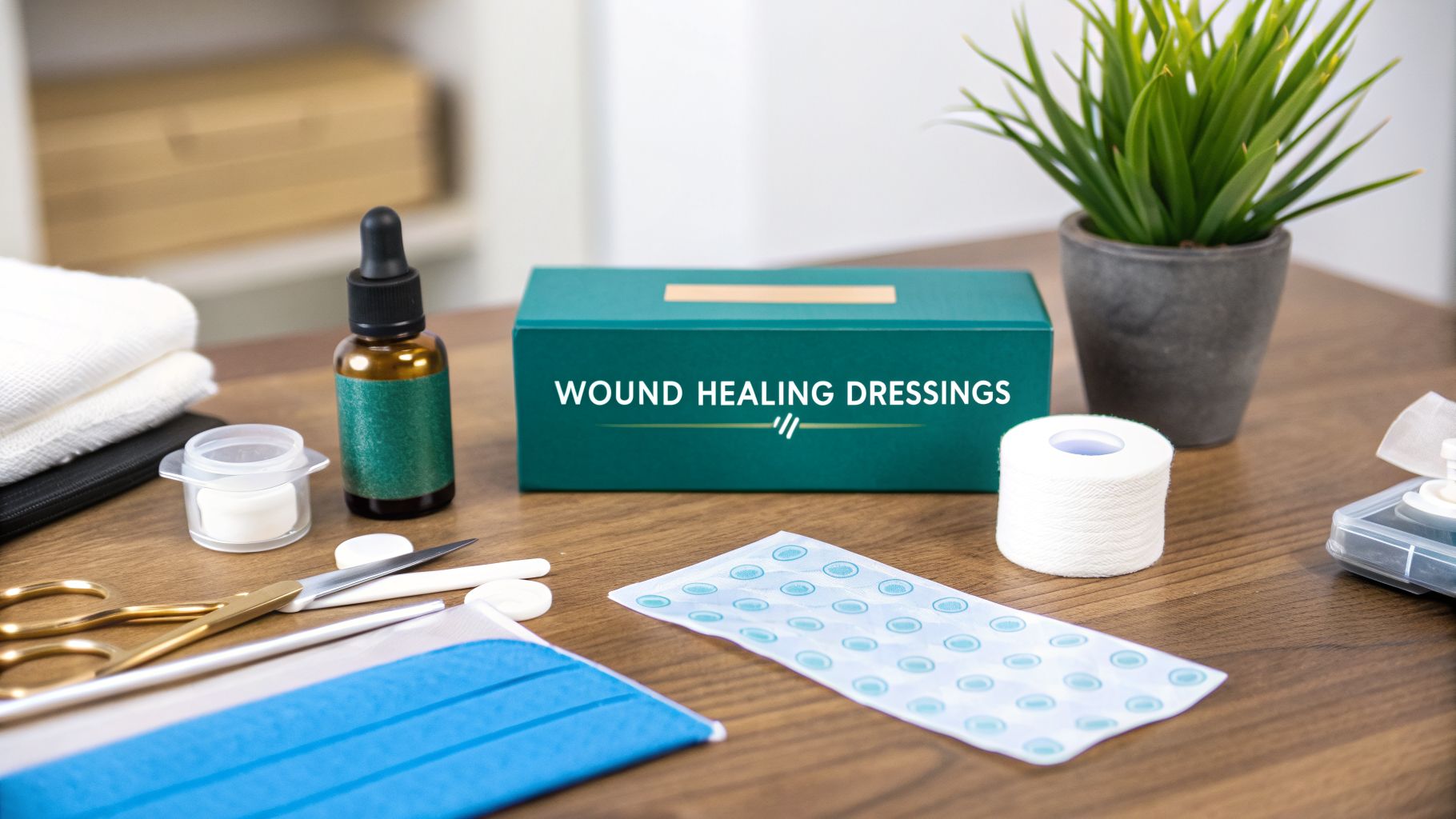
In modern wound care, we’ve moved far beyond the idea of a dressing as just a simple cover. Today’s dressings are active, therapeutic tools we use to intentionally create the ideal environment for healing. They do far more than just protect a wound; they manage moisture, fight off infection, and can even encourage the body to build new tissue. This makes choosing the right dressing one of the most critical decisions we make at the bedside. With the vast array of options available, from foams and hydrocolloids to advanced antimicrobial agents, understanding the underlying science of each dressing type is paramount for clinicians aiming to optimize patient outcomes. This comprehensive guide will explore the mechanisms, applications, and strategic selection of wound healing dressings, providing a practical framework for every stage of the healing process.
Why Modern Wound Dressings Are More Than Just Bandages

The old "dry gauze and tape" approach is a thing of the past. We now understand that a wound bed is a complex and ever-changing biological landscape. The right dressing isn't just a passive barrier—it’s an active partner in the healing process. This paradigm shift recognizes that healing is not a passive event but an active biological cascade that can be modulated and supported through intelligent dressing selection.
Think of it like this: a skilled mechanic doesn't use a hammer for every repair. They have a whole toolbox of specialized instruments. In the same way, clinicians now have an incredible array of wound dressings, each engineered to solve a specific problem. This fundamental shift from passive covering to active intervention is the very foundation of effective wound care. The evolution of material science has given rise to dressings with specific properties, such as controlled moisture vapor transmission rates, bacterial sequestration capabilities, and the ability to donate or absorb moisture, making them powerful agents in wound management.
The Clinical and Financial Impact of Dressing Choice
Getting the dressing choice right has a direct and powerful impact on both patient outcomes and a facility's bottom line. The correct dressing can speed up healing, make the patient more comfortable, and significantly reduce the chances of complications, which ultimately leads to happier patients and fewer costly readmissions. A well-chosen dressing can reduce the frequency of changes, lowering supply costs and nursing time, while improving the patient's quality of life by minimizing pain and discomfort.
On the flip side, the wrong dressing can bring healing to a grinding halt. It might cause maceration (skin breakdown from excessive moisture) or fail to manage the wound's bioburden, opening the door to infection and driving up treatment costs. Every single dressing change is a decision with real consequences. On any given day, clinicians face a host of challenges:
- Managing Exudate: Is the wound producing too much fluid, or is it too dry? Striking the perfect moisture balance is crucial for progress. This balance, known as moist wound healing, is a cornerstone principle, as cellular functions required for repair are optimized in a moist environment.
- Preventing Infection: How can you protect a vulnerable wound from bacteria without using harsh agents that damage healthy, regenerating cells? The goal is to manage the bioburden, not sterilize the wound, which would be detrimental to healthy tissue.
- Promoting Tissue Growth: What kind of material will best support the body’s own efforts to build healthy new granulation tissue? The dressing interface must be non-adherent and non-traumatic to the fragile new cells.
This move toward sophisticated solutions is changing the entire industry. Driven by advancements in wound healing dressings, the global wound care market hit USD 22.37 billion in 2025 and is on track to reach a projected USD 41.22 billion by 2034.
A Framework for Success
This guide is designed to give you a clear, practical framework for making sense of it all. We’re going to look past the brand names to truly understand the mechanisms of action that make each dressing category work. You will learn how to match a dressing's function to the specific physiological needs of a wound at each stage of healing. This knowledge empowers clinicians to make informed, evidence-based decisions rather than relying on habit or outdated protocols.
Mastering this is the key to all evidence-based wound care practices that get real results for patients. The ability to critically assess a wound and pair it with the appropriate dressing technology is what separates novice practitioners from wound care experts.
Better yet, modern technology can now support these clinical judgments. AI-driven tools are available to help clinicians track wound healing with objective data and automate the tedious documentation process. This streamlines everything from bedside assessment to reimbursement, ensuring your expert clinical decisions are backed by solid data. These platforms can analyze wound images for changes in size and tissue type, providing longitudinal data that was previously difficult to capture, thereby enhancing the precision of care.
Matching Dressing Types to Healing Stages

A wound isn't a single, static problem. It’s a living, changing environment that moves through four predictable phases of healing. The secret to effective wound care is choosing a dressing that works with the body's natural process, not against it. Think of yourself as a gardener tending to a delicate plant; your job is to create the perfect conditions for growth at every stage.
From the moment an injury occurs, the body launches a sophisticated healing sequence. As clinicians, our role is to be a good partner in this process, selecting a dressing that supports, protects, and sometimes even speeds things along. Getting this match wrong can stall a wound's progress or, worse, send it backward. Each phase—hemostasis, inflammation, proliferation, and maturation—presents a different set of physiological challenges and, therefore, requires a different therapeutic approach from the chosen dressing.
Putting a super-absorbent dressing on a dry, healing wound is like depriving a plant of water—it halts new growth. On the flip side, using a non-absorbent film on a heavily draining wound is like overwatering; you’ll end up with macerated, waterlogged tissue. Understanding this synergy is the cornerstone of expert wound management. The goal is to maintain a homeostatic balance within the wound microenvironment.
Stage 1 Hemostasis and Stage 2 Inflammation
Right after an injury, the body's emergency response kicks in with hemostasis (stopping the bleed) and inflammation. First, a clot forms a temporary scaffold. Then, the inflammatory phase begins, and the body’s cleanup crew of white blood cells rushes in to clear out bacteria and debris. This phase is characterized by the classic signs of erythema, edema, and pain, all driven by the influx of neutrophils and macrophages.
During this phase, the wound will often look red, swollen, and warm, and it typically produces a fair amount of exudate. Your primary goal here is to manage that drainage and help clear away the junk without harming any healthy tissue. This is the "weeding" phase of our wound garden, where the right dressing helps clear the soil for new growth. The dressing should effectively absorb exudate while facilitating the removal of necrotic tissue and debris.
Dressings that excel at this job include:
- Calcium Alginates: These seaweed-derived dressings are incredibly absorbent. When they meet wound fluid, they transform into a soft gel that traps exudate and debris, making them easy to remove. Their high absorbency helps manage heavy drainage and maintains a moist environment.
- Hydrofibers: A synthetic cousin to alginates, these are also powerhouse absorbers. They gel on contact and lock away excess moisture, which helps prevent maceration of the surrounding skin. Their vertical wicking action is particularly effective at protecting periwound skin.
- Foams: For wounds with moderate to heavy drainage, certain foam dressings are fantastic. They soak up exudate effectively while also providing a soft, protective cushion over the tender, inflamed area, which can reduce pain and trauma.
Stage 3 Proliferation
Once the wound bed is clean and prepped, the proliferation stage starts. This is the "rebuilding" phase. New, oxygen-rich blood vessels form (angiogenesis), and that beautiful, bumpy, red granulation tissue begins to fill in the wound base. This new tissue is incredibly fragile, so protecting it in a moist, clean environment is your top priority. Fibroblasts migrate into the wound, depositing the collagen matrix that will form the new dermal layer.
During proliferation, the right dressing acts like fertilizer and a greenhouse for your wound garden. It needs to maintain a perfectly balanced, moist environment to encourage cells to migrate and build this new tissue. The dressing must be non-adherent to prevent disruption of the delicate, newly formed tissue bed during changes.
A core tenet of modern wound care is that a moist wound heals far better and faster than a dry one. Dressings that nail this balance during proliferation are what keep the healing process moving forward toward closure.
Ideal dressings for the proliferative phase are:
- Hydrocolloids: These are fantastic for creating a moist, insulated environment. They form a gentle gel "bubble" over the wound that supports the body's own debriding process and shields the delicate new tissue from external contaminants.
- Foams: Bordered foams are a great choice here, especially for managing light to moderate exudate. They protect the wound from bumps and friction while keeping the bed moist, and many feature gentle silicone adhesives that are kind to fragile skin.
- Collagen Dressings: Think of these as a scaffold. Collagen provides a structural framework that encourages the body's own cells to migrate and lay down new tissue. They can act as a sacrificial substrate, attracting destructive enzymes and protecting native collagen.
Stage 4 Maturation
The final stage, maturation (or remodeling), is the long haul. This phase can last for a year or more as the body works to strengthen and reorganize the new tissue. The collagen fibers realign, and the scar gradually flattens and fades. The key thing to remember is that this new skin is extremely fragile and vulnerable to friction and shear, achieving only about 80% of its original tensile strength.
At this point, the dressing’s role changes completely. It now acts as a "protective shield" for the delicate, newly closed skin while it builds tensile strength. The goal is simple: protect the area, minimize scarring, and prevent any re-injury. You'll want to use light, gentle, and non-adherent materials that protect against external forces and UV light.
Great options for the maturation phase include:
- Transparent Films: These thin, flexible dressings are perfect for shielding skin from friction. They also let you keep an eye on the healing tissue without removing the dressing, acting as a "second skin."
- Silicone Sheets or Gels: Silicone is the gold standard for scar management. It helps soften and flatten scars by providing a protective, hydrating barrier over the new skin, modulating fibroblast activity to reduce hypertrophic scarring.
- Hydrogels (in sheet form): For sensitive areas, a hydrogel sheet can offer a soothing, cool, protective layer over the fragile new epidermis, providing comfort and protection from minor trauma.
Your Guide to Advanced Wound Dressing Categories

Now that we've connected dressing functions to the body’s own healing rhythm, let's open up the modern clinician's toolkit. This is less about memorizing brand names and more about truly understanding what each dressing category is designed to do. Once you get a feel for how each one works, making the right choice at the bedside becomes second nature. A deep understanding of material science and mechanism of action is crucial.
Great wound care really comes down to choosing the right tool for the job. Just like a master carpenter wouldn't use a sledgehammer to drive a finishing nail, you have to match the dressing to the specific problem you're trying to solve in the wound bed. Let’s break down the most common advanced wound healing dressings and get practical about their uses, strengths, and when to leave them on the shelf. This section will serve as a practical formulary for your clinical practice.
Hydrocolloids: The Moisture-Locking Bubble
Hydrocolloids have been a go-to for years, and for good reason. These dressings are packed with gel-forming particles that soak up wound fluid and create a moist, sealed environment. It's like forming a protective "bubble" over the wound, which locks in moisture and helps the body’s own enzymes dissolve dead tissue—a process we call autolytic debridement. The occlusive nature also provides thermal insulation, which supports cellular activity.
They’re perfect for wounds with light to moderate drainage, like early-stage pressure injuries (Stage 1 or 2) or shallow, partial-thickness wounds. That occlusive seal also insulates the wound, keeping the temperature stable and giving healing a boost. They can be left in place for several days, reducing disturbance to the wound bed.
A word of caution, though: they are the wrong choice for heavily draining or infected wounds. That same seal that holds in moisture can also trap bacteria, and too much fluid underneath can lead to maceration, turning the healthy skin around the wound white and soggy. They are also not recommended for deep cavity wounds or wounds with exposed bone or tendon.
Alginates and Hydrofibers: The Super Absorbers
When you’re staring down a wound that’s producing a ton of fluid, alginates and hydrofibers are your best friends. Derived from brown seaweed, calcium alginates are incredible absorbers. As soon as they touch wound fluid, they swell into a soft gel that fills every nook and cranny of the wound bed, trapping bacteria and debris right inside its fibers. This gelling property ensures a moist environment and facilitates non-traumatic removal.
This gelling action also means dressing changes are much less traumatic—a huge win for patients with painful wounds. Hydrofibers are a synthetic version that works similarly, wicking fluid straight up into the dressing to keep it from spreading sideways and damaging the surrounding skin. This vertical absorption is a key feature that protects the periwound area from maceration.
You'll find yourself reaching for these absorbent dressings for:
- Venous Leg Ulcers: These are notorious for heavy drainage, making an alginate the perfect primary dressing to manage the moisture, often used under compression therapy.
- Tunneling or Undermining Wounds: Alginates and hydrofibers come in a rope form that’s perfect for gently packing deep or irregularly shaped wound cavities, ensuring contact with the entire wound surface.
- Infected Wounds: Because they trap bacteria so effectively, they work well as a primary dressing under a secondary cover when managing infection, helping to reduce the microbial load.
Foams: The Moisture Balancers
Foam dressings are the versatile workhorses of any wound care clinic. They’re built to absorb anything from light to heavy drainage while providing a soft, protective cushion over the wound area. But unlike alginates, which are pure absorption, foams are all about striking a delicate moisture balance. Their structure allows them to absorb exudate while maintaining a moist wound interface.
Foams let water vapor out but keep bacteria from getting in. This allows the wound to "breathe" while staying protected from contamination. They come in all shapes and sizes, from simple non-adherent pads to bordered versions with a gentle silicone adhesive. This makes them useful as either a primary or a secondary dressing. Their versatility makes them suitable for a wide range of wound types and exudate levels.
A bordered foam, for instance, is a fantastic all-in-one solution for a sacral pressure injury. It pads the area to reduce friction, manages moderate drainage, and the silicone border is kind to the fragile skin nearby, allowing for atraumatic removal. This combination of absorption, protection, and gentle adhesion is ideal for difficult-to-dress areas.
Hydrogels: The Moisture Donators
While most dressings absorb fluid, hydrogels do the exact opposite—they give it away. Made of up to 96% water, these dressings are designed to hydrate dry, sloughy, or necrotic wounds. Think of it as giving a thirsty wound a long, cool drink. This softens up dead tissue and kick-starts autolytic debridement by providing the moisture needed for endogenous enzymes to work.
Hydrogels typically come in two forms:
- Amorphous Gels: A tube of gel you can apply directly into the wound, which is great for filling dry, open cavities. This form allows for intimate contact with the wound bed.
- Sheet Gels: A flat sheet of gel that provides a cool, soothing feeling, making it ideal for painful wounds like burns or skin tears. The cooling effect can provide significant pain relief.
The guiding principle here is simple: if a wound bed is dry, healing grinds to a halt. Hydrogels rehydrate the entire area, creating the moist environment cells need to move around and build new tissue.
Since they have zero absorptive ability, hydrogels always need a secondary dressing—like a foam or transparent film—to hold them in place and manage any fluid that’s released. They are definitely not for wounds with moderate to heavy drainage, as they would just make the moisture problem worse by contributing to maceration.
Antimicrobials: Fighting the Bioburden
When a wound is clearly infected or at a high risk of becoming so, it's time to bring in an antimicrobial dressing. These dressings are infused with agents like silver, iodine, or PHMB (polyhexamethylene biguanide) to knock down the bacterial load in the wound bed. Their purpose is to address the "I" (Infection/Inflammation) in the TIME framework.
- Silver Dressings: Silver is a powerful, broad-spectrum antimicrobial that’s effective against a huge range of bacteria, including tough ones like MRSA. Modern dressings release it slowly and steadily to fight infection without harming healthy, healing cells, a concept known as ionic silver delivery.
- Iodine Dressings: Cadexomer iodine is another great option. It releases iodine as it absorbs fluid, making it a good choice for cleaning up the bioburden in heavily draining wounds. Just be mindful of using it with patients who have thyroid disorders or sensitivities to iodine.
The key with antimicrobials is to use them wisely. They are meant for wounds that are clinically infected or have such a high bacterial load that healing has stalled. Using them routinely on clean, healthy wounds is unnecessary, costly, and can contribute to the growing problem of bacterial resistance. A "two-week challenge" is a common strategy to assess their effectiveness before continuing use.
Applying the TIME Framework for Dressing Selection

With so many wound healing dressings on the market, how do you choose the right one? It’s not just about memorizing product specs. You need a reliable system you can use right at the bedside to assess the wound and make a confident choice. This is where the TIME framework proves its worth time and time again. Developed by an international group of wound care experts, it has become a global standard.
TIME is an acronym that stands for Tissue, Infection/Inflammation, Moisture, and Edge. Think of it as your clinical roadmap. It provides a simple, structured checklist to guide your assessment, connecting what you see in the wound directly to the type of dressing it needs at that exact moment. Using this systematic approach ensures a comprehensive evaluation and a more targeted treatment plan.
T is for Tissue Type
First things first, look at the wound bed. What do you see? The type of tissue present will be your biggest clue for your primary dressing choice, as your main goal is to protect healthy tissue and get rid of anything that’s not. This step is about identifying the barriers to healing present in the wound base.
Ask yourself these two simple questions:
- Is the tissue viable and healthy? If you see that classic bumpy, beefy red granulation tissue, your job is to protect it. A gentle foam or hydrocolloid is a great choice here. The goal is to foster continued proliferation without causing trauma.
- Is there non-viable tissue? If you see yellow, stringy slough or hard, black eschar, it has to go. You can use a dressing to help the body break it down through autolytic debridement. A hydrogel, for example, is perfect for adding moisture to soften and lift dry, dead tissue. Sharp debridement may also be necessary for hard eschar.
A core principle in wound care is simple: a wound can't heal if it's not clean. Your tissue assessment tells you if you're in "protection mode" or "cleanup mode."
Remember, a wound is a dynamic environment. A wound that needed a hydrogel to debride it last week might be beautifully granulating today, meaning it's time to switch to a protective foam. That’s why you must perform a TIME assessment at every single dressing change. For a deeper look at identifying tissue types, see this guide on proper wound bed description.
I is for Infection and Inflammation
Next, you're looking for signs of trouble—specifically, infection or out-of-control inflammation. While some inflammation is a normal part of the healing process, it can stall progress if it goes on for too long or if bacteria get the upper hand. Distinguishing between normal inflammation and critical colonization or infection is a key clinical skill.
The crucial question is: Does this wound have a clinical infection?
- Look for the classic signs: Is the patient reporting more pain? Do you see spreading redness (erythema), warmth, swelling, or thick, pus-like drainage? A new or worsening odor is also a major red flag. These are the overt signs of infection.
- If you suspect infection: It’s time to bring in an antimicrobial dressing. Products containing silver are workhorses here, effectively reducing the bacterial load in the wound bed. This intervention targets the high bioburden that is impeding healing.
- If there's no sign of infection: Don't use an antimicrobial. Overusing these dressings is not only costly but also contributes to the growing problem of antimicrobial resistance. Stick with a standard dressing that addresses the wound's other needs. This practice is known as antimicrobial stewardship.
M is for Moisture Balance
Getting the moisture balance right is one of the most critical—and sometimes trickiest—parts of wound care. You want the wound bed to be moist, but never wet. Think of yourself as the wound's moisture manager, either donating hydration to a dry wound or absorbing excess fluid from a wet one. The ideal is a moist environment that supports cellular function without causing maceration.
Your assessment all comes down to the level of exudate:
- Is the wound dry? A dry wound bed is like a construction site with no water—work grinds to a halt because cells can't move. You need to add moisture. A hydrogel is the perfect choice to donate hydration and facilitate cellular migration.
- Is there minimal to moderate drainage? Here, you need a dressing that can handle a little fluid while keeping the wound bed moist. A hydrocolloid or foam works perfectly, absorbing excess fluid while maintaining a moist interface.
- Is the wound draining heavily? Too much moisture will damage the surrounding skin (maceration). You need a super-absorber, like a calcium alginate or hydrofiber, to wick that excess fluid away from the wound and lock it within the dressing.
E is for Edge of the Wound
Finally, examine the edges of the wound and the surrounding (periwound) skin. Are the edges moving inward, or are they stuck? The condition of the edge tells you if the wound is actively closing through epithelialization. The periwound skin provides clues about moisture management and potential trauma.
Here’s what to look for:
- Are the edges advancing? A thin, pink, or silvery line of new epithelial tissue migrating from the sides is a beautiful sight. Your job is to protect it with a gentle dressing that won't stick and disrupt these new cells.
- Are the edges stalled or rolled (epibole)? This is a sign that the healing process has hit a wall. The edges may need to be debrided to get things moving again, as epithelial cells cannot migrate over a non-viable edge.
- Is the periwound skin red, raw, or white and wrinkly (macerated)? This is a direct sign of a moisture problem. You likely need a more absorbent dressing or a barrier cream to protect the healthy skin. This indicates the current dressing strategy is failing.
North America dominates the global wound care market, holding a 46.88% share. Advanced wound healing dressings are a huge part of this, making up 35.09% of the revenue. For facilities, this makes documentation critical, as poor coding can lead to denial rates as high as 18%. This is a major challenge that AI-driven platforms like Ekagra Health AI are solving by accurately translating clinical voice notes into billable codes, which has been shown to reduce administrative work by an incredible 70%. You can learn more about the wound care market on grandviewresearch.com.
Tying Your Documentation Directly to Reimbursement
In the world of wound care, your clinical notes are far more than a simple record—they're the essential link to getting paid. There's a straight line connecting the quality of your documentation for an advanced wound healing dressing and your facility’s ability to actually secure reimbursement. It's a hard truth we all face: if you can't prove medical necessity on paper, the payer isn't going to see it either. This financial reality underscores the importance of meticulous record-keeping.
All too often, claims for advanced dressings get denied. It’s not usually because the clinical choice was wrong, but because the documentation was too weak to back it up. Vague notes, missing measurements, or a simple failure to justify why you chose a specific dressing creates a financial dead end. Payers need to see a clear, evidence-based story that explains why that particular dressing was necessary over a cheaper alternative, like simple gauze.
Painting a Vivid Picture for Payers
To get your claims approved, your documentation has to be precise, objective, and tell a compelling clinical story. Payers are looking for specific data points that prove an advanced dressing was medically necessary. Just writing "changed dressing" is practically an invitation for a denial. Your notes must function as a legal and financial justification for the care provided.
Think of your notes as the payer's eyes on the wound. They need to illustrate the wound's exact condition and the clinical thinking that drove your decisions. This means you have to document:
- Objective Measurements: Every single time, record the wound's length, width, and depth. Serial measurements are essential to demonstrate progress or lack thereof.
- Wound Bed Details: Describe the tissue types using percentages. For example, "Wound bed shows 70% healthy granulation tissue with 30% adherent yellow slough." This quantifies your assessment.
- Exudate Levels: Quantify the drainage—scant, minimal, moderate, or heavy—and note its color and consistency. This justifies the choice of absorptive or hydrating dressings.
- Response to Treatment: This is absolutely critical. You must document how the wound is responding, or failing to respond, to the current plan. A note like, "Wound progress has stalled for two weeks with minimal change in size using a hydrocolloid. Now switching to a silver-impregnated foam to address suspected high bioburden," gives a rock-solid reason for escalating care.
Good documentation isn't just about checking a box for compliance. It's about validating your clinical expertise. It proves your choice of a wound healing dressing was a deliberate, evidence-based decision made to hit a specific therapeutic target.
Closing the Gap Between Documentation and Billing
Let's be honest—the administrative work needed to create audit-proof documentation is a huge time-sink, pulling clinicians away from their patients. Chronic wounds are already a massive clinical challenge, making up 40-50% of all wound care cases and affecting about 6.5 million Americans. The financial side is just as daunting, with these non-healing wounds costing the U.S. healthcare system an estimated USD 28.1 billion every year. For a deeper look at the market forces at play, you can read the full wound care market analysis on gminsights.com.
This is where smart digital health platforms come in, helping to transform your clinical observations directly into structured, billable data. Some of the newer systems can take a clinician's spoken notes and automatically build a perfectly structured chart with the right CPT and ICD-10 codes already mapped. Imagine just dictating your assessment and having the platform generate a complete note that ticks every box for payers. This is how you ensure your documentation consistently backs up your clinical judgment and strengthens your revenue cycle.
These tools can also provide standardized, AI-powered wound measurements right from a photo, making sure progress is tracked with incredible accuracy. This objective data not only informs better, evidence-based dressing changes but also creates an undeniable record of care that dramatically cuts down on denials from vague or incomplete charting. If you need help structuring your notes, our wound care documentation template is a great place to start. When you automate the tedious link between care and reimbursement, you get to focus on what truly matters: healing your patient. This technological integration represents a significant leap forward in optimizing both clinical and operational efficiency.
Common Questions About Wound Dressings
Even with the best selection guides, real-world wound care always throws a few curveballs. Let's tackle some of the questions that pop up most often in the clinic, at the bedside, or during a home visit. This section addresses the practical nuances that arise in daily practice.
How Often Should I Change a Dressing?
There’s no magic number here. How often you change a dressing comes down to two things: the type of dressing you're using and how much the wound is draining. A heavily exuding venous leg ulcer, for instance, might soak through a calcium alginate in less than a day, demanding a daily change to keep things clean and prevent leakage. The goal is to match wear time to exudate levels.
On the flip side, a clean wound with minimal drainage might be perfectly happy under a hydrocolloid for 3-5 days. The manufacturer's instructions are your starting point, but your clinical judgment is the final word. If a dressing is saturated, leaking, or you even think you smell an infection, change it. Don't wait. The goal is a moist healing environment, not a swamp that macerates the healthy skin around the wound. Less frequent changes also mean less disturbance to the healing wound bed.
Can I Layer Different Dressing Types?
Absolutely. In fact, combining dressings is often the smartest way to handle complex wounds. This lets you tackle multiple problems at once. Think of it as a primary dressing that does the heavy lifting directly on the wound bed and a secondary dressing that acts as a supportive partner. This combination therapy allows for a multi-faceted approach to wound bed preparation.
Here’s a classic combo you’ll see all the time:
- You might fill a deep, dry wound cavity with an amorphous hydrogel. Its job is to donate moisture and gently soften up any dead tissue, promoting autolytic debridement.
- Then, you’d cover that with a bordered foam dressing to hold the gel in place, add some protective padding, and absorb any light drainage that might appear. The foam provides a protective, semi-permeable barrier.
The trick is making sure the dressings work as a team. Their functions need to complement each other to get you closer to your healing goal. For example, never place an absorbent dressing over a moisture-donating one if the goal is hydration.
What Are the Biggest Mistakes People Make in Choosing a Dressing?
One of the most common mistakes I see is the "go-to" dressing habit—using the same product for every wound, no matter what it looks like. Another huge pitfall is not reassessing. A wound changes from one visit to the next, and your dressing choice has to evolve with it. A dressing that was appropriate one week may be detrimental the next.
The cardinal sin of dressing selection? Creating a moisture imbalance. Putting a super-absorbent dressing on a dry wound will suck it dry and halt healing in its tracks. Using a moisture-donating one on a heavily draining wound will just create a soupy, macerated mess.
And don't forget the paperwork. If your documentation doesn't clearly explain why a specific advanced dressing is medically necessary, you're setting yourself up for a costly reimbursement denial. Failure to link the dressing choice to the wound assessment is a frequent and avoidable error.
When Should I Use Negative Pressure Wound Therapy Instead?
Negative Pressure Wound Therapy (NPWT) is your next-level option when standard dressings aren't getting the job done, especially for stubborn, chronic wounds. It's a powerful tool for deep diabetic foot ulcers, large open abdominal wounds, or tough Stage 3 and 4 pressure ulcers that need a major healing push. It's considered an advanced modality for complex cases.
NPWT works by applying a controlled vacuum to the wound bed. This constant, gentle pull helps kickstart new tissue growth, pulls away heavy exudate, and physically draws the wound edges closer together through macro- and micro-deformation. It's an advanced therapy, though, and it's not for every wound. It's a definite no-go for wounds with untreated bone infections (osteomyelitis), cancer, or unexplored fistulas. You need the right patient and the right training to make it work. A thorough assessment is required to ensure the patient is an appropriate candidate for this therapy.
Accelerate healing outcomes and your revenue cycle with Ekagra Health AI. Our end-to-end platform automates documentation, coding, and billing from a simple voice note, reducing administrative time by up to 70% so you can focus on patient care. Discover a smarter workflow at Ekagra Health.
