
The body’s response to injury is nothing short of remarkable. It’s a natural, biological process that kicks off the moment tissue is damaged, unfolding in four distinct, coordinated phases to repair the wound. This intricate cascade starts with hemostasis to halt bleeding, moves into inflammation to clear out debris, shifts to proliferation to rebuild, and finishes with remodeling to strengthen the new tissue. Getting a handle on this sequence is the absolute foundation of effective wound care. A deep understanding allows clinicians to not only support the body's natural capabilities but also to intervene precisely when the process falters, ensuring optimal outcomes for every patient.
Decoding the Body's Remarkable Healing Blueprint
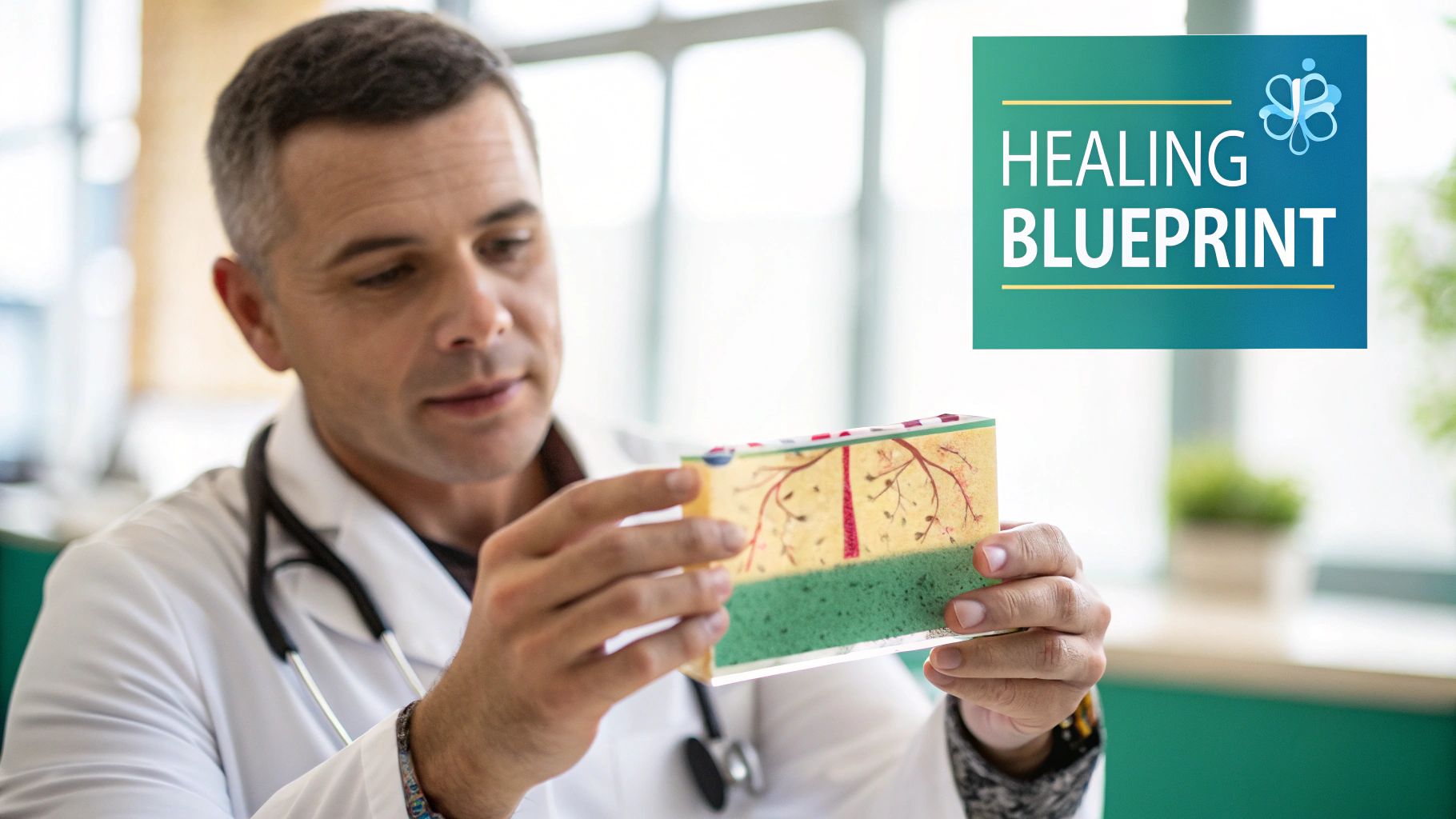
Think of the human body as a sophisticated, self-repairing machine. The instant an injury happens—whether it’s a minor paper cut or a major surgical incision—a complex and beautifully orchestrated recovery process is triggered. This isn't a chaotic scramble; it's a precise biological blueprint, perfected over millennia. Each phase sets the stage for the next, involving a complex interplay of cells, growth factors, and structural proteins. The efficiency of this system is a testament to evolutionary biology, designed to protect the organism from infection and restore structural integrity as quickly as possible.
This guide is all about peeling back the layers of this incredible process. We’ll walk through the four foundational stages, treating them like chapters in the body’s own repair manual. The goal is to give you a clear, comprehensive roadmap of what’s really happening under the skin, from the initial molecular signals to the final scar maturation.
Why This Blueprint Matters
A solid grasp of the wound healing process isn't just clinical trivia. For anyone in healthcare, from nurses and physicians to physical therapists and researchers, it’s the bedrock of good patient care. When you know what should be happening at each stage, you can quickly spot when a wound is stalling or going off track, allowing you to intervene effectively and get the patient back on the road to recovery. This knowledge transforms wound care from a reactive task to a proactive strategy.
The stakes are high. When a wound fails to heal properly, it can lead to chronic conditions, dangerous infections, and a serious hit to a patient's quality of life. Even something as basic as inadequate nutrition is a well-known risk factor for skin breakdown and delayed healing, as the body lacks the essential building blocks for repair.
The fallout directly hits clinical and financial performance:
- Patient Safety: Poor healing is a major contributor to hospital-acquired conditions like pressure injuries and complications from surgical wounds. These issues increase patient morbidity and mortality rates.
- Financial Penalties: These negative outcomes are often tracked by quality measures that can trigger reduced Medicare reimbursement for hospitals. Non-healing wounds represent a significant financial drain due to prolonged treatment needs.
- Operational Strain: Chronic wounds are resource hogs, placing a massive burden on both clinical staff and the broader healthcare system. They require frequent dressing changes, specialist consultations, and sometimes costly advanced therapies.
At its core, mastering the wound healing process means transforming a potential liability into a successful outcome. It requires a blend of biological knowledge and practical application to ensure the body’s natural repair mechanisms have everything they need to succeed.
This foundational knowledge is also the perfect launchpad for adopting modern tools. When we connect the timeless biology of healing with today's technology, we see how AI-driven platforms like Ekagra Health AI are raising the bar. By automating assessments, streamlining documentation, and improving how we track progress, these tools give clinicians the power to manage the healing blueprint with more accuracy and efficiency than ever before. This guide bridges that gap, starting with the fundamentals and building toward a smarter future in wound care.
The Four Critical Stages of Wound Healing
To really get a handle on wound management, you need to appreciate the complex construction project happening right under the skin. The wound healing process isn't just one thing; it's a beautifully coordinated, four-act play of cellular teamwork. Each stage is characterized by the presence of specific cell types and the release of unique biochemical mediators that drive the process forward.
Thinking of it like a construction site helps make sense of it all. An injury is like sudden, unexpected damage to a building. The body immediately sends out specialized crews to stop the immediate crisis, clear the site, rebuild the structure, and finally, reinforce everything for the long haul.
Let's walk through the body's biological blueprint, stage by stage.
Stage 1: Hemostasis – The Emergency Crew
The first boots on the ground belong to the emergency response team. This initial phase, hemostasis, kicks in within seconds of an injury. The goal is simple and urgent: stop the bleeding. Think of it as the body’s rapid-response plumbers arriving to shut off a burst main.
As soon as a blood vessel is broken, it instinctively constricts (vasoconstriction) to reduce blood flow. Tiny cell fragments called platelets swarm the scene, sticking to the exposed collagen in the damaged vessel walls and clumping together to form a temporary plug—a quick, initial patch job. This process is known as platelet aggregation.
This platelet plug then sets off a chain reaction called the coagulation cascade. This complex process involves a series of clotting factors that activate proteins to weave a tough mesh of fibrin. This net traps more platelets and red blood cells, forming a solid, stable clot that effectively seals the breach. The whole emergency response is usually over in a matter of minutes to hours, providing a provisional matrix for the cells that will arrive later.
Stage 2: Inflammation – The Demolition Team
With the leak contained, the next crew arrives to start site prep. This is the inflammation stage, which typically lasts from day one to around day six. Picture this as the demolition and cleanup team, clearing away all the debris to make way for new construction. While often viewed negatively, inflammation is a crucial, controlled process necessary for healing.
You know the classic signs of inflammation: redness, heat, swelling, and pain. These aren’t problems; they’re signals that the body's immune system is doing its job. Blood vessels dilate to increase blood flow, bringing immune cells to the area. The first responders are specialized white blood cells called neutrophils, which flood the area to fight off bacteria and start carting away dead cells and other junk through a process called phagocytosis.
A few days later, a more advanced crew of macrophages takes over. These cells are part foreman, part cleanup crew. They continue to engulf debris and any lingering pathogens, but they also release critical growth factors that give the green light for the rebuilding phase to begin. Macrophages are essential orchestrators, bridging the gap between the clean-up and rebuilding phases.
The inflammatory stage is absolutely essential for a clean start. Attempting to rebuild on a foundation cluttered with bacteria and dead tissue is a recipe for failure, which is why this 'demolition' phase is a non-negotiable step in the wound healing process.
Stage 3: Proliferation – The Rebuilding Phase
Once the site is cleared and prepped, it's time for the builders to get to work. The proliferation stage starts around day three and can last for several weeks. This is when the actual rebuilding happens, as new tissue is constructed from the ground up in three coordinated, overlapping efforts.
- Granulation: Cells called fibroblasts move into the wound and start producing collagen. This forms a new extracellular matrix that acts like scaffolding for the new structure. This new tissue, which looks beefy, red, and bumpy, is called granulation tissue, and seeing it is a great sign of healthy healing. It's rich in new capillaries, giving it its characteristic appearance.
- Angiogenesis: All this construction work needs power and supplies. New blood vessels are built in a process called angiogenesis, branching off from existing ones to ensure the growing tissue gets all the oxygen and nutrients it needs to flourish. Without this new blood supply, the healing process would quickly stall.
- Epithelialization: While granulation tissue fills the wound bed from the bottom up, skin cells (epithelial cells) at the edges start to multiply and creep across the surface, laying down a new top layer of skin to close everything off. This process requires a moist surface to proceed efficiently.
Getting the environment right during this stage is absolutely critical. Knowing which dressings support this delicate process is key. For a deeper dive, our guide on 10 evidence-based wound dressing selection strategies can help you make the right call.
Stage 4: Remodeling – The Finishing Touches
The final stage of the project is remodeling, also known as maturation. This is by far the longest phase, often lasting for a year or even longer after the wound appears closed. This is the finishing crew, focused on refining and strengthening the new structure.
During this phase, the disorganized type III collagen that was laid down quickly during proliferation gets gradually replaced and reorganized into a much stronger, more orderly, cross-linked pattern of type I collagen. This process dramatically increases the tensile strength of the new tissue. While the repaired skin will never be as strong as it was before the injury (uninjured skin is a mix of collagen types), it can regain up to 80% of its original strength over time.
You'll see the scar, which might have started out raised and red, gradually flatten, soften, and fade in color. This slow, meticulous process ensures the repaired area is as tough and functional as possible, bringing the body's incredible construction project to a successful close.
The Four Stages of Wound Healing at a Glance
To tie it all together, this table gives a quick overview of the construction project we just walked through. Each stage has a clear job, a dedicated crew, and a general timeline for acute wounds.
| Stage | Primary Goal | Key Cellular Players | Typical Duration (Acute Wound) |
|---|---|---|---|
| Hemostasis | Stop bleeding | Platelets, Fibrin | Seconds to Hours |
| Inflammation | Clean the wound site | Neutrophils, Macrophages | 1-6 Days |
| Proliferation | Rebuild with new tissue | Fibroblasts, Epithelial Cells | 3 Days to 3 Weeks |
| Remodeling | Strengthen the new tissue | Collagen Fibers | 3 Weeks to 1+ Year |
Understanding this sequence is fundamental for any clinician. When you know what should be happening and when, you can spot when a wound gets stuck—often in the inflammatory stage—and intervene effectively.
When the Healing Process Goes Off Track
Ideally, wound healing is a smooth, predictable cascade from injury to full repair. But what happens when this biological construction project hits a major snag? Sometimes, a wound just stalls out, failing to move through the normal stages and turning a simple repair job into a chronic, nagging problem.
For clinicians, understanding these roadblocks is everything. When healing gets derailed, it's almost never random. There are specific, underlying reasons that throw the body's repair signals into chaos. We can group these challenges into two main buckets: local factors that directly mess with the wound site, and systemic factors that compromise the patient's entire body.
Local Factors Stalling Wound Recovery
Think of local factors as problems happening right at the wound bed—like persistent obstacles on a construction site. They physically get in the way of the cellular crews trying to do their jobs, often trapping the wound in a state of endless inflammation.
Here are the most common local roadblocks:
- Persistent Infection: When bacteria form biofilms and take over, the body's immune system gets stuck on high alert. This chronic inflammatory state prevents the transition to the rebuilding (proliferation) stage.
- Poor Perfusion: Healing tissue is hungry for oxygen and nutrients, all delivered by the bloodstream. If conditions like peripheral artery disease restrict that blood flow (ischemia), the new cells are effectively starved, and the proliferation stage grinds to a halt.
- Unrelieved Pressure: Constant pressure, especially over a bony spot, can literally squeeze blood vessels shut, cutting off circulation. This leads to tissue death (necrosis) and makes any real healing impossible—it's the primary culprit behind pressure injuries.
- Foreign Bodies: Any debris left in the wound—suture material, dirt, or non-viable tissue like slough or eschar—acts as a physical barrier. It also becomes a breeding ground for bacteria, triggering a non-stop inflammatory response that prevents healing.
- Repetitive Trauma: A wound that is repeatedly disturbed, whether through movement or improper dressing changes, can't establish the fragile new tissue needed for proliferation. Each disruption sends it back to square one.
Systemic Issues That Undermine Healing
While local factors disrupt the wound site itself, systemic factors sabotage the patient's overall ability to heal. These issues throw a wrench into the entire "supply chain" and "workforce" needed for the repair project, undermining the process from the inside out.
A wound doesn't heal in isolation. It heals as part of a whole person. Systemic health problems can turn off the very biological switches needed to fuel tissue repair, no matter how well the local wound is managed.
Think of these as company-wide problems that prevent the construction crews from ever getting the resources they need.
Common Systemic Roadblocks:
| Factor | How It Disrupts Healing |
|---|---|
| Diabetes | High blood sugar (hyperglycemia) impairs the function of immune cells like neutrophils and macrophages, makes blood vessels rigid (reducing perfusion), and damages nerves (neuropathy). This stalls out both the inflammatory and proliferative stages. |
| Malnutrition | Without enough protein, vitamins (like C and A), and minerals (like zinc and copper), the body literally lacks the building blocks to create collagen and new cells. The rebuilding phase simply can't happen without the right materials. |
| Vascular Disease | Issues with arteries (arterial insufficiency) or veins (venous insufficiency) mean oxygenated blood can't get to the wound, and waste products can't get out. This creates a toxic, hypoxic environment that's completely hostile to new cell growth. |
| Certain Medications | Steroids, chemotherapy drugs, and even some non-steroidal anti-inflammatory medications (NSAIDs) can suppress the immune response or interfere with cell proliferation, intentionally or not, putting the brakes on the healing cascade. |
| Advanced Age: As we age, our cellular responses slow down, collagen production decreases, and the skin becomes thinner and more fragile. These factors combine to inherently slow down the entire wound healing process. |
For patients with diabetes, the risk of developing a non-healing wound is sky-high. The combination of impaired immunity, poor circulation, and nerve damage creates a perfect storm for chronic ulcers. To dig deeper into this specific challenge, check out our guide on diabetic foot ulcer management.
By learning to spot and address these local and systemic roadblocks, clinicians can shift from just treating a wound to truly managing the patient. This diagnostic mindset is the critical first step toward finding the root cause of delayed healing and building a strategy to get the process back on track.
Advancing Wound Assessment Beyond the Ruler
Knowing the biological stages of healing is one thing, but actually measuring progress in a busy clinic is a whole different ball game. For decades, the go-to tools for wound assessment have been decidedly low-tech: rulers, cotton swabs, and the clinician's own expert eye.
This traditional approach has a few core parts. First, you measure the physical dimensions—length, width, and depth—to get a rough idea of the surface area and volume. Next, you visually identify the tissue types in the wound bed, like healthy red granulation tissue, yellow slough, or black eschar. Finally, you assess the wound drainage, or exudate, noting its amount, color, and consistency.
While these methods have been the bedrock of wound care for years, they're fundamentally subjective and prone to error. The way one clinician measures an irregular wound border can be completely different from a colleague's, creating inconsistent data that makes it tough to know if a wound is actually healing, just stalled out, or getting worse.
The Limits of Manual Measurement
The problem with manual wound assessment isn’t a lack of clinical skill; it's the natural variability of human perception and technique. A simple measurement can be thrown off by the angle of a ruler or how a clinician probes for depth. Two nurses might look at the same wound and describe the percentage of granulation tissue differently, leading to conflicting notes. This inter-rater variability is a well-documented challenge in wound care.
This kind of inconsistency snowballs into bigger problems:
- Inaccurate Healing Trajectories: Without reliable data, you can't accurately chart a wound’s progress over time. It’s all just a best guess, making it difficult to prove the efficacy of a treatment plan.
- Delayed Interventions: If a wound is slowly getting worse, subjective assessments can miss the subtle red flags until the issue becomes a major setback, potentially leading to hospitalization.
- Communication Gaps: When care teams are working off inconsistent notes, it causes confusion and gets in the way of creating a unified treatment plan. Continuity of care suffers.
These issues are more than just a documentation headache. They can directly affect patient outcomes and paint a misleading picture of the quality of care being delivered.
The Shift to Objective, Data-Driven Assessment
Thankfully, technology is finally moving wound care past the ruler. New tools are swapping subjective guesswork for objective, repeatable data, setting a new standard for how we assess wounds. It’s all part of a larger push in healthcare toward more precise, evidence-based practice.
The demand for better tools is fueling major growth. The advanced wound care market was valued at $9.45 billion in 2023 and is expected to hit $16.97 billion by 2032, a growth rate that’s leaving the broader wound care market behind. This jump reflects a clear industry shift toward technologies that get better results, a trend that's especially strong in North America. You can learn more about these advanced wound care market trends in the full market analysis.
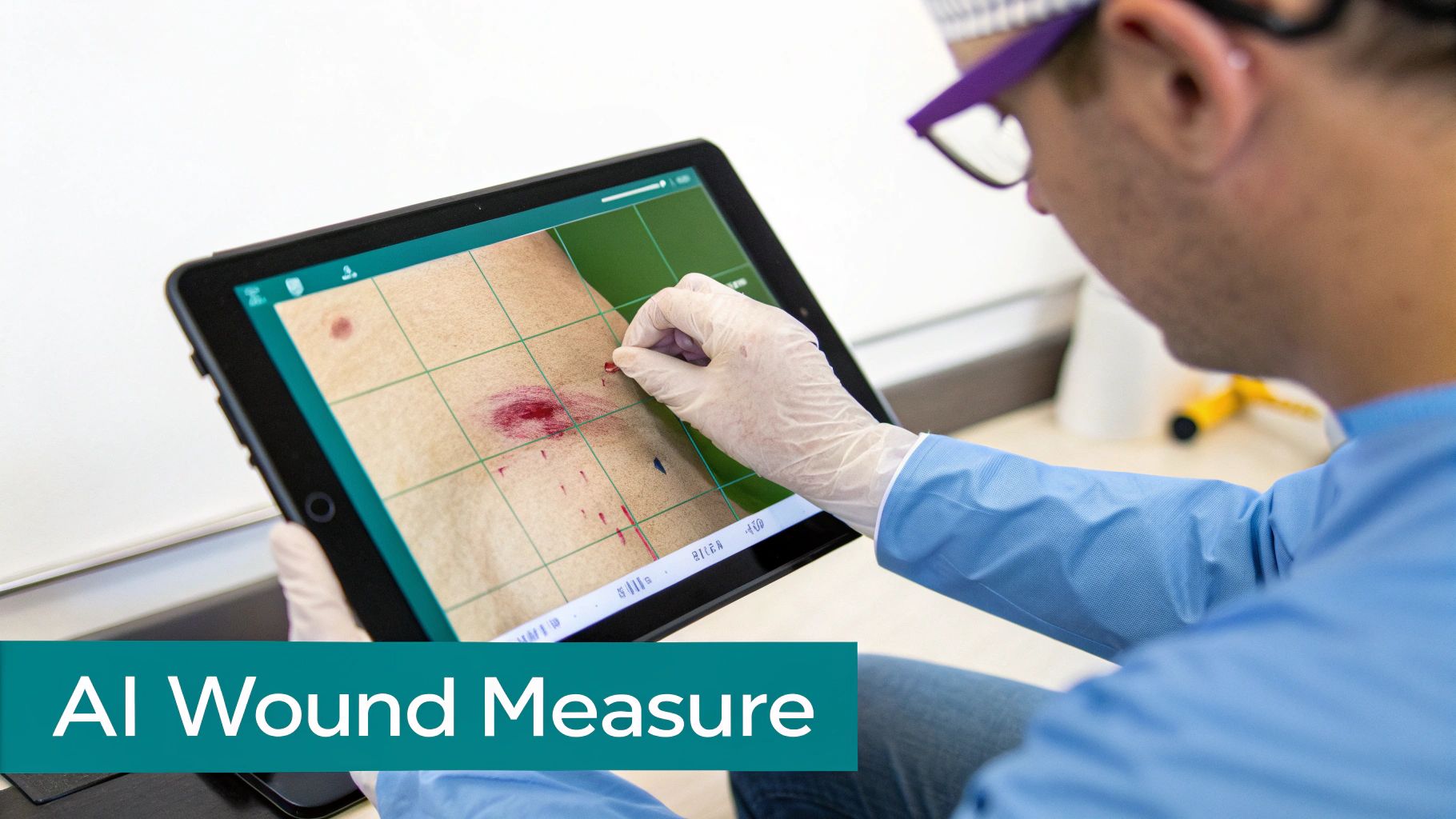
AI-powered platforms are leading this charge. Take Ekagra Health AI, for example. A clinician can now just take a photo of a wound with a smartphone or tablet. In an instant, the AI analyzes the image, delivering precise, automatic measurements and an objective breakdown of tissue types.
By turning a simple photograph into a source of hard data, AI removes the guesswork from wound assessment. It ensures that every measurement is captured the same way, every time, by every member of the care team.
This automated approach gives us a level of consistency that's simply impossible to get by hand. The platform can calculate surface area with precision, track changes down to the millimeter, and give a color-coded analysis of tissue percentages. For clinicians, it means they can finally see a true, data-driven picture of the wound healing process.
Being able to nail down wound characteristics is also key for correct staging, particularly in complex cases. If you're looking for more guidance on this, you might find our visual guide for accurate pressure injury staging helpful.
Ultimately, moving from manual to automated assessment gives clinicians the reliable data they need to make better, faster decisions. It standardizes care across an entire organization and builds a solid foundation of objective evidence to support effective treatments, clear documentation, and most importantly, better patient outcomes.
From Bedside Voice Notes to Paid Claims

Understanding the clinical side of wound healing is one thing. The administrative side? That’s a whole different beast. For most clinicians, the hours spent on documentation feel like a frustrating distraction from what really matters—patient care—and it’s a major driver of burnout.
This administrative slog isn't just about paperwork; it has very real financial consequences. To get paid, you need accurate, detailed documentation that justifies the care provided. It’s the bedrock of correct medical coding and successful reimbursement.
The Daily Coding and Documentation Grind
Every single day, wound care specialists have to translate their clinical work into a language payers understand: a specific set of ICD-10 (diagnosis) and CPT (procedure) codes. It’s anything but straightforward. The level of specificity required is immense, and payers are increasingly scrutinizing claims for medical necessity.
To choose the right codes, your documentation has to back up every service you provided. A note that’s missing specifics—like tissue type, exact wound dimensions, signs of infection, or the patient's response to treatment—can send a claim straight to the denial pile.
This pressure cooker environment means small documentation mistakes can cause big revenue losses and trigger a long, frustrating appeals process. It’s a vicious cycle: treat patients, document everything meticulously, and then fight to get paid for it.
The path from patient care to payment is paved with documentation. If that documentation is incomplete or inaccurate, the entire revenue cycle breaks down, leaving clinicians feeling undervalued and organizations financially strained.
This administrative burden is only growing as the industry expands. Global spending on wound care hit an incredible $148.65 billion in 2022, with projections soaring to $341.22 billion by 2034. These numbers show just how massive the financial scale of wound management is and why getting the operational side right is non-negotiable. You can discover more insights about these market projections on PubMed.
A Modern Workflow from Voice to Claim
This is where end-to-end platforms come in, offering a much-needed operational overhaul. They take a disconnected, clunky process and turn it into one smooth, connected workflow. Instead of treating clinical work and billing as separate jobs, these systems weave them together from the point of care.
Picture this: a clinician is at the bedside, talking through their assessment during a patient visit. With a platform like Ekagra Health AI, those spoken words are the only thing needed to get the entire documentation and billing process started.
This “voice to claim” model is surprisingly simple:
- Ambient Voice Capture: The clinician’s natural conversation and verbalized notes about the wound are captured right then and there.
- AI-Powered Charting: The AI gets to work, processing the audio and instantly turning it into a structured, detailed clinical note. It organizes everything logically, pulling out key details and ensuring all the critical pieces are there.
- Intelligent Code Suggestion: Based on that perfectly charted note, the AI analyzes the findings and suggests the most accurate and specific ICD-10 and CPT codes, ensuring alignment between documentation and billing.
- Clean Claim Generation: With the documentation and codes perfectly aligned, a clean claim is generated, ready to be sent off with a high probability of first-pass acceptance.
This whole sequence shrinks the time from a patient visit to a submitted claim from hours—or even days—down to just a few minutes.
The Clear Return on Investment
By automating the most draining parts of the workflow, this approach delivers an immediate and obvious return. And the benefits go way beyond just saving time.
- Reduced Documentation Time: Clinicians get to put down the keyboard and spend more time with their patients, which directly improves job satisfaction and the quality of care. This helps combat burnout.
- Improved Coding Accuracy: AI-driven suggestions cut down on human error when selecting codes, meaning fewer denials, underpayments, and compliance risks. This leads to a much healthier revenue cycle.
- Accelerated Reimbursement: Clean claims get paid faster. This improves cash flow and slashes the administrative costs tied to fighting denials and chasing down payments.
Ultimately, this is about modernizing the business of wound care. It ensures that the vital work of managing the wound healing process is supported by an administrative backbone that’s just as efficient and reliable.
The Future of Smart Wound Management
So, we've walked through the entire wound healing process from start to finish. It's a truly amazing biological sequence, from the initial clot in hemostasis, through inflammation and proliferation, all the way to the final remodeling of tissue. But understanding that blueprint is only half the battle, especially when local or systemic issues throw a wrench in the works.
This is where the real connection happens—linking that foundational knowledge to the tools we use every day. The evolution of wound care is no longer just about developing better dressings or debridement techniques; it's about fundamentally changing the way we gather, interpret, and act on information.
The jump from holding a ruler up to a wound to getting precise, AI-powered measurements is more than just an upgrade. It’s a fundamental shift. What once felt like a futuristic concept is now becoming a core part of delivering high-quality, scalable wound care. We finally have a way to get the objective, consistent data needed to make sharp clinical calls and actually see if a wound is getting better.
A New Standard of Care
The future isn't about choosing between clinical expertise and smart technology; it's about blending them together. This is exactly what platforms like Ekagra Health AI are built for—to take on the tedious, operational tasks that drain clinicians and lead to burnout. The goal is to free up practitioners to do what they're truly there for: taking care of patients.
By bringing these kinds of tools into your practice, you're not just buying software. You're tackling several critical goals at once:
- Elevate Clinical Outcomes: When a wound stalls, consistent and accurate data means you can spot it sooner and intervene faster. Predictive analytics can even flag at-risk wounds before they become chronic.
- Boost Operational Efficiency: Think of the hours spent on documentation and coding. Automating that work frees up a massive amount of time and smoothes out the entire workflow, allowing staff to manage larger patient loads more effectively.
- Strengthen Financial Health: Fewer claim denials and faster reimbursement cycles mean a much more stable bottom line. Accurate data also provides the evidence needed to justify the use of advanced therapies.
Let's be clear: the point isn't to replace clinicians with technology. It's about augmenting their skills with the speed and accuracy of AI to finally solve some of the most persistent problems in wound care.
This is how healthcare professionals can rise above the increasing complexities of the field. Adopting these tools isn't just a tech decision; it's a strategic move toward providing care that is more effective, more efficient, and backed by solid evidence. The future of wound management is already here, built on a deep understanding of biology and amplified by intelligent automation.
Common Questions About the Wound Healing Process
When you're in the thick of clinical work, understanding the wound healing process isn't just academic—it's practical. Knowing the difference between a wound that's on the right track and one that's stalled is everything. Here are some straightforward answers to the questions we hear most often.
How Can You Tell If a Wound Is Healing Properly?
A healing wound gives you clear signs it's making progress. You should be able to see and measure a consistent reduction in its size over time. The wound bed itself will start to fill in with that healthy, beefy red granulation tissue, which has a classic bumpy texture.
You'll also notice the amount of drainage (exudate) tapering off. Look at the perimeter—the edges should appear attached and you'll see new skin starting to creep across the surface. This is epithelialization in action. On the flip side, a stalled wound just… sits there. You'll see a lack of these changes, maybe more pain, a foul odor, or persistent junk like yellow slough or black eschar.
What Is the Difference Between an Acute and a Chronic Wound?
The real difference boils down to time and underlying pathology. An acute wound, like a surgical incision, plays by the rules. It moves predictably through the four stages of healing and is usually closed up within a few weeks.
A chronic wound is the one that gets stuck. It has failed to progress and is often trapped in the inflammatory phase for more than three months. This isn't random; there's almost always an underlying culprit. Things like poor circulation, a lingering infection, unrelieved pressure, or a systemic disease are roadblocks that keep the body's repair crew from doing its job.
How Does AI Technology Improve Wound Documentation Accuracy?
This is where things get interesting. AI brings objectivity to a process that can be frustratingly subjective. It tackles the two biggest sources of inconsistency head-on.
- Objective Measurements: Instead of relying on rulers and estimations that vary from clinician to clinician, AI uses computer vision. It can take a simple photo and calculate the exact area and depth, giving you consistent data every single time.
- Structured Charting: AI can also use Natural Language Processing (NLP) to turn a clinician's spoken notes directly into a perfectly structured, comprehensive chart entry. This ensures that all required data points are captured for both clinical and billing purposes.
The result is a massive reduction in manual data entry mistakes and forgotten details. It standardizes documentation across the entire team, which is non-negotiable for tracking progress and getting claims paid.
Can a Wound Heal Without a Scab?
Absolutely. In fact, it often heals better without one. This is the whole idea behind moist wound healing. The old wisdom was to "let it air out," but we now know that's counterproductive. A dry environment kills the surface cells and impedes the migration of new ones.
Modern dressings are designed to maintain a moist environment over the wound bed. This keeps cells hydrated and allows new epithelial cells to slide across the wound surface easily and quickly. Not only does this speed up the wound healing process, but it can also lead to much less scarring than letting a wound form a thick, dry scab that actually blocks new cell growth and can trap bacteria underneath.
Ready to see what this looks like in practice? Find out how Ekagra Health AI uses voice commands and intelligent automation to cut down documentation time, nail down accuracy, and speed up reimbursement. Discover Ekagra Health AI and bring smarter wound management to your facility.
