
Accurate, consistent, and comprehensive wound care documentation is more than just a regulatory hurdle. It's the cornerstone of effective patient care, clear team communication, and successful reimbursement. Yet, clinicians often find themselves wrestling with cumbersome forms and repetitive data entry, pulling focus away from the patient. This guide cuts through the complexity by providing detailed wound care documentation examples and actionable strategies to streamline your charting process.
We will break down what, why, and how to document effectively across various clinical scenarios. This is not just a collection of forms; it is a strategic guide to transforming your charting from a time-consuming chore into a powerful clinical tool. By exploring specific examples, you will learn how to justify clinical decisions, demonstrate medical necessity, and create a clear, defensible record of care that supports both patient outcomes and your facility's financial health.
This in-depth resource is designed as long-form pillar content, exceeding 2,000 words to provide the comprehensive detail required for such a critical topic. You will gain access to replicable methods and expert analysis for each example, helping you standardize your approach and master your documentation. Let’s dive into the examples that will bring clarity and efficiency to your practice.
1. AAWC (American Academy of Wound Care) Standardized Wound Assessment Form
The American Academy of Wound Care (AAWC) Standardized Wound Assessment Form is a comprehensive, evidence-based template designed to standardize the documentation process. It serves as a foundational tool, ensuring that all critical data points of a wound assessment are captured consistently and accurately. This form guides clinicians through a systematic evaluation, covering location, size, depth, tissue types, exudate characteristics, periwound skin condition, and signs of infection. It also prompts documentation of pain, wound edges, and any undermining or tunneling present.
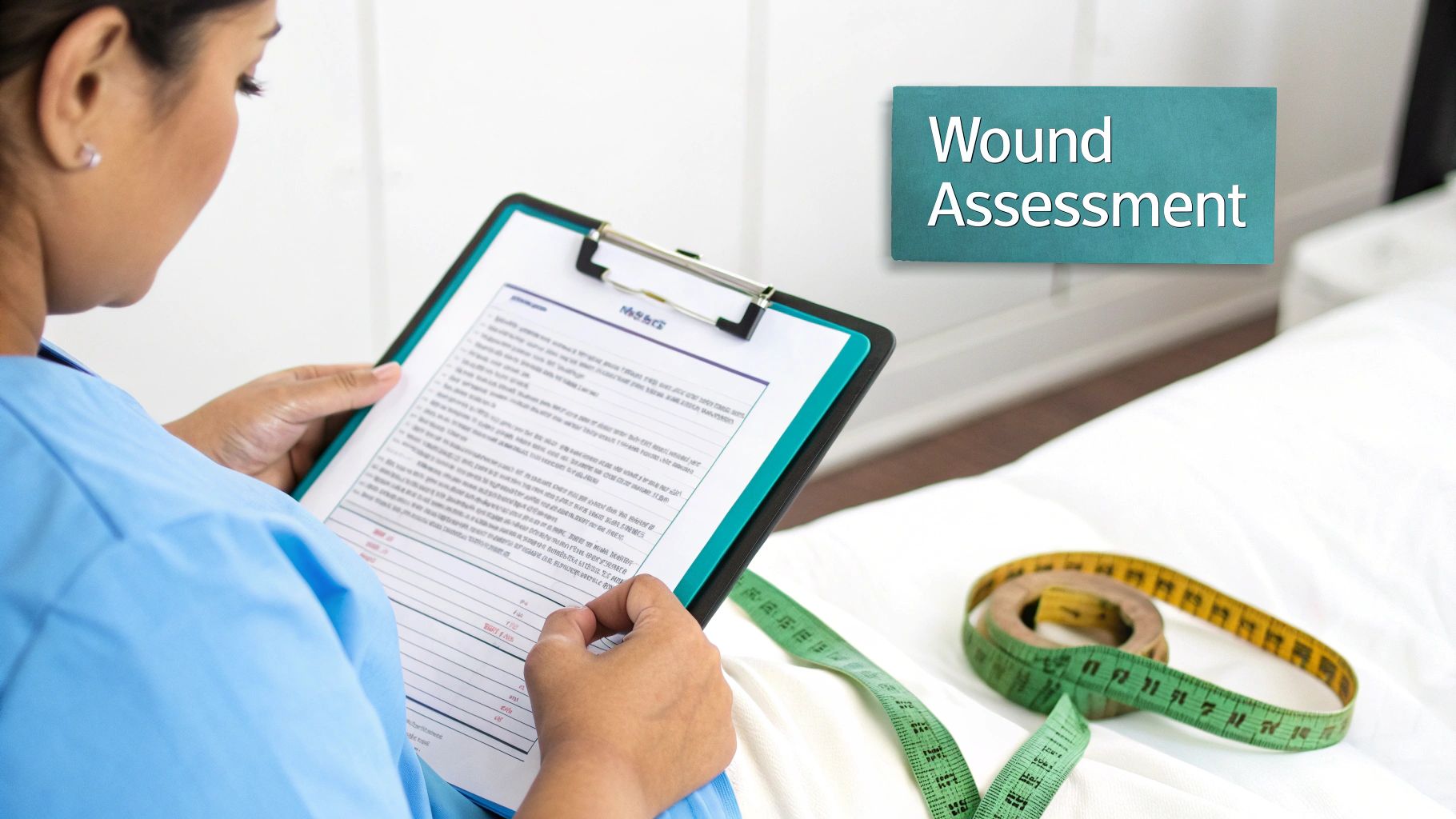
By providing a structured framework, the AAWC form mitigates variability in documentation among different practitioners and settings. This standardization is crucial for tracking wound healing over time, supporting clinical decision-making, facilitating interdisciplinary communication, and ensuring regulatory compliance. It is a cornerstone for creating high-quality wound care documentation examples that can stand up to audits and justify treatment plans. The form's emphasis on objective measurements and detailed descriptions helps create a clear, longitudinal record that is invaluable for both clinical management and legal defensibility.
Why This Example is a Gold Standard
The AAWC form’s strength lies in its meticulous, all-encompassing structure. It prompts clinicians to document details that might otherwise be overlooked, ensuring a complete clinical picture.
- Consistency Across Settings: Whether in a hospital, outpatient clinic, or home health agency, the form ensures everyone speaks the same language. A major wound care center can use the AAWC template as its baseline for all patient charts, establishing a uniform standard from the start. This interoperability is vital when patients transition between different levels of care, preventing information gaps.
- Data-Driven Decisions: The detailed data collected, such as precise measurements and tissue type percentages, allows for objective tracking of healing or deterioration. This data is vital for adjusting care plans and demonstrating medical necessity. For instance, documenting "70% granulation tissue, 30% slough" provides a quantifiable baseline that can be compared against future assessments.
- Regulatory and Billing Support: The form’s comprehensive nature directly supports accurate CPT and ICD-10 coding. Documenting specific wound characteristics (e.g., depth, tissue type) helps justify the level of service billed and the diagnosis codes used. For more information on the variety of tools available, you can explore these detailed wound assessment tools for nurses.
Actionable Takeaways & Implementation Tips
Integrating the AAWC framework into your practice requires a strategic approach. Here are actionable steps to take:
- Standardize Measurement Techniques: Train all staff to use the same tools (e.g., disposable measuring tapes) and methods (e.g., length x width x depth in centimeters) for every assessment to ensure data integrity. Document length as the longest head-to-toe measurement and width as the longest side-to-side measurement, regardless of the wound's shape.
- Incorporate Visual Documentation: Supplement the form with standardized photographs. Use consistent lighting, positioning, and a measurement guide in each photo to create a reliable visual timeline of the wound's progress. Photos should be taken at the same angle during each assessment to provide a true comparison.
- Link to Coding: Map fields on the AAWC form directly to corresponding ICD-10 codes for wound types, locations, and severity. This streamlines the billing process and reduces coding errors. For example, the "tissue type" field can help determine if a debridement code is appropriate.
- EHR Integration: Work with your IT department or EHR vendor to build the AAWC standards directly into your electronic health record’s wound care module. This creates an efficient, guided documentation workflow that reduces manual data entry and improves compliance with mandatory fields and structured data.
2. Braden Scale Pressure Injury Risk Assessment Template
The Braden Scale is a cornerstone of preventative wound care, serving as a validated, evidence-based tool to systematically identify patients at risk for developing pressure injuries. This standardized template guides clinicians in scoring six key factors: sensory perception, moisture, activity, mobility, nutrition, and friction/shear. The resulting score, typically ranging from 6 to 23, allows for the stratification of patients into risk categories (e.g., at risk, moderate risk, high risk), enabling targeted, proactive interventions.

Widespread adoption in hospitals, skilled nursing facilities (SNFs), and home health agencies makes the Braden Scale a critical component of regulatory compliance and quality care. By translating a patient's condition into a quantifiable score, it provides a clear, objective basis for care planning. This documentation is essential for justifying preventative measures, supporting clinical judgment, and creating robust wound care documentation examples that demonstrate a proactive approach to patient safety. The score acts as a communication tool, quickly conveying a patient's vulnerability to the entire care team.
Why This Example is a Gold Standard
The Braden Scale's power lies in its simplicity and predictive validity. It transforms a complex clinical judgment into a standardized, communicable score that drives preventative action before a wound ever develops.
- Proactive and Preventative Focus: Unlike assessment tools for existing wounds, the Braden Scale is purely preventative. An SNF, for example, can mandate a Braden Scale assessment on admission and weekly thereafter, creating a system that automatically triggers interventions like specialized mattresses or turning schedules for high-risk residents. This proactive approach is key to reducing facility-acquired pressure injuries.
- Justifies Resource Allocation: A low Braden score provides objective evidence to justify the medical necessity of preventative equipment, such as low-air-loss mattresses or nutritional supplements, which is crucial for reimbursement and resource management. This documentation serves as proof that the facility is providing the appropriate level of care based on assessed risk.
- Regulatory Compliance: For agencies regulated by entities like the Centers for Medicare & Medicaid Services (CMS), consistent Braden Scale documentation is a key indicator of quality care and adherence to pressure injury prevention protocols. Auditors frequently review these scores to ensure that at-risk patients are identified and protected.
Actionable Takeaways & Implementation Tips
Effectively integrating the Braden Scale into your documentation workflow requires consistency and a clear link between scores and actions.
- Establish a Scoring Cadence: Implement a clear policy for when the Braden Scale is performed: at admission, upon any significant change in patient status (e.g., surgery, decline in mobility), and at regular intervals (e.g., weekly in SNFs, daily in ICUs). This ensures the risk assessment remains current and relevant.
- Train for Inter-Rater Reliability: Conduct regular training sessions with nursing staff to ensure everyone interprets and scores the six categories consistently. Use case studies and competency checks to minimize variability and improve data accuracy. Consistent scoring is essential for the tool's validity.
- Create Action-Oriented Care Plans: Link specific Braden scores to a tiered intervention protocol. For example, a score of 12-14 might trigger a skin protection protocol and a two-hour turning schedule, while a score below 9 might automatically require a specialty bed and a nutrition consult. This closes the loop between assessment and action.
- Document Interventions for Each Risk Factor: Don't just document the final score. Note the interventions implemented for each identified risk factor. If a patient scores low on "Mobility," document the specific turning schedule or assistive devices provided to mitigate that specific risk. This creates a more defensible and complete record.
3. PUSH (Pressure Ulcer Scale for Healing) Tool Documentation Template
The PUSH Tool is a validated, rapid assessment instrument specifically designed to monitor the healing progress of pressure ulcers over time. Developed and popularized by the National Pressure Ulcer Advisory Panel (NPUAP), this tool uses a 0-17 point scale to numerically score a wound based on three key variables: surface area, exudate amount, and tissue type. Unlike comprehensive diagnostic assessments, the PUSH Tool's primary function is to track the healing trajectory and the effectiveness of treatment interventions.

This focus on tracking outcomes makes it ideal for serial assessments where documenting healing is critical for clinical decisions and reimbursement. A decreasing score over time provides objective, quantifiable evidence that the wound is improving. This simple yet powerful metric transforms subjective observations into hard data, creating powerful wound care documentation examples that clearly communicate progress to payers, providers, and other stakeholders. Its simplicity also makes it efficient to use in busy clinical settings.
Why This Example is a Gold Standard
The PUSH Tool’s strength is its simplicity and its focus on quantifying healing. It provides an objective, data-driven method to demonstrate treatment efficacy in a way that is universally understood and easily tracked.
- Objective Healing Trajectory: The numerical score removes ambiguity. A skilled nursing facility can document weekly PUSH scores as part of its pressure injury management protocol, showing a clear trend of improvement that supports the care plan. This data is far more compelling than a subjective note like "wound appears better."
- Justifies Continued Care: A declining PUSH score is compelling evidence for payers. Home health agencies frequently use PUSH scores in their documentation to justify the need for continued skilled nursing visits and specialized wound care supplies. It demonstrates that the current plan of care is effective and should be continued.
- Guides Clinical Decisions: The tool helps clinicians quickly assess if a treatment is working. A hospital wound care team can track PUSH scores on a complex pressure injury and use a stalled or increasing score as a trigger to re-evaluate and modify the treatment protocol, ensuring timely adjustments to care.
Actionable Takeaways & Implementation Tips
Integrating the PUSH Tool into your documentation workflow can significantly enhance your ability to track and justify care.
- Establish a Consistent Schedule: Implement a clear policy for assessment frequency. For instance, document PUSH scores weekly in acute or long-term care settings and at every visit in a home health or outpatient clinic setting. Consistency is key to creating a meaningful trend line.
- Standardize Measurement Techniques: Ensure all clinical staff use the same method for calculating the wound area (length x width in cm²) and the same definitions for exudate amount and tissue types to maintain scoring consistency. This improves the reliability of the data over time.
- Create Visual Progress Reports: Document PUSH scores in a trend format, ideally with a simple graph in the patient’s chart. This visual representation makes it easy for auditors, payers, and interdisciplinary team members to see the healing progress at a glance.
- Link Scores to Interventions: In your clinical notes, explicitly connect an improving PUSH score to the specific treatments being provided. For example: "Patient's sacral pressure injury PUSH score has decreased from 12 to 9 over two weeks following initiation of silver alginate dressing and pressure redistribution mattress."
4. WOCN (Wound Ostomy Continence Nurses) Society Comprehensive Wound Documentation Standard
Developed by the Wound, Ostomy, and Continence Nurses (WOCN) Society, this comprehensive documentation standard integrates assessment, intervention, and outcome components into a cohesive framework. It is built upon the nursing process, guiding clinicians through a systematic evaluation that covers wound etiology, classification, measurements, surrounding skin status, pain levels, and treatment plans. This standard is widely adopted in settings where interprofessional teams demand standardized documentation for care coordination.
The WOCN standard excels by creating a clear narrative of the patient's wound journey, from initial assessment to healing outcomes. Its systematic structure ensures that documentation not only meets regulatory requirements but also supports clinical reasoning and justifies the plan of care. This makes it an essential tool for generating high-quality wound care documentation examples that facilitate clear communication and demonstrate medical necessity across diverse healthcare environments. It emphasizes a holistic approach, considering not just the wound but the entire patient.
Why This Example is a Gold Standard
The WOCN standard's power comes from its holistic, process-oriented approach. It moves beyond a simple checklist to encourage critical thinking about the entire care cycle, from assessment to intervention and evaluation.
- Interdisciplinary Collaboration: Major hospital systems adopt WOCN standards across their multidisciplinary wound care teams (nurses, physicians, therapists) to create a unified documentation language, ensuring everyone is working from the same clinical data. This seamless communication is crucial for complex cases.
- Evidence-Based Practice: The standard is rooted in evidence-based principles promoted by the WOCN Society, making it a defensible and reliable framework for patient care and quality improvement initiatives. Adherence to these standards signifies a commitment to high-quality care.
- Comprehensive Care Planning: By covering etiology, pain, and psychosocial factors, the documentation provides a complete patient picture. A home health agency using WOCN principles can better document the complex needs of a patient with a chronic venous leg ulcer, justifying both the skilled nursing visits and the specific supplies required. To see how these principles are applied in practice, you can review a detailed wound care documentation template.
Actionable Takeaways & Implementation Tips
Adopting the WOCN documentation standard can significantly elevate your practice's quality and efficiency. Here are practical steps for implementation:
- Unified Team Training: Ensure all team members, including physicians and physical therapists, are trained on the WOCN documentation standards. This fosters consistency and reinforces the collaborative nature of wound management. Regular refreshers can maintain proficiency.
- Structure EHR Notes: Use the WOCN assessment components to structure your EHR templates. Organizing notes into sections like "Etiology," "Wound Bed Characteristics," and "Periwound Skin" improves readability and helps clinicians quickly find critical information.
- Link Findings to Billing Codes: Train staff to connect WOCN classification findings directly to the appropriate CPT and ICD-10 codes. For example, documenting the depth and tissue type according to WOCN guidelines provides clear justification for specific debridement codes.
- Systematic Outcome Tracking: Use the framework to consistently capture outcome metrics like wound size reduction or changes in tissue type. This data is invaluable for quality improvement projects and demonstrating the effectiveness of your care protocols to payers and regulatory bodies.
5. Diabetes Wound Care-Specific Assessment and Monitoring Template
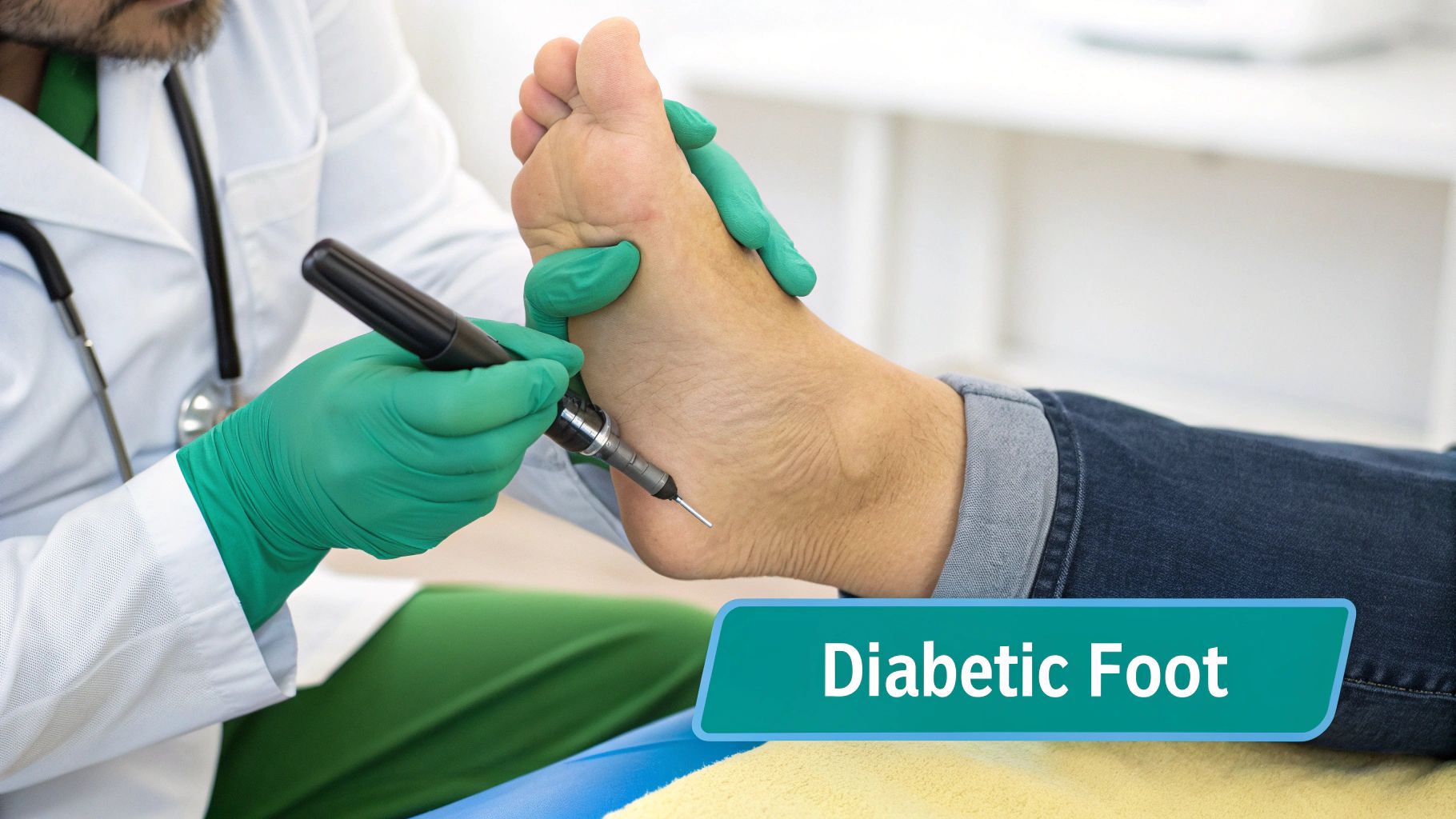
A Diabetes Wound Care-Specific Assessment and Monitoring Template is a specialized documentation tool designed to address the complex factors influencing diabetic ulcers. This template goes beyond standard wound assessment by integrating critical elements unique to diabetes management. It guides clinicians through a holistic evaluation, including glycemic control status, peripheral neuropathy screening, vascular assessment, and biomechanical foot abnormalities.
By providing a structured framework for these diabetes-specific factors, the template ensures that the root causes of the wound are addressed, not just the symptoms. This comprehensive approach is vital for effective treatment, preventing recurrence, and justifying medical necessity. Using such a targeted tool creates robust wound care documentation examples that clearly link systemic disease management to local wound care, painting a complete clinical picture for payers and other providers.
Why This Example is a Gold Standard
The strength of this template lies in its integration of systemic and local factors, reflecting the multifactorial nature of diabetic wounds. It forces a comprehensive view that is essential for limb preservation.
- Holistic Patient Assessment: It connects glycemic control (e.g., HbA1c levels) directly to wound healing progress, ensuring the underlying disease is managed. A multidisciplinary diabetic foot center can use this to document how adjustments in insulin therapy correlate with wound bed improvements.
- Proactive Risk Mitigation: By systematically documenting neuropathy (e.g., monofilament testing) and vascular status (e.g., pulse grading, ABI results), the template helps identify and address key risk factors for non-healing wounds and future ulceration. This preventative aspect is crucial in diabetic care.
- Specialized Coding Justification: The detailed documentation directly supports the use of diabetes-specific ICD-10 codes (e.g., E11.621 for Type 2 diabetes with diabetic foot ulcer) and associated CPT codes for debridement and offloading, ensuring accurate reimbursement for specialized care.
Actionable Takeaways & Implementation Tips
Integrating a diabetes-specific template requires a focus on both wound characteristics and systemic patient factors. Here are actionable steps for implementation:
- Standardize Neuropathy and Vascular Screening: Train staff to perform and document a 10-gram monofilament test at standardized sites and to use a consistent pulse grading scale (0-4+) for the dorsalis pedis and posterior tibial arteries. These objective tests are essential.
- Incorporate Diabetic Wound Classification: Use established systems like the Wagner or University of Texas (UT) classification to grade the wound. This provides a standardized, objective measure of severity that is widely understood and helps guide treatment protocols.
- Link Glycemic Control to Wound Progress: Create a dedicated field in the template to document the patient's latest HbA1c and recent blood glucose trends. Correlate these values with changes in wound status during each visit to demonstrate the link between systemic control and local healing.
- Automate ICD-10 Coding: Work with your EHR vendor to create smart fields. For example, documenting a new diabetic foot ulcer could automatically prompt the clinician to select the appropriate E10/E11 series codes, improving coding accuracy and efficiency while reducing administrative burden.
6. NPUAP-EPUAP-PPPIA Pressure Injury Staging and Documentation Protocol
The NPUAP-EPUAP-PPPIA Pressure Injury Staging and Documentation Protocol is an internationally recognized, evidence-based framework for classifying and documenting pressure injuries. Developed by the National, European, and Pan Pacific Pressure Injury Alliances, this system provides standardized definitions and staging categories (Stages 1-4, Deep Tissue Pressure Injury, Unstageable) that are essential for consistent clinical communication and regulatory compliance. It serves as the definitive guide for assessing tissue damage related to pressure and shear.
This protocol is mandatory in many regulated healthcare settings, such as those certified by the Centers for Medicare & Medicaid Services (CMS). By providing precise descriptors for each stage, clarifying that injuries do not "reverse stage" as they heal, and offering guidance on documentation, the framework ensures every clinician, from a hospital nurse to a home health aide, uses the same language. This uniformity is critical for accurate patient assessments, developing effective care plans, and providing high-quality wound care documentation examples for legal and reimbursement purposes.
Why This Example is a Gold Standard
The protocol’s strength is its role as a global standard that eliminates ambiguity in pressure injury assessment. It establishes a non-negotiable, evidence-based foundation for documentation that is understood across all care disciplines and settings.
- Regulatory Compliance: CMS-certified facilities, including hospitals and skilled nursing facilities (SNFs), are required to use this staging system for all pressure injury documentation, particularly in assessments like the MDS 3.0. Failure to do so can result in penalties and survey deficiencies.
- Clinical Accuracy: The specific criteria for each stage prevent subjective interpretation. A Stage 2 pressure injury is defined the same way in an acute care hospital as it is in a long-term care facility, ensuring continuity of care during patient transfers. For a deeper understanding, explore this comprehensive pressure injury staging guide.
- Billing and Coding Precision: Accurate staging directly supports correct ICD-10 coding (L89.xx series). Documenting a "Stage 3 pressure injury of the right buttock" provides the specificity needed to justify treatment, demonstrate medical necessity, and ensure proper reimbursement from payers.
Actionable Takeaways & Implementation Tips
Adopting the NPUAP-EPUAP-PPPIA protocol is a fundamental requirement, but excellence lies in its consistent application. Here are key steps for implementation:
- Conduct Annual Competency Training: Schedule mandatory annual training for all clinical staff on the latest NPUAP-EPUAP-PPPIA guidelines. Use visual aids and case studies to reinforce correct staging and documentation of all injury types, including Deep Tissue Pressure Injury (DTPI) and unstageable wounds.
- Standardize Photographic Evidence: Implement a protocol for taking stage-specific wound photos. Ensure each image includes a measurement guide and patient identifier, and store it securely in the EHR to support the documented stage and track changes over time.
- Document Clinical Rationale: Require clinicians to document not just the stage but also the reasoning behind their assessment. For example: "Stage 2 pressure injury noted due to partial-thickness loss of dermis presenting as a shallow open ulcer with a red-pink wound bed, without slough." This detailed description supports the chosen stage.
- Establish a Quality Assurance Loop: Create a peer-review or wound committee process to regularly audit a sample of pressure injury documentation. This helps identify and correct any inconsistencies in staging accuracy across the clinical team and reinforces best practices throughout the organization.
7. Venous and Arterial Wound-Specific Etiology and Hemodynamic Assessment Template
This specialized documentation template is designed to capture the unique assessment requirements for lower extremity wounds caused by vascular disease. It goes beyond general wound assessment to focus on the underlying etiology, incorporating critical hemodynamic data and physical findings specific to venous and arterial insufficiency. The form guides clinicians through documenting venous indicators like edema and skin changes, alongside arterial signs such as claudication, tissue perfusion, and Ankle-Brachial Index (ABI) results.
By integrating vascular assessment directly into the wound documentation process, this template ensures that treatment decisions are based on a correct etiological diagnosis. It provides a structured framework for documenting hemodynamic test results, assessing compression therapy tolerance, and differentiating between venous, arterial, or mixed-etiology wounds. This level of detail is essential for creating wound care documentation examples that justify advanced treatments and support interdisciplinary referrals.
Why This Example is a Gold Standard
The strength of this template lies in its focus on etiology, which is the root cause of the wound and the single most important factor in developing an effective care plan. It forces a diagnostic approach rather than just a descriptive one.
- Evidence-Based Treatment: By documenting the vascular status, clinicians can confidently apply evidence-based treatments. A wound care clinic can use this template to confirm adequate arterial flow via an ABI of >0.8 before initiating compression therapy for a venous leg ulcer, preventing potential harm.
- Facilitates Proper Referrals: The detailed hemodynamic data provides objective grounds for escalating care. Documenting a critically low ABI (<0.5) and rest pain provides clear, indisputable justification for an urgent referral to a vascular surgeon for revascularization. This improves patient outcomes by ensuring timely specialist intervention.
- Supports Medical Necessity: This template directly links the wound's characteristics to its underlying vascular disease, which is crucial for billing and reimbursement. It provides the specific data needed to justify procedures like debridement, advanced dressings, and compression systems, aligning the documentation with CPT and ICD-10 coding requirements.
Actionable Takeaways & Implementation Tips
Integrating an etiology-focused template requires a commitment to vascular assessment. Here are steps to implement this framework effectively:
- Mandate Hemodynamic Screening: Establish a protocol where all lower extremity wounds receive a baseline hemodynamic screening, such as an ABI test, upon initial assessment. Document the results and interpretation directly within the template. This should be a non-negotiable first step.
- Document Compression Tolerance: Before applying full compression, perform and document a brief trial. Note the patient's response, any increase in pain, or changes in skin color to confirm tolerance and rule out contraindications. This simple step enhances patient safety.
- Differentiate Wound Characteristics: Train staff to document the classic signs of each etiology. For venous ulcers, note irregular borders, location over the medial malleolus, and surrounding hemosiderin staining. For arterial ulcers, document the "punched-out" appearance, pale base, and location on toes or pressure points.
- Correlate Pain with Vascular Status: Use the template to document pain patterns precisely. Note if pain is relieved by dependency (classic for arterial disease) or elevation (typical for venous disease), adding another layer of diagnostic evidence to your assessment. This detail strengthens the clinical narrative.
Comparison of 7 Wound Care Documentation Templates
| Template | Implementation Complexity 🔄 | Resource Requirements ⚡ | Expected Outcomes ⭐📊 | Ideal Use Cases 💡 | Key Advantages ⭐ |
|---|---|---|---|---|---|
| AAWC Standardized Wound Assessment Form | 🔄🔄🔄 — Comprehensive fields and staging guidelines; requires protocol adherence | Moderate–High: measurement tools, staff training, photo standards ⚡ | ⭐⭐⭐ 📊 High consistency, improved coding and longitudinal healing analysis | Hospitals, wound centers, home health, EHR integration | Standardized, evidence-based, interoperable with AI documentation |
| Braden Scale Pressure Injury Risk Template | 🔄🔄 — Simple scoring workflow but needs scorer training | Low–Moderate: checklist-based, routine reassessments ⚡⚡ | ⭐⭐ 📊 Reliable risk stratification; enables early prevention | Admissions, SNFs, nursing units, preventive protocols | Validated, fast to apply, supports regulatory compliance |
| PUSH Tool Documentation Template | 🔄 — Rapid focused scoring (area, exudate, tissue) | Low: basic measurements and serial tracking; quick to perform ⚡⚡⚡ | ⭐⭐ 📊 Objective healing trajectory tracking for treatment decisions | Wound clinics, SNFs, home health monitoring visits | Fast, objective, ideal for demonstrating treatment efficacy/reimbursement |
| WOCN Comprehensive Wound Documentation Standard | 🔄🔄🔄 — Holistic, multi-domain template aligned with nursing process | High: extensive training, time to document, multidisciplinary input ⚡ | ⭐⭐⭐ 📊 Comprehensive case justification and outcome tracking | WOCN-certified centers, multidisciplinary teams, complex cases | Holistic assessment, strong interprofessional communication, quality benchmarking |
| Diabetes Wound Care–Specific Assessment | 🔄🔄🔄 — Specialized vascular and neuropathy components; requires specialty skills | High: ABI/Toe pressures, monofilament, glucose data, specialist coordination ⚡ | ⭐⭐⭐ 📊 Improved diabetic foot management, targeted interventions, better coding | Podiatry, diabetic foot centers, endocrinology, multidisciplinary clinics | Focused on neuropathy/vascular contributors; supports complex reimbursement |
| NPUAP‑EPUAP‑PPPIA Staging & Documentation Protocol | 🔄🔄🔄 — Detailed staging criteria and photo standards; periodic guideline updates | Moderate–High: training, photography standards, documentation review ⚡⚡ | ⭐⭐⭐ 📊 Standardized staging, regulatory compliance, diagnostic accuracy | CMS-regulated facilities, hospitals, quality/education programs | Internationally recognized staging, supports audits and coding accuracy |
| Venous & Arterial Wound Etiology & Hemodynamic Template | 🔄🔄🔄 — Complex physiological assessment and differential diagnosis | High: hemodynamic testing (ABI, duplex), specialist interpretation ⚡ | ⭐⭐⭐ 📊 Accurate etiology identification leading to safer, targeted therapy | Vascular surgery, tertiary wound clinics, complex lower-extremity wounds | Distinguishes venous vs arterial causes, informs safe compression and referral decisions |
Automating Excellence: The Future of Wound Documentation
Throughout this guide, we have journeyed through a comprehensive collection of wound care documentation examples, from the foundational AAWC Standardized Wound Assessment Form to etiology-specific templates for venous and arterial ulcers. We've deconstructed detailed clinical notes, analyzed voice-to-text transcripts, and provided actionable templates designed to elevate your charting from a mere administrative task to a strategic clinical asset. The core lesson is clear: exceptional documentation is not just about meeting compliance standards; it is the bedrock of effective patient care, accurate reimbursement, and defensible clinical decision-making.
By dissecting the PUSH Tool, the Braden Scale, and the WOCN Society's rigorous standards, we’ve highlighted a powerful throughline: structure and specificity are non-negotiable. Vague descriptions like "wound improving" are replaced with precise measurements, objective tissue type percentages, and quantifiable changes in wound parameters. This level of detail is what separates a basic note from one that paints a clear, defensible, and billable clinical picture.
Key Takeaways for Immediate Implementation
Mastering the art of wound documentation requires a conscious shift in mindset and practice. Here are the most critical, actionable takeaways from the examples provided:
- Standardize Your Approach: Adopt proven frameworks like the NPUAP-EPUAP-PPPIA staging protocol or the WOCN comprehensive standards. Standardization eliminates variability between clinicians, reduces errors, and ensures all critical data points are consistently captured for every patient.
- Quantify Everything Possible: Move away from subjective language. Instead of "less drainage," document "scant serosanguinous exudate on a 4×4 gauze over 24 hours." Precise quantification provides undeniable evidence of a wound's trajectory and the effectiveness of your treatment plan.
- Connect Documentation to Medical Necessity: Each documented detail, from wound measurements to debridement method, must directly support the medical necessity of the services rendered. This is paramount for justifying CPT codes and ensuring successful claim adjudication, as seen in our coding-focused examples.
- Embrace Multidisciplinary Clarity: As our team-based note example illustrated, effective documentation serves as a vital communication tool. It ensures that every member of the care team, from the vascular surgeon to the home health nurse, is operating from the same source of truth, leading to better-coordinated and safer patient care.
From Best Practices to Automated Workflows
Adopting these standardized templates and meticulous documentation habits is the crucial first step toward clinical and operational excellence. However, the administrative burden of manual charting, even with the best templates, remains a significant challenge. It consumes valuable clinician time, creates a lag between care delivery and documentation, and introduces the potential for human error. The true future of advanced wound care lies in bridging the gap between best practices and daily workflows through intelligent automation.
This is where the principles we've discussed become even more powerful. Imagine speaking naturally during a patient encounter while an ambient AI platform listens, understands the clinical context, and automatically generates a perfectly structured, coded, and compliant note based on the very wound care documentation examples we have explored. The platform would instantly populate wound dimensions, identify tissue types, suggest appropriate ICD-10 and CPT codes, and ensure every element aligns with payer requirements.
This isn't a distant future; it's the next logical evolution in healthcare technology. By automating the documentation process, you not only ensure consistency and unparalleled accuracy but also reclaim hours of administrative time each week. This reclaimed time can be reinvested where it matters most: in direct patient care, complex clinical problem-solving, and building stronger patient relationships. Automating excellence means transforming documentation from a retrospective burden into a real-time, intelligent asset that enhances care quality and drives practice efficiency.
Ready to eliminate documentation headaches and implement the best practices from these wound care documentation examples automatically? Discover how Ekagra Health AI can transform your patient encounters into structured, coded, and compliant clinical notes in seconds. See the future of wound care documentation by visiting Ekagra Health AI today.
