
Stop Wasting CME Dollars on Fluff
Another weekend, another CME course that felt more like a vendor pitch than a clinical update. You leave with a tote bag and a few decent pens, but nothing that changes how you document a Wagner Grade 3 ulcer or fight a denial for a sharp debridement. The right wound care CME does more than check a box for licensure. It sharpens clinical judgment, tightens documentation, and protects revenue.
That matters more than most clinicians admit. An outpatient wound care center collects only 33% of its billable charges, which means weak documentation and coding discipline show up fast in the bank account. If your notes don't clearly support wound depth, tissue type, exudate, periwound condition, and medical necessity, your billing team is left defending a chart that never had enough support in the first place.
Recertification pressure adds another layer. If you're maintaining a wound credential through the continuing education pathway, you need exactly sixty contact hours of wound- or skin-care-specific education, and those hours need the right accreditation and documentation. That's not the place to gamble on lightweight content. If you need a quick refresher on broader continuing education terminology, this short explainer on what is CPE credit is useful.
1. Wound Healing Society Annual Conference
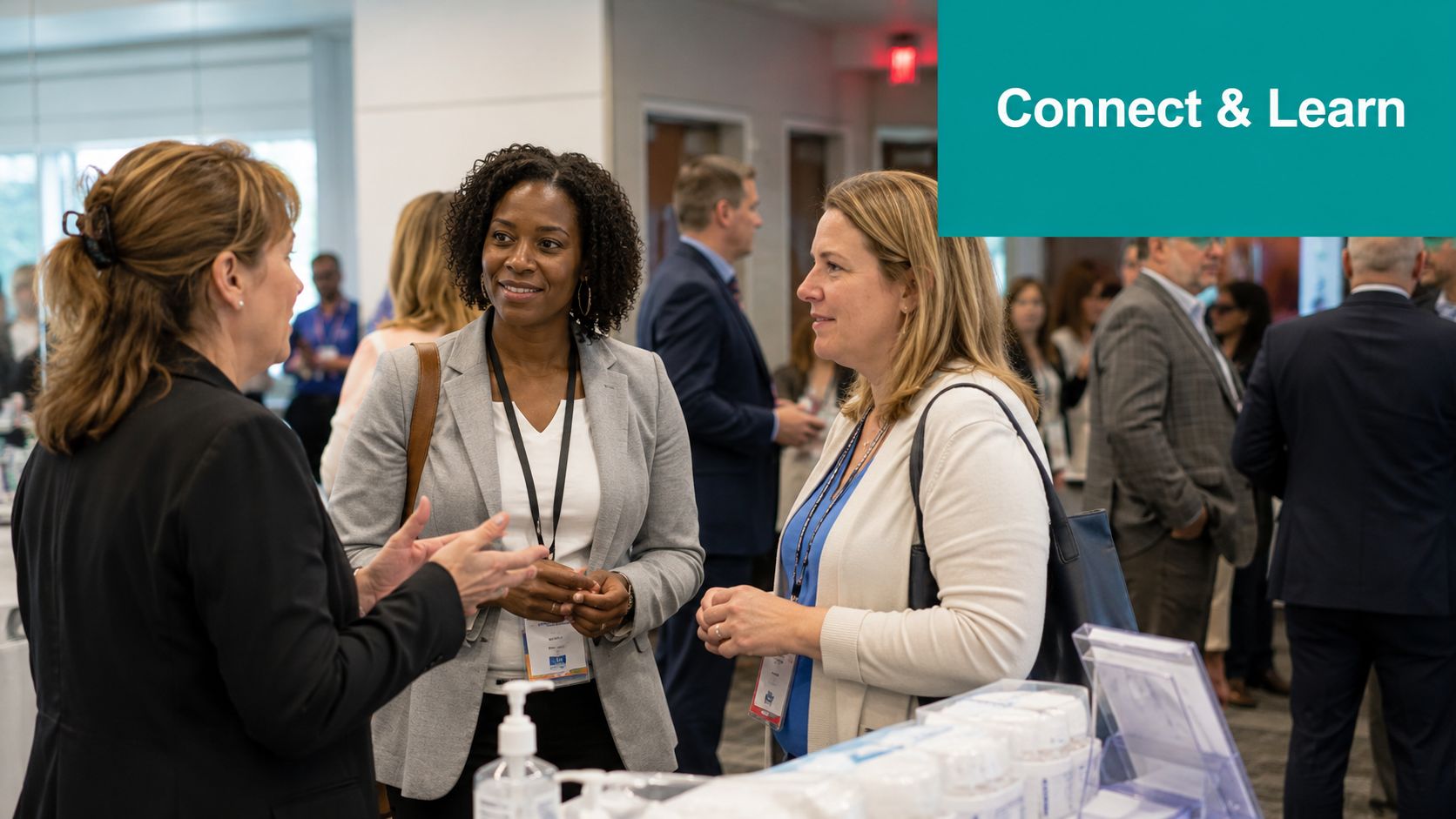
If you want one in-person wound care CME option that usually gives you the widest clinical spread, this is near the top of the list. The value isn't just the lectures. It's the mix of bedside decision-making, research updates, hallway conversations, poster sessions, and the chance to compare how other programs document and treat the same kinds of wounds you're seeing every day.
Multidisciplinary teams tend to get the most out of their travel budget: physicians can focus on limb preservation, surgical decision points, infection management, and complex ulcers. Nurses and advanced practice clinicians can tighten assessment language, dressing rationale, and periwound documentation. Billing and compliance staff can sit in sessions that translate directly into fewer preventable denials.
Best fit for teams, not just individuals
A solo attendee can learn a lot. A team gets more ROI. One person can cover diabetic foot ulcers and debridement strategy while another sits in compliance or operational sessions, then you compare notes back at the clinic.
What works after a meeting like this is immediate implementation:
- Rewrite note templates: Add required fields for Wagner grade, wound measurements, tissue description, exudate type, and periwound findings.
- Standardize debridement support: Make sure the note clearly supports CPT 11042 through 11047 with depth and tissue removed.
- Debrief within days: If you wait two weeks, most of the practical takeaways die in someone's notebook.
Practical rule: Don't come back with slides only. Come back with one protocol change, one documentation change, and one billing change.
What doesn't work is treating a big conference like passive education. If your practice struggles with denials, prior auth delays, or inconsistent documentation, pick sessions with direct operational value. The exhibit floor can be useful, but it shouldn't consume the day. The better move is to schedule conversations early and spend your main time on sessions that change Monday's workflow.
2. American College of Foot and Ankle Surgeons Wound Care Certification
For podiatrists and foot and ankle surgeons, broad wound education isn't always enough. You need diabetic foot ulcer staging, offloading logic, infection recognition, surgical judgment, and documentation that survives payer review. This type of certification path usually delivers better ROI for that audience than a generic online module.
The practical upside is focus. Lower extremity wounds drive a large share of documentation disputes because the chart often skips the severity language that payers expect. A course built around foot and ankle pathology is more likely to sharpen the details that matter, especially when you're documenting ischemia, neuropathy, osteomyelitis concern, or progression in a high-risk diabetic foot.
Where this option earns its keep
This is strongest for clinicians who routinely manage Wagner-graded diabetic foot ulcers and perform or supervise debridement. If you live in CPT 11042 through 11047 territory, the educational payoff is often immediate because coding mistakes usually start with weak clinical specificity.
A few ways to get more from it:
- Study with your real charts nearby: Compare the course material to how your practice documents depth, infection, and offloading.
- Use the credential operationally: Add it to payer contracting packets, referral outreach, and physician bio pages.
- Pull in nursing staff: Better physician training helps, but support staff still shape intake, wound photography, and dressing documentation.
This option isn't ideal if your patient mix is broad and your main challenge is enterprise-wide pressure injury documentation, home health consistency, or SNF workflow. It's a sharper tool than that. For the right specialty, though, it's a strong one.
3. National Pressure Injury Advisory Panel Pressure Injury Prevention and Management Webinar Series
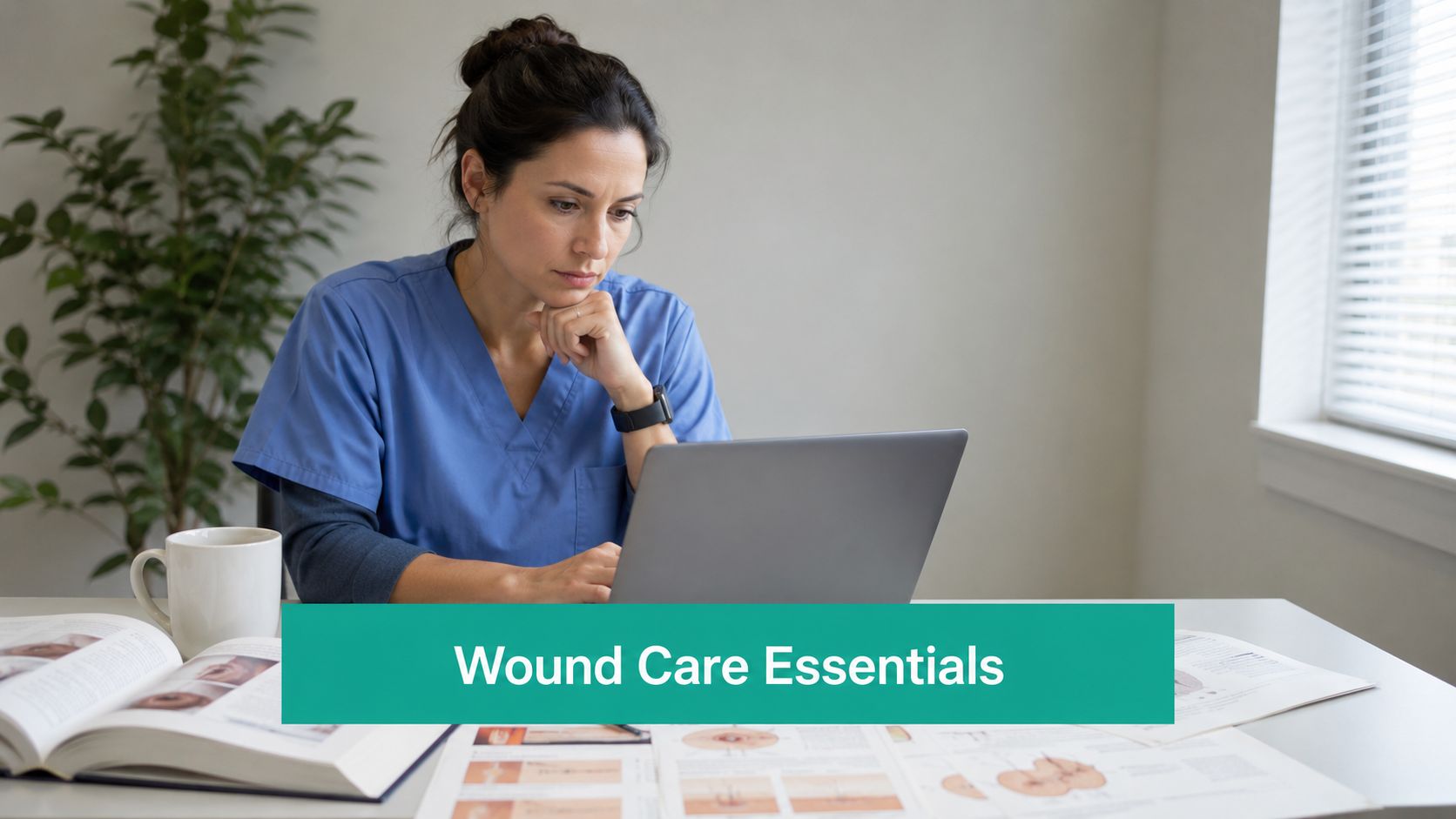
If your world includes SNFs, home health, acute care, or any setting where pressure injuries drive quality scrutiny, this is one of the more practical wound care CME options. It tends to help teams that need consistent staging language, prevention protocols, and charting that holds up during survey or internal review.
Pressure injury errors usually aren't dramatic. They're small and repetitive. Stage misclassification. Missing description of depth or tissue loss. Weak support for present-on-admission status. No real periwound assessment. Those mistakes create clinical confusion first and coding trouble right after.
Strong choice for survey readiness
This series is especially useful when nursing leadership wants one educational standard across units or across a post-acute network. The webinar format also makes it easier to include bedside nurses, educators, wound team members, and quality staff in the same learning cycle.
If you use it well, the next step is internal auditing. Compare how your clinicians are staging against a pressure injury staging reference like this pressure injury staging guide, then clean up documentation gaps before they become survey findings or payment issues.
Pressure injury education only works when staging language and prevention language are both hardwired into the note.
This isn't the best option if your main pain point is outpatient sharp debridement billing or advanced ulcer coding. But for facilities that live under pressure injury quality scrutiny, it addresses problems that general wound courses often skim over.
4. Academy of Wound Management Certification in Wound Care

Some CME options are best for filling a gap. This kind of certification path is better when you want to raise the floor for overall wound competency. That's why it works well for mixed teams of RNs, NPs, PAs, and physicians who need a common clinical framework.
The strength here is breadth with enough structure to be useful. Teams usually come out better aligned on wound biology, assessment sequencing, infection concerns, compression basics, offloading, nutrition, and the logic behind dressing selection. That matters when your clinic's documentation quality depends on more than one discipline.
Good for practices fixing inconsistency
When a practice has variable chart quality across clinicians, a broader certification can stabilize things faster than chasing isolated webinar topics. You start hearing the same language used in intake, assessment, and follow-up notes. That consistency improves handoffs and reduces the number of charts that need coding clarification after the visit.
What tends to work best:
- Build a study group: Case discussion improves retention more than solo module completion.
- Tie study to common diagnoses: Venous leg ulcers, diabetic foot ulcers, pressure injuries, and surgical wounds should be front and center if that's your mix.
- Use certified staff as internal teachers: The biggest gain comes when someone brings the material back to the team.
The trade-off is time. This isn't a quick weekend fix. If you need a fast answer to a specific denial pattern, pick a targeted coding program instead. If you need to strengthen the whole clinical base, this is the better investment.
5. American Association for Vascular Surgery Arterial and Venous Wound Management Course
Lower extremity wound care goes off track fast when vascular assessment is treated like a side issue. This course category is valuable because it forces the clinician to connect wound appearance, perfusion, edema, compression decisions, and referral timing. That's where a lot of treatment errors start.
A venous ulcer course that ignores billing isn't enough. A billing course that ignores perfusion isn't enough either. If you manage mixed-etiology ulcers, the payoff comes from learning how to document the vascular story clearly enough that treatment decisions make sense to both the next clinician and the payer reviewing the claim.
Best when compression decisions are inconsistent
This option is high yield for vascular surgery groups, limb preservation programs, and wound clinics that see a heavy load of arterial insufficiency ulcers, venous leg ulcers, and mixed disease. It also helps practices that need better discipline around ABI interpretation, duplex follow-up, and documenting why compression was used, modified, or deferred.
A practical post-course move is to review your lower extremity wound template. Make sure it prompts for vascular findings, edema pattern, pulses, prior vascular workup, compression plan, and patient tolerance. Without those details, clinicians often make good decisions but fail to prove them on paper.
The chart should make it obvious why compression was started, adjusted, or held. If a reviewer has to infer it, you've already lost ground.
This isn't the first CME I'd send a generalist home health nurse to. It is one of the first I'd consider for clinicians managing chronic leg ulcers where vascular nuance changes treatment and reimbursement.
6. Association for the Advancement of Wound Care Online Wound Care Essentials Module
Every practice has staff who need a reset. New hires. Cross-trained nurses. Clinicians returning to wound care after spending more time in another service line. That's where a self-paced essentials program can earn its keep.
The advantage is flexibility. You can assign the full curriculum to newer staff and direct experienced clinicians to the sections they need, such as infection documentation, debridement categories, or coding fundamentals. For clinics with rotating schedules, mobile services, or multi-site staffing, that matters.
Best use is foundational alignment
This kind of module is not where you go for advanced nuance on difficult denials or edge-case coding disputes. It is where you go when you need every clinician to assess a wound the same way, describe tissue consistently, and understand the difference between partial-thickness and full-thickness language in practical charting.
A few ways to make it stick:
- Set a completion deadline: Optional education drifts forever.
- Use huddles to reinforce content: One short case discussion per day works better than a long recap session once a month.
- Turn key screenshots into references: Put staging or dressing logic in work areas where staff can use it.
This option is usually underrated because it looks basic. In reality, a lot of advanced billing problems start with basic assessment failures. If your staff can't document wound bed tissue, exudate character, odor, undermining, or periwound condition consistently, no revenue cycle cleanup downstream will fully fix it.
7. American College of Surgeons ASSET Wound Management Module
This one serves a narrower audience, but for the right team it's worth the time. If you manage acute wounds, contaminated surgical wounds, traumatic tissue loss, or serial debridement in operative settings, simulation-based education tends to outperform passive lecture formats.
The hands-on piece matters because wound management in surgical environments is procedural, not just cognitive. Teams need shared judgment around classification, closure timing, contaminated fields, infection prevention, negative pressure decisions, and repeat debridement strategy. Those are hard to learn well from slides alone.
Where simulation beats lecture
Surgeons, surgical APPs, OR nurses, and trauma teams usually get the most from this format. It can also help facilities where operative wound protocols vary too much by surgeon or service line. When that happens, staff spend too much energy adapting to individual preference instead of following a consistent wound pathway.
The downside is obvious. It's less relevant for outpatient chronic wound clinics that rarely touch acute operative management. If your day is mostly diabetic foot ulcers, venous disease, pressure injuries, and clinic-based debridement, your CME dollars are probably better spent elsewhere.
Still, for surgical teams, the educational return is practical. Better debridement technique, cleaner closure decisions, and more disciplined wound classification don't just improve care. They reduce the friction between the OR note, postoperative management, and any later coding review.
8. Wound Care Institute Clinical Documentation and Coding Webinar Series
Monday morning clinic. The wound is improving, the debridement was appropriate, and the claim still gets denied because the note never clearly tied tissue depth, total surface area, and ulcer etiology to what was billed. That is why documentation and coding CME usually produces a faster return than another broad wound update.
This format fits practices with a familiar problem. The clinical care is often sound. The chart is vague, the coder has to guess, and the payer reads that uncertainty as lack of medical necessity. Denials, downcodes, and record requests follow.
Best option for revenue cycle pain
The strongest use case is joint training. Put the physician or APP, coder, biller, and clinic manager in the same session. Review debridement coding for CPT 11042 to 11047, pressure injury staging, non-pressure ulcer diagnosis selection, modifier use, and prior authorization documentation as one workflow instead of four separate jobs. Then compare your actual notes against a practical reference for ICD-10 and CPT codes for wound care.
That matters because wound revenue problems rarely start in the billing office. They start in the room.
A good webinar series in this category should teach clinicians what auditors look for in plain terms. Did the note identify the wound cause, location, dimensions, tissue level debrided, instruments used, post-debridement measurements when required, and the ongoing reason treatment remains medically necessary? If not, your team will keep arguing over claims that were lost in the note before they were lost at the payer.
There is a trade-off. Documentation and coding CME will not sharpen bedside skills the way a procedure lab or hands-on debridement course will. But for busy outpatient wound clinics, hospital-based wound teams, and any service line struggling with preventable denials, this is often the course category that changes daily operations fastest. Better notes reduce coder queries, make prior auth packets cleaner, and lower the odds that a defensible service gets downcoded because the chart never said enough.
From CME to Clinic Making New Knowledge Stick
A clinician finishes a wound care course on Sunday, sees patients on Monday, and by Tuesday the old note pattern is back. Wound measurements are partial. The debridement note says "subcutaneous tissue" but does not clearly support the tissue level, instrument, total surface area, or medical necessity. The care may be right. The chart still loses.
That is the gap that matters.
Wound care CME pays off only when it changes what happens during the visit and what ends up in the record. Busy clinics do not struggle because staff forgot a lecture on Wagner grading or exudate types. They struggle because the EMR, the room workflow, and the billing workflow do not reinforce the new standard. Then coder queries return, prior auth packets need rework, and claims tied to services like CPT 11042 to 11047 get delayed or downcoded because the note is incomplete.
The strongest education formats account for that reality. They teach the clinical decision and the documentation behavior together. If a course shows how to capture wound location, pre-debridement size, tissue level addressed, drainage, odor, periwound condition, and diagnosis linkage during the encounter, the learning has a better chance of sticking. That is a better return than CME that stays at the theory level and never reaches the chart.
Accredited activities that focus on practical wound management still have value for that reason. The American Board of Anesthesiology lists 2.00 CME credits for the Complex Wound Management activity, and those credits count toward patient safety CME in its recertification cycle. The Mayo Clinic Wound Symposium offers 4.5 CME credits, including 1.5 credits tied to exudate management and periwound assessment documentation. Credit volume alone should not drive the decision. The better question is whether the training improves bedside decisions, supports cleaner documentation, and reduces avoidable revenue loss.
For a busy service line, retention usually improves when the course is tied to a template change, a short chart audit, and immediate feedback from coders or clinical leads.
Technology can help if it supports the visit instead of adding another task after the visit. EkagraHealth AI fits that role because it structures documentation around the details wound clinicians and billing teams need. The platform listens during the encounter, drafts the SOAP note, maps CPT and ICD-10 coding, and helps keep the note aligned with the claim. That reduces the gap between what the clinician learned in CME and what the payer sees in the chart.
If your team is spread across sites and relies on online education, this piece on Whisper AI's online learning guide offers practical ideas for follow-through after training.
8-Point Wound Care CME Resource Comparison
| Program | Format & duration | Clinical focus & examples | CME / time commitment | Target audience | Practical value / Price & USP |
|---|---|---|---|---|---|
| WHS Annual Conference | In-person 3–4 days; posters, hands-on workshops | Acute & chronic wounds, compression, offloading, biologics; real-time case debates; examples: Wagner IV/V amputation prevention, improved 11042–11047 documentation | 25–35 CME; multi-day attendance | Physicians, nurses, billing/compliance staff, researchers | Best for high-value networking and live product demos; cost ~$600–$1,200 + travel; strongest peer-reviewed content |
| ACFAS Wound Care Certification | Self-paced modules + proctored exam | Lower-extremity focus: Wagner & UT grading, IDSA infection guidance, offloading; practical CPT review (11042–11047) | 20–25 CME; ~30–50 hrs study prior to exam | Podiatrists, foot & ankle surgeons | Payer-recognized credential useful for contracting; study-heavy but supports higher reimbursement |
| NPIAP Webinar Series | Monthly 60–90 min webinars (recordings 12 months) | Pressure-injury staging & prevention, Braden Scale, ICD-10 L89.x, FAPI management | 1–1.5 CME per session; ongoing monthly | SNF nurses, home health clinicians, hospital wound teams | Direct CMS/survey compliance impact; membership ~$200–$300/yr; focused on reducing facility-acquired pressure injuries |
| AWM Certification in Wound Care (CWC) | Blended: online modules + 2–3 live didactics + proctored exam | Broad wound biology, assessment, infection control, compression, nutrition; practical decision frameworks | 40–50 CME; ~50–80 hrs study | Nurses, PAs, NPs, physicians on multidisciplinary teams | Deep, practice-ready credential for teams; improves assessment and dressing selection; significant time commitment |
| AAVS Arterial & Venous Wound Course | 1–2 day course, in-person & online options | Vascular assessment (ABI, duplex), compression protocols, surgical indications; coding I70.x, I87.x, L97.x | 8–12 CME; short intensive course | Physicians, NPs, PAs managing complex LE wounds | Fixes misclassification/undercoding of arterial/venous ulcers; small-group depth; adopt ABIs after course |
| AAWC Wound Care Essentials Module | Fully self-paced online, 15–30 min modules | Core wound healing phases, debridement types, dressing selection, CPT/ICD guidance (11042–11047, L89.x) | 20–25 CME; ~20–30 hrs total | New clinicians, rotating staff, SNF/home health, mobile teams | Affordable onboarding and refresher ($200–$400); ideal for standardizing basic practice quickly |
| ACS ASSET Wound Management Module | Hands-on cadaver/manikin simulation, 2–3 days | Acute wound closure, serial debridement, NPWT, SSI prevention, trauma wound algorithms | 15–20 CME; 2–3 day commitment | Surgeons, surgical nurses, OR teams | High-fidelity skills training; recognized by surgical credentialing; cost ~$1,500–$3,000 |
| Wound Care Institute Coding Webinar Series | Monthly 60-min coding/documentation webinars | Debridement CPTs (11042–11047), pressure injury L89.x, E11.xx with L97.x, payer policy | 1 CME per session; monthly cadence | Clinicians plus billing/coding teams | Direct revenue-cycle impact; lowers denials and prior-auth delays; lower cost than conferences |
If your team is tired of losing time to charting and cleaning up denials after the visit, take a look at EkagraHealth AI. It gives wound care practices a practical way to turn CME lessons into real workflow improvement by listening during visits, drafting wound-specific SOAP notes, mapping CPT and ICD-10 codes, supporting image documentation, and helping clean claims go out without AR days piling up.
