
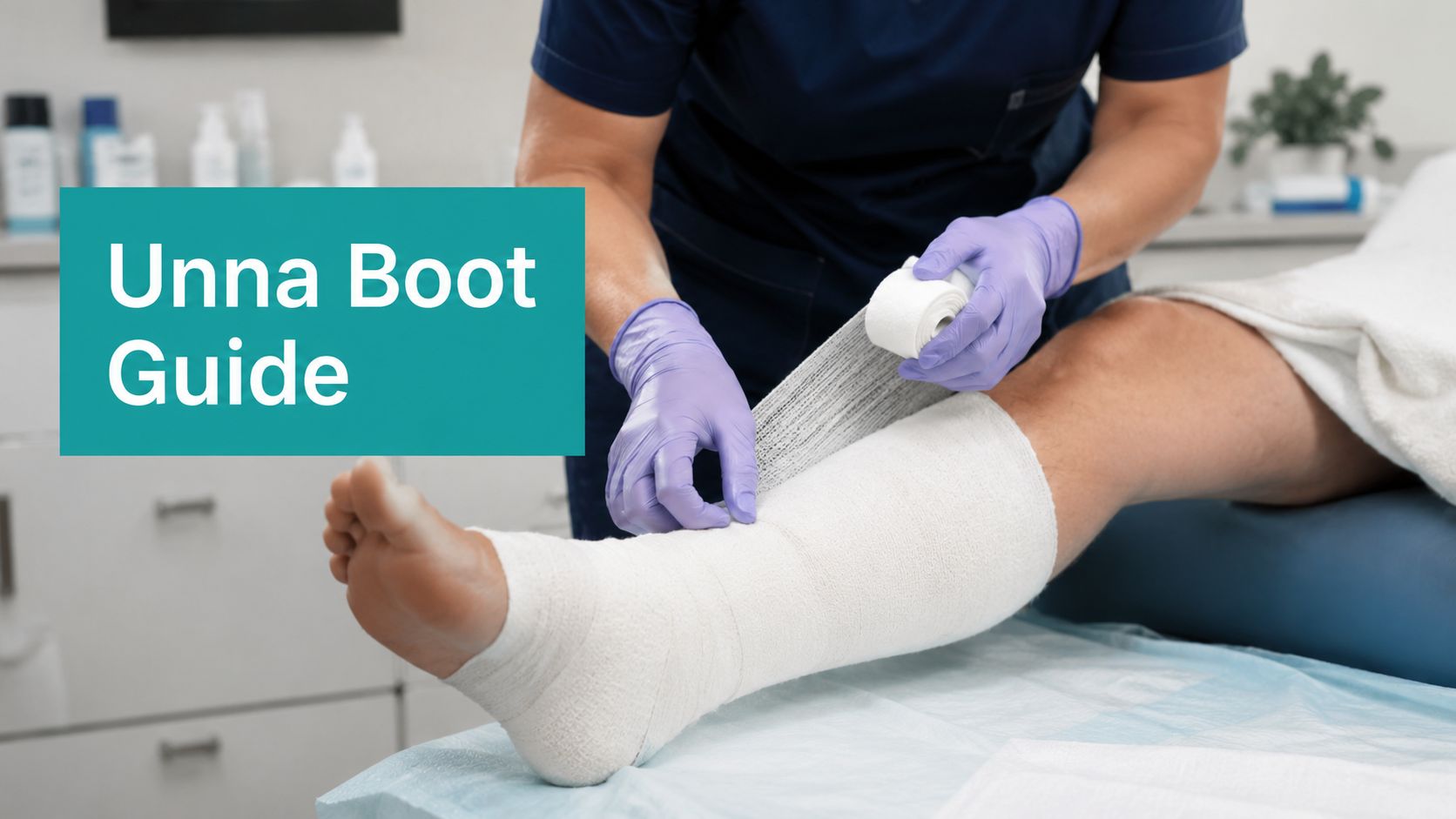
The leg that walks into clinic on a Thursday morning tells the story fast. The ankle is puffy, the medial gaiter ulcer is weeping more than last week, and somebody already tried to “just wrap it” without checking whether the limb could tolerate compression. That's where Unna boot application either helps or hurts, and the difference usually starts before the paste bandage even leaves the box.
When an Unna Boot Is the Right Call
A good Unna boot starts with the right leg, not the right wrap. The core indication is a venous leg ulcer or venous edema pattern with enough arterial flow to tolerate compression. That's the patient you see with dependent swelling, gaiter-area breakdown, and a wound that behaves like venous disease, meaning it looks worse when the leg is down and better when edema is controlled.
Triage the limb before you touch the supplies
Compression is standard therapy for venous leg ulcers, but only when perfusion is acceptable. The practical screen is simple, check vascular status first, then decide whether an Unna boot makes sense. If the ABI is uncertain, borderline, or not documented, don't pretend the wrap is harmless. Borderline perfusion deserves reassessment, not optimism. When arterial disease is possible, the safer move is vascular workup before compression, not after a complication. The same logic applies to severe peripheral arterial disease, acute deep venous thrombosis, uncontrolled congestive failure, and infected wounds that need daily inspection.
Practical rule: If the limb needs frequent inspection, or if circulation is in doubt, skip the paste boot and reassess the plan.
For a patient with a chronic venous ulcer and manageable edema, Unna boot care can be very reasonable. The device has been around since the end of the 19th century, and it's still described as a widely used inelastic compression option around the world, which says a lot about its staying power in wound care (systematic review summary). That history matters because this is not a novelty dressing. It's a compression tool with a real evidence base, and it works best when the wound is venous, the wrap is applied correctly, and follow-up happens.
Documentation should show that reasoning. I want to see the vascular assessment, the wound etiology, the edema pattern, and why the patient was selected for compression on that day. If you're building the surrounding compression plan, it helps to think about the broader leg-management strategy too, including gradient support stockings when the limb is ready for a different maintenance phase.
Know when not to force it
If the leg has mixed arterial disease, rapidly changing edema, or a wound that needs frequent inspection, an Unna boot is the wrong tool. So is any wrap that assumes yesterday's perfusion still applies today. When the limb is uncertain, the safer answer is defer, reassess, and choose a modality that matches the physiology instead of the schedule.
That's the first trap I see in practice, not a bad wrapping technique, but a bad patient selection decision.
Materials, Prep, and the Wrap Sequence
When the vascular status is acceptable, the exudate burden is manageable, and the edema pattern is predictable enough for compression, the procedure itself is straightforward. It is also unforgiving. A paste boot that is too loose, too bunched, or too wet under the outer layers will not settle into place later. It hardens unevenly, shifts on the limb, and starts acting like a pressure ridge instead of a compression dressing.
Assemble the right setup first
Have the paste bandage, padding, elastic outer layer, skin barrier if the limb is maceration-prone, and any protective adjuncts you need. That means clean gauze, cleanser, dry towels, scissors, gloves, and enough padding to protect bony prominences without building a bulky calf.
The limb has to be clean and dry. Protect the periwound skin. Position the ankle at 90 degrees with the patient supine so the wrap reflects the functional leg, not a dependent, swollen one. Standard application guidance recommends cleansing, drying, and then starting at the base of the toes, overlapping each pass by about 50% to 75% as you move to just below the knee (application guidance). Use light tension, not a tourniquet. Typical compression targets are about 20 to 30 mmHg, which is enough to matter but still depends on proper technique and ambulation to work as intended (compression range reference).
Keep the ankle at right angle, keep the layers smooth, and do not let the heel or Achilles become the place where the wrap gets tight.
A quick wound selection check belongs before the first turn of the bandage. If the limb has mixed arterial disease, rapidly changing swelling, or a wound that needs frequent inspection, the boot is the wrong tool for that visit. A clear wound dressing selection chart helps keep that choice tied to the bed of the wound and the amount of drainage, instead of to habit.
A venous gaiter ulcer and a unilateral malleolar edema case
A medial gaiter ulcer with moderate exudate usually needs a nonadherent contact layer that can handle drainage, then the paste wrap over it, followed by the outer layer to secure everything. Keep the wrap even from toes to calf so the medial ankle does not become the point of maximal pressure. New staff often overcorrect here, especially when the wound is wet. They pull harder, the ankle compresses too much, and the distal calf becomes a ridge.
Unilateral malleolar edema needs a little more judgment. The affected leg still gets wrapped in the same general pattern, but a sloppy pressure gradient develops if the shape of the limb is ignored. Measure the swollen side, compare it with the other side, and make sure the wrap follows the actual contour, not a standard pattern that assumes every ankle looks the same. One comparative clinical study found that customized Unna boot technique produced a higher proportion of healed ulcers than conventional use over follow-up, which reinforces a simple point, fit and pressure distribution matter (customized technique study).
A later clinical series also showed why the dressing remains useful in real clinics, with one study reporting 41 patients, or 51.3%, achieving healing within 12 weeks, and better outcomes in smaller ulcers (clinical series). The same series reported mean ulcer area falling from 15.25 cm² to 9.38 cm² in one group over the first 3 months, while the comparator group remained larger at 28.23 cm² to 20.29 cm² across the same evaluation points.
Change Schedule and Keeping the Boot Therapeutic
A good Unna boot can look fine at application and still fail by the next follow-up if the limb changes under it. Edema drops, drainage wicks through the layers, the wrap loosens, and a patient who keeps the leg down most of the day can turn a workable dressing into dead weight without doing anything unusual.
Recheck the boot as the leg changes
Start with circulation, then decide whether the current wrap still makes sense. Toe color, warmth, capillary refill, pain, numbness, and tightness all need to be checked after application and again at the next visit. Pale toes, cool skin, new pressure, or increasing pain mean the boot should come off and the leg should be reassessed. Leaving a failing wrap in place just because the calendar says so is a common mistake.
The change interval follows edema trajectory and exudate burden. A heavily draining venous ulcer, especially one with swelling that rises and falls or fragile periwound skin, usually needs a sooner change than a drier wound that stays stable between visits. That is a wound decision, not a fixed schedule. When drainage thickens, the wrap slips, or maceration starts at the edges, the dressing may still be on the leg, but it is no longer doing the job in the right way.
Know what failure looks like in the field
A solid Unna boot program watches the same warning signs every time. The outer layer migrates. The paste sets unevenly. The heel or Achilles gets irritated. The ankle improves, then the calf looks constricted. Those are not mysterious changes. They are what happens when limb volume shifts and the pressure profile changes with it.
If the boot slides, folds, or becomes damp enough to soften the paste, it is losing therapeutic value before the next scheduled visit.
For home health and SNF teams, the question is whether the dressing still behaves like a therapeutic wrap on day three. If drainage is breaking through, odor is stronger, maceration is spreading at the wound edge, or the wrap feels too loose to support the limb, bring the patient back sooner. A shorter interval is often the right move. Sometimes the boot should be abandoned altogether in favor of a different compression system when the leg clearly needs something more durable.
The literature on Unna boot use also shows how much outcomes depend on technique and wound factors. A systematic review summary found 4 studies on complete ulcer healing and no clear difference in healing rates versus comparators, with an odds ratio of 0.43 (95% CI 0.188 to 1.01), and time to complete healing showed a weighted mean difference of 41.3 days in 2 studies, though the evidence was limited and heterogeneous. That matches what clinicians see in practice. The dressing can help, but it is not magic.
Measurement and Documentation That Survives Audit
Good Unna boot care becomes payable care when the note tells the same story your hands told at the bedside. A reviewer should be able to see why compression was chosen, what the wound looked like before the wrap, and how you'll know it worked. If that story is thin, denials tend to follow.
Chart the wound, the limb, and the reason
I want baseline circumference at standardized points, just above the medial malleolus, mid-calf, and just below the knee. I also want wound length, width, and depth, plus the tissue mix, granulation, slough, eschar, and the exudate type and amount. Periwound skin needs plain language, macerated, intact, erythematous, dry, fragile, or boggy. Pain score belongs there too.
Serial photographs help, but only if they're consistent. Same lighting, similar framing, visible scale, and enough detail to show progress rather than a random close-up. That's not cosmetic. It's audit defense.
For teams trying to keep documentation usable during the visit, compare records retrieval services is a reasonable place to understand how records access and retrieval workflows are being handled in other medical settings.
The best notes also tie the wrap to the clinical decision. If the patient has chronic venous insufficiency, say it. If there's edema reduction after a previous change, say that too. If you deferred compression because the vascular status wasn't clear, document that reasoning instead of leaving a vague “tolerated well” line that doesn't explain anything.

A solid SOAP-style note might read like a clinician wrote it in real time, not after hours from memory. Subjective, leg pain stable, drainage moderate, walking more than sitting. Objective, venous ulcer at medial gaiter, wound measured and photographed, periwound mildly macerated, edema improved from prior visit by circumference comparison. Assessment, chronic venous ulcer with edema appropriate for inelastic compression. Plan, Unna boot applied with protective padding, follow-up set based on drainage and wrap integrity.
If your organization is trying to make those notes faster and cleaner, EkagraHealth AI is built to draft wound notes, map CPT and ICD-10 codes, and keep the images, measurements, and claims tied together in one chart.
Coding and Billing for Unna Boot Encounters
Most denials on Unna boot visits come from the chart, not the wrap. The code set has to match the work, and the work has to match the wound. If the note doesn't support medical necessity, the cleanest CPT line in the world won't save the claim.
Pair the service with the wound type
The application itself is usually billed under the dressing-change or wound-care service your documentation supports, while debridement gets coded separately only when the tissue removed, depth, and medical necessity are clearly documented. Selective debridement codes 11042 to 11047 depend on tissue type and depth, so the wound bed has to justify the code you pick. An E/M add-on is appropriate only when there's a separate identifiable service with documented history, exam, and medical decision-making beyond the procedure.
The ICD-10-CM diagnosis has to tell the payer why compression belongs here. I87.2 fits venous insufficiency. I83.0 and I83.2 cover varicose ulcer with and without breakdown. L97.9 is the non-pressure chronic ulcer code when site specificity is limited. E11.621 comes into play when diabetes is part of the picture and the ulcer is diabetic in nature. Laterality matters. Ulcer severity matters. Missing either one is an easy denial reason.
| Service | CPT Code | Typical ICD-10-CM Pairing | Documentation Cue |
|---|---|---|---|
| Unna boot application or dressing-change support | Procedure code supported by wound-care documentation | I87.2, I83.0, I83.2, L97.9, E11.621 as applicable | Show vascular rationale, wound location, and why compression was chosen |
| Selective debridement | 11042 to 11047 | Same wound etiology codes, plus site-specific ulcer code | Match code depth to tissue actually removed |
| Separate E/M service | Office or other appropriate E/M code when supported | Diagnosis that justifies the visit | Distinct history, exam, and MDM beyond the procedure |
The table above is only useful if the note backs it up. A debridement line without depth, or an ulcer code without laterality and specificity, will draw attention fast. So will a chart that says “compression applied” but never explains why the leg was safe to compress in the first place.
A short operational note matters here too. If the wound is diabetic, venous, or mixed, the documentation should read that way. Don't mash every ulcer into the same coding bucket. That's how legitimate claims get treated like sloppy ones.
For practices managing this across multiple sites, ICD-10 and CPT codes are easiest to use when the chart is structured to capture the wound, the procedure, and the medical reasoning in one pass.
Troubleshooting and When to Abandon the Boot
The failures are predictable if you have done this long enough. Slippage, maceration, pressure injury, and missed arterial disease show up again and again. The fix is rarely dramatic. It is usually a better decision made earlier, starting with whether the leg should have been wrapped at all.
What to do when the wrap is failing
If the boot slips within a day, the problem is usually molding, limb shape, or inadequate outer-layer security. Rewrap with better contouring, or stop treating this as a good candidate for this system. If the periwound skin is macerated, shorten the change interval and add barrier protection before the next application. If the Achilles or anterior shin looks angry, pad the bony prominence before the paste layer and reduce the tension.
New rest pain, cool toes, or color change after application means remove it immediately and reassess perfusion. Do not negotiate with those signs. A compression dressing that threatens circulation is not a compression dressing anymore. It is a problem.
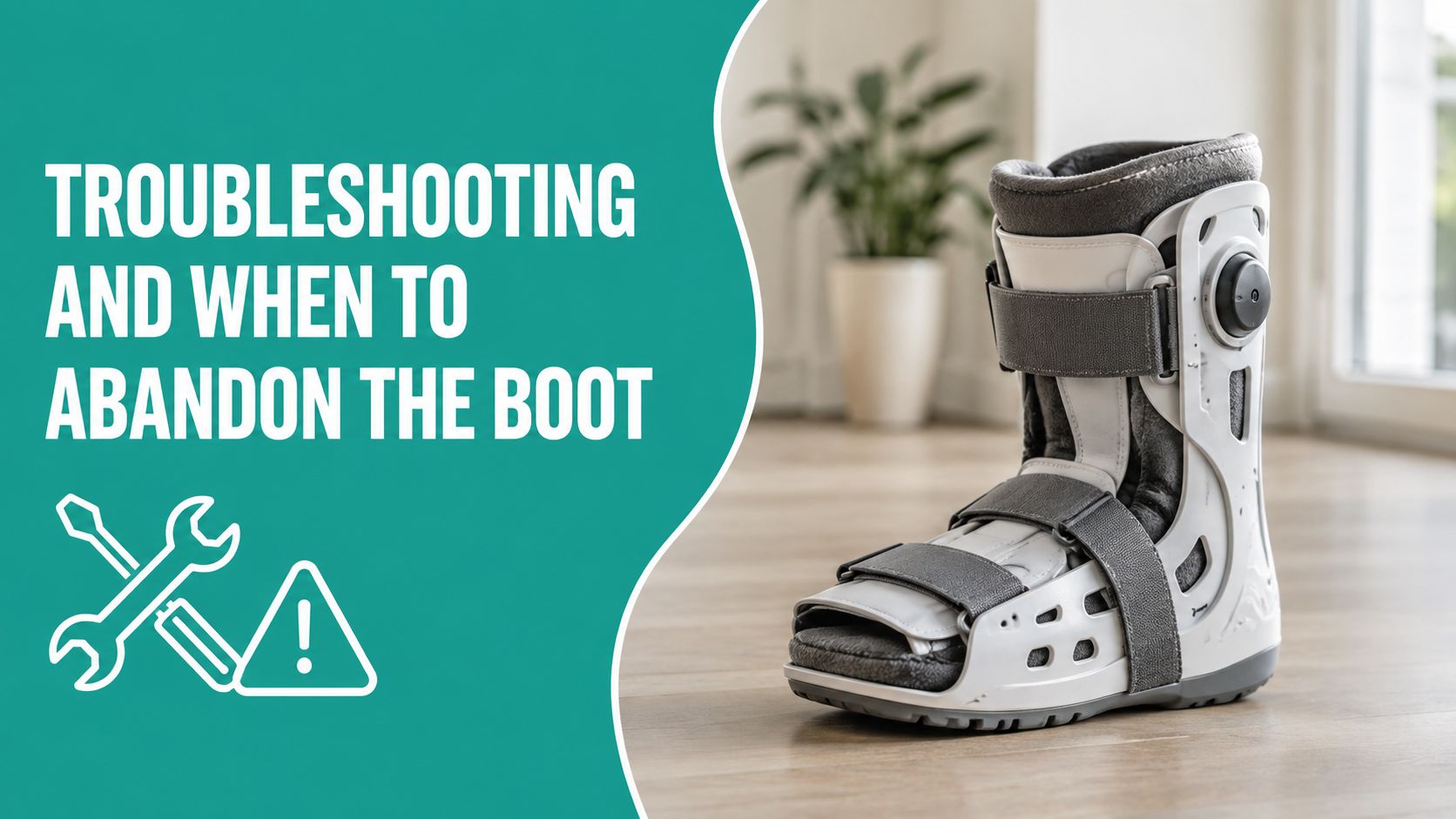
There are also cases where the entire modality should be abandoned. Some legs do better with a two-layer compression system, an adjustable wrap, or another approach entirely when inelastic compression keeps failing. That decision is not a sign of poor technique. It is a sign that the limb needs a different pressure strategy. In mixed disease, heavy drainage, or a limb that keeps breaking down under the boot, persistence only delays the better choice.
The right answer is the one the leg can tolerate over several days, not the one that looked neat at the end of the visit.
The older literature and modern reviews line up on the same point, Unna boots are a standard tool, but they are not a magic fix. They work when the patient selection is sound, the wrap is even, and the follow-up is disciplined as noted earlier. That is the difference between a boot that helps and one that just hides a problem for a few days.
If your team wants cleaner wound notes, better code capture, and fewer missed details at the point of care, EkagraHealth AI is built for wound documentation, measurements, and claims in one workflow. It fits this kind of visit well, especially when the chart has to support both the compression decision and the billing behind it.
