
Epithelialization in Wound Care: Recognition And
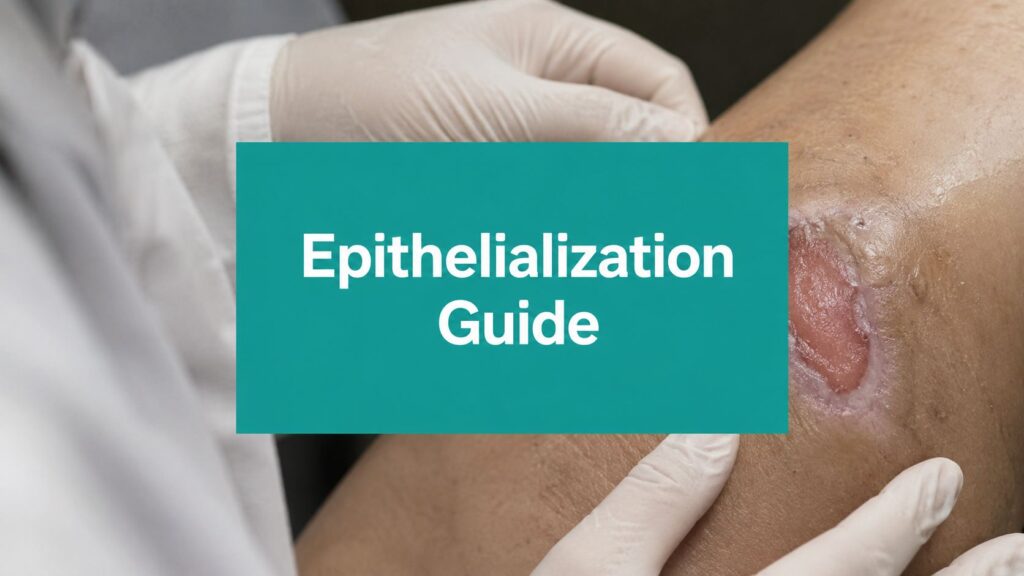
A wound can look busy and still be going nowhere. The base is pink, the exudate has settled down, the edges are cleaner, and everybody in the chart keeps saying “filling in,” but the skin never advances. That's the moment epithelialization matters, because granulation is not closure. When Granulation Isn't Enough A diabetic foot ulcer […]
What Are Open Wounds? Types, Healing, and AI Assessment for Clinicians
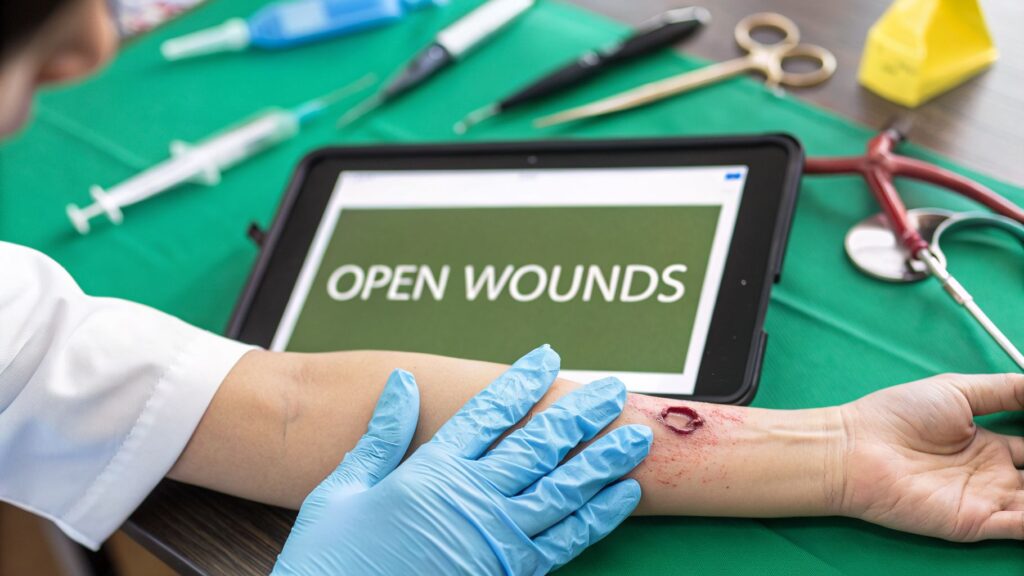
An open wound is technically any injury that breaks the skin, exposing internal tissue to the outside world. But in a clinical setting, that simple definition doesn't even begin to cover it. We're not just talking about a cut; we're talking about a complex physiological event, a potential gateway for serious infection, and a major […]
A Clinician’s Guide to Granulation Tissue Definition and Assessment
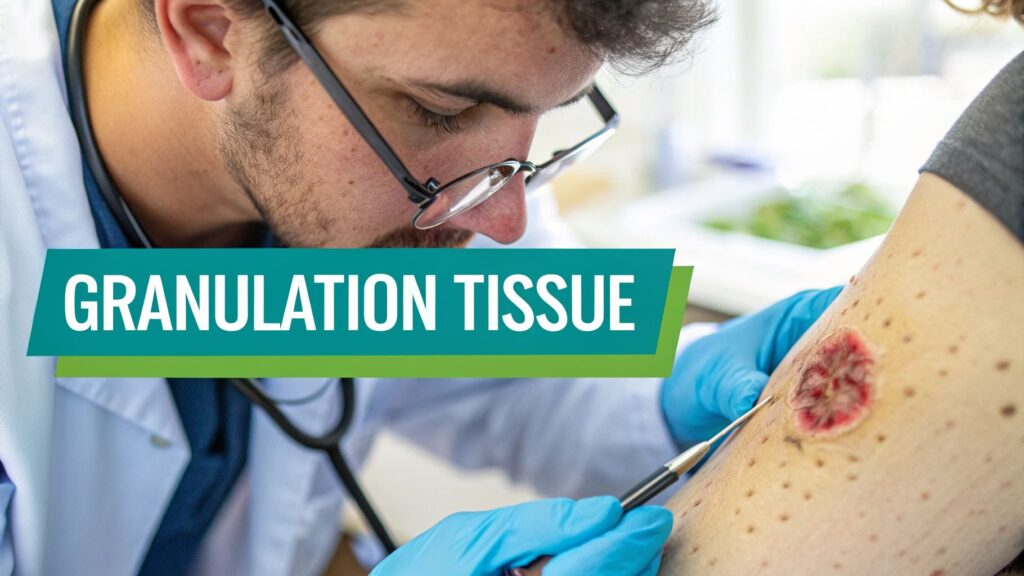
To really get a handle on wound care, you have to know what you’re looking at in the wound bed, and that starts with a clear understanding of granulation tissue. Simply put, this is the living proof that your patient's body is actively working to repair an open wound. Seeing it is a good sign—it […]
A Clinician’s Guide to Full Thickness Wound Care
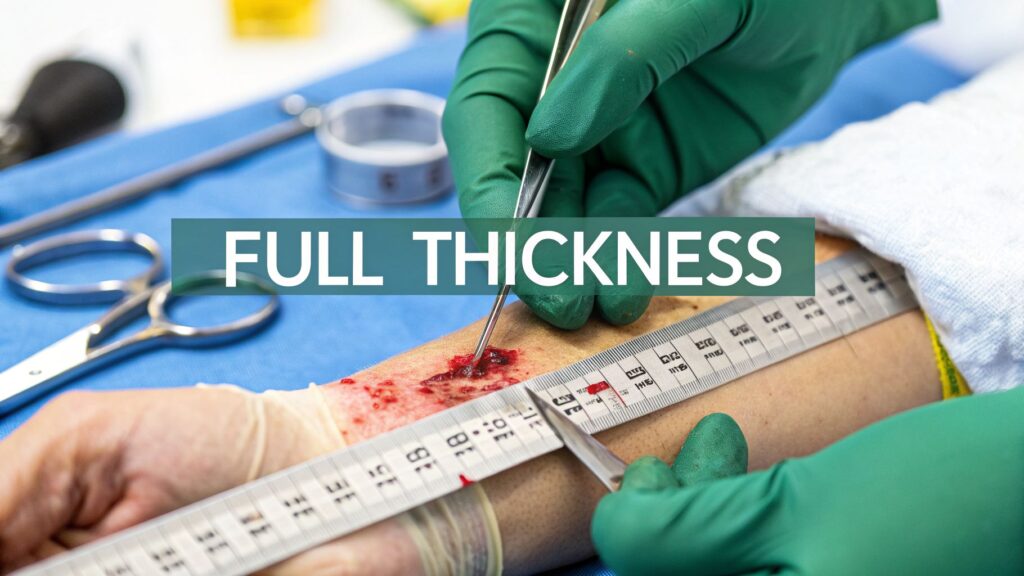
When you’re looking at an injury, the first and most critical question is always, "How deep does this go?" This isn't just an academic detail; the answer fundamentally shapes the entire treatment plan and predicts the healing journey. Understanding the difference between a partial-thickness wound and a full-thickness wound is one of the foundational concepts […]
Discover: What Is Granulation Tissue and Its Role in Healing
When a wound starts to heal, you'll often see a new, pinkish-red tissue begin to fill the space. This is granulation tissue, and it's essentially the biological scaffolding your body constructs to repair the damage. It's a temporary but absolutely critical structure made of new blood vessels, connective tissue, and immune cells all working together. […]
Guide: wound edge description for clinicians
A precise wound edge description is what elevates your assessment from a subjective art to an objective science. It tells a clear, actionable story about the wound’s status—is it healing, stalled, or getting worse? This kind of detailed data is absolutely essential for smart treatment planning, predicting healing outcomes, and getting reimbursement right. For healthcare […]
A Clinician’s Guide to Partial Thickness Wound Care
When you see a deep scrape or a second-degree burn, you're likely looking at a partial thickness wound. This is a specific kind of injury that goes through the skin's top layer (the epidermis) and cuts into the second layer (the dermis), but it stops there. It doesn't penetrate the deeper fatty tissue. Getting this […]
A Clinician’s Guide to Evidence Based Wound Care Practices
Evidence-based wound care isn’t just a buzzword; it’s a fundamental shift away from routine, ritual-based treatments toward a smarter, more effective strategy. It’s about methodically blending top-tier research with seasoned clinical expertise and, crucially, the patient’s own values and preferences. This philosophy ensures every decision, from the initial assessment to the final dressing choice, is […]