
What are superficial wounds: A Practical Guide to Quick Assessment

Superficial wounds are injuries that only scratch the surface, affecting the skin's outermost layer, the epidermis. Think of your everyday scrapes, minor cuts, and first-degree burns—the kind that don't break through the skin's main protective barrier. These seemingly minor injuries are a critical part of a clinician's daily practice, as their proper assessment can prevent […]
A Clinician’s Guide to Full Thickness Wound Care
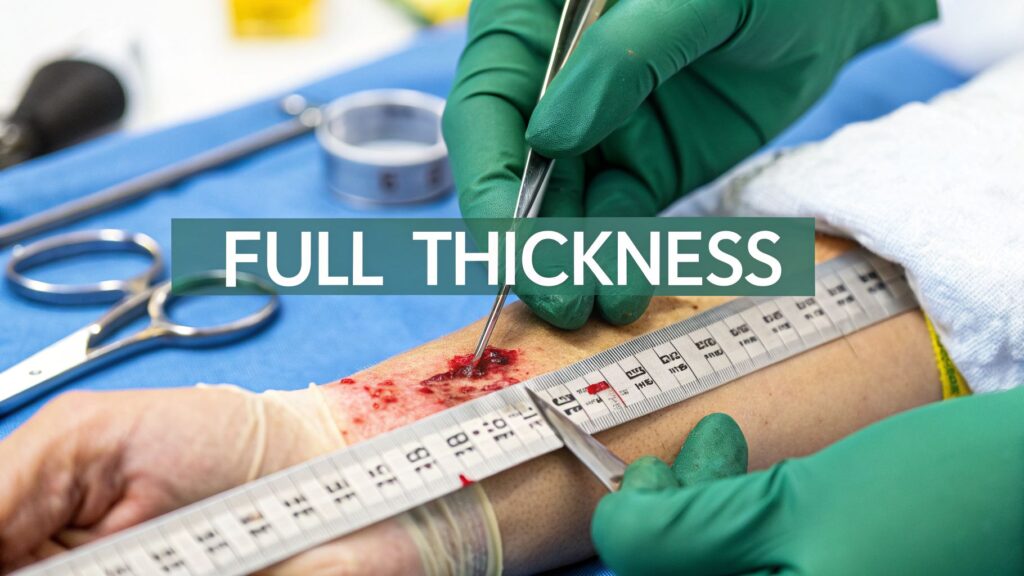
When you’re looking at an injury, the first and most critical question is always, "How deep does this go?" This isn't just an academic detail; the answer fundamentally shapes the entire treatment plan and predicts the healing journey. Understanding the difference between a partial-thickness wound and a full-thickness wound is one of the foundational concepts […]
A Nurse’s Guide to Describing a Wound for Nursing

Describing a wound for nursing isn't just about jotting down a few notes. It’s a systematic, objective assessment of its location, size, tissue types, exudate, and the surrounding skin—all coming together to create a clear clinical picture. This detailed documentation is absolutely vital for tracking healing, guiding our treatment decisions, and keeping the entire care […]
Granulation Tissue Color: Using Color Cues for Smarter Wound Care
The color of granulation tissue is one of the most immediate and telling signs of how a wound is healing. When you see that classic beefy red or a vibrant pink, it’s a great sign—it tells you there's healthy blood flow and the wound is on the right track. This healthy, new tissue is the […]
7 Essential Wound Care Documentation Examples for 2026
Accurate, consistent, and comprehensive wound care documentation is more than just a regulatory hurdle. It's the cornerstone of effective patient care, clear team communication, and successful reimbursement. Yet, clinicians often find themselves wrestling with cumbersome forms and repetitive data entry, pulling focus away from the patient. This guide cuts through the complexity by providing detailed […]
Wound Healing Process Timeline: A Guide for Clinicians
The journey of wound healing is a remarkable, highly organized process. For a simple, acute wound, this timeline is fairly predictable. The initial inflammatory reaction might last 3-7 days, the main rebuilding (proliferative) phase can take up to 3 weeks, and the final remodeling stage often continues for 12-24 months as the new tissue gains […]
A Clinician’s Guide to Wound Bed Description

A wound bed description is the specific language we use in the clinic to paint a picture of a wound's physical state. It’s how we document everything from the types of tissue we see and the amount of drainage to the health of the skin around it. Think of it as creating a detailed map […]
A Clinician’s Guide to Home Health Wound Care
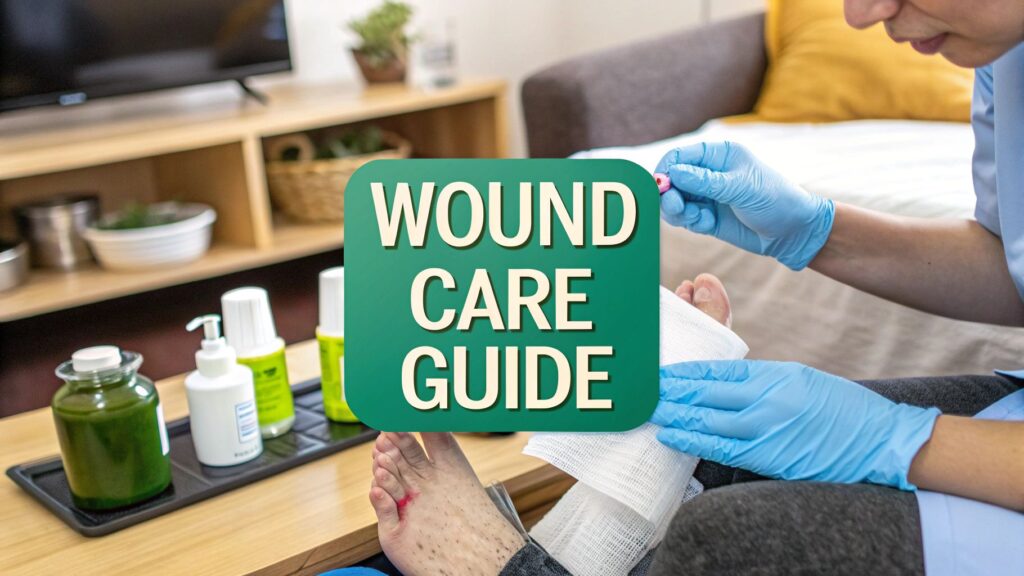
Home health wound care isn't just about changing a bandage. It's about bringing a high level of specialized medical treatment right into a patient's living room, turning what was once a hospital-based procedure into a comfortable, in-home experience. This model is crucial for managing chronic wounds, helping patients recover after surgery, and preventing serious complications […]
A Practical Guide to the Wound Care Documentation Template
When it comes to treating complex wounds, the right tools are everything. A purpose-built wound care documentation template isn’t just another form—it’s a critical clinical instrument designed to capture the highly specific details that guide treatment, ensure compliance, and secure reimbursement. It goes far beyond a generic note field, providing a structured way to document […]
Is Pus a Sign of Infection? A Guide for Clinicians
When you see pus in a wound, the first question that probably pops into your head is: is this an infection? It’s a natural assumption, but the answer isn't a simple yes or no. While pus is a clear signal of an intense inflammatory response where bacteria are present, it doesn't automatically mean you're dealing […]