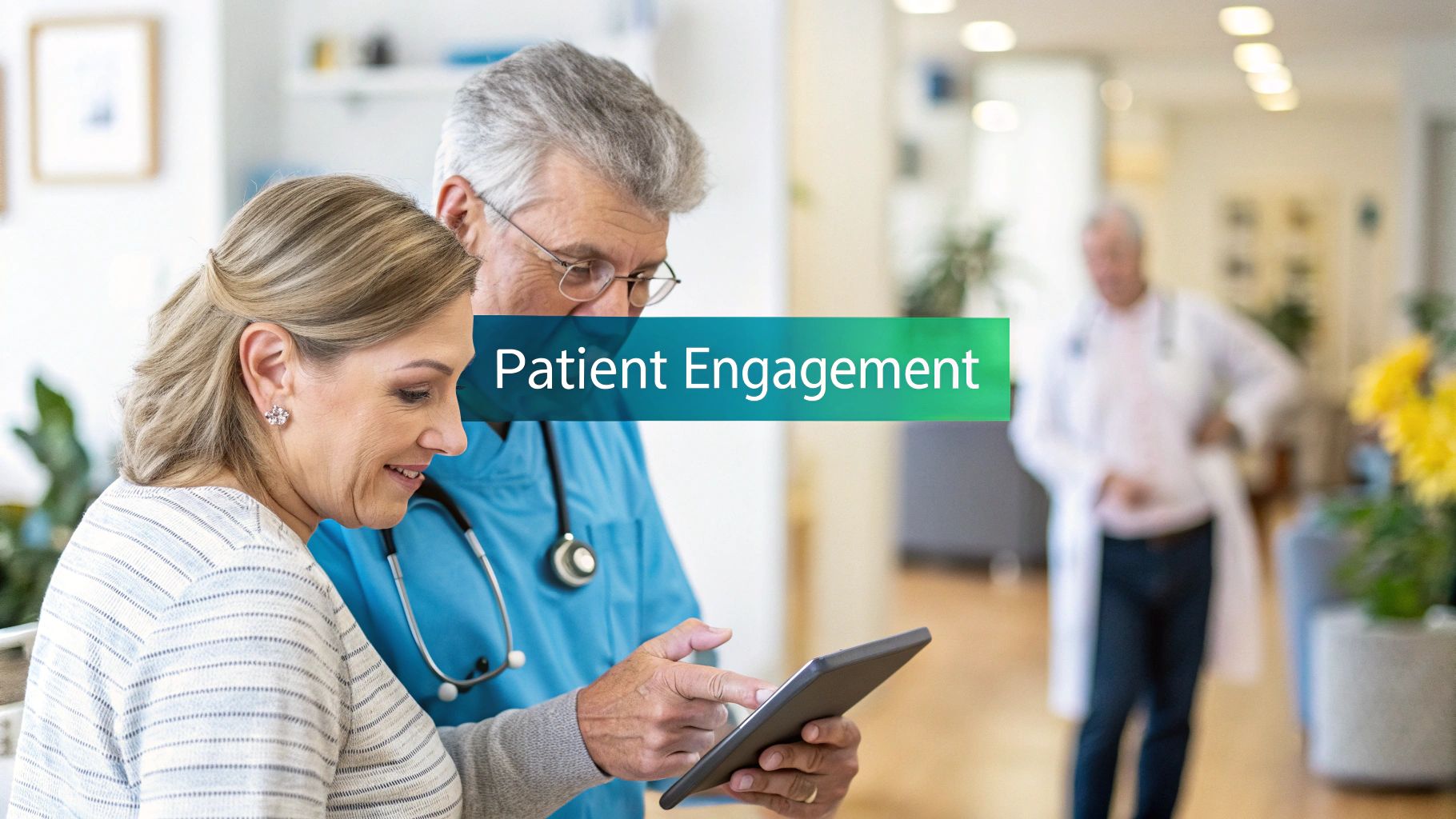
In modern healthcare, clinical excellence alone is not enough. The most successful outcomes, especially in complex fields like wound care, outpatient services, and home health, depend on what happens between visits. This is where patient engagement becomes critical. Engaged patients are more likely to adhere to treatment plans, report complications early, and actively participate in their own recovery.
Fostering this engagement requires more than just good intentions; it demands a structured, strategic approach. Passive patients rarely achieve optimal results, making the shift toward active partnership essential for both patient well-being and provider success. This is why implementing effective patient engagement strategies healthcare providers can rely on is no longer optional.
This article breaks down 10 evidence-backed, actionable strategies to transform outcomes. We will explore how to implement each strategy, measure its success, and overcome common barriers. We'll also demonstrate how technology like Ekagra Health AI can streamline and supercharge these efforts, turning passive recipients of care into active partners in their healing journey.
1. Patient Portals and Digital Health Records Access
Empowering patients begins with transparency. Patient portals and secure access to digital health records are foundational patient engagement strategies in healthcare, transforming passive recipients of care into active participants. These platforms provide a direct window into personal health information, allowing patients to view test results, track treatment plans, and monitor progress between visits. This is particularly crucial in wound care, where seeing visual progress through images and data fosters accountability and motivation.
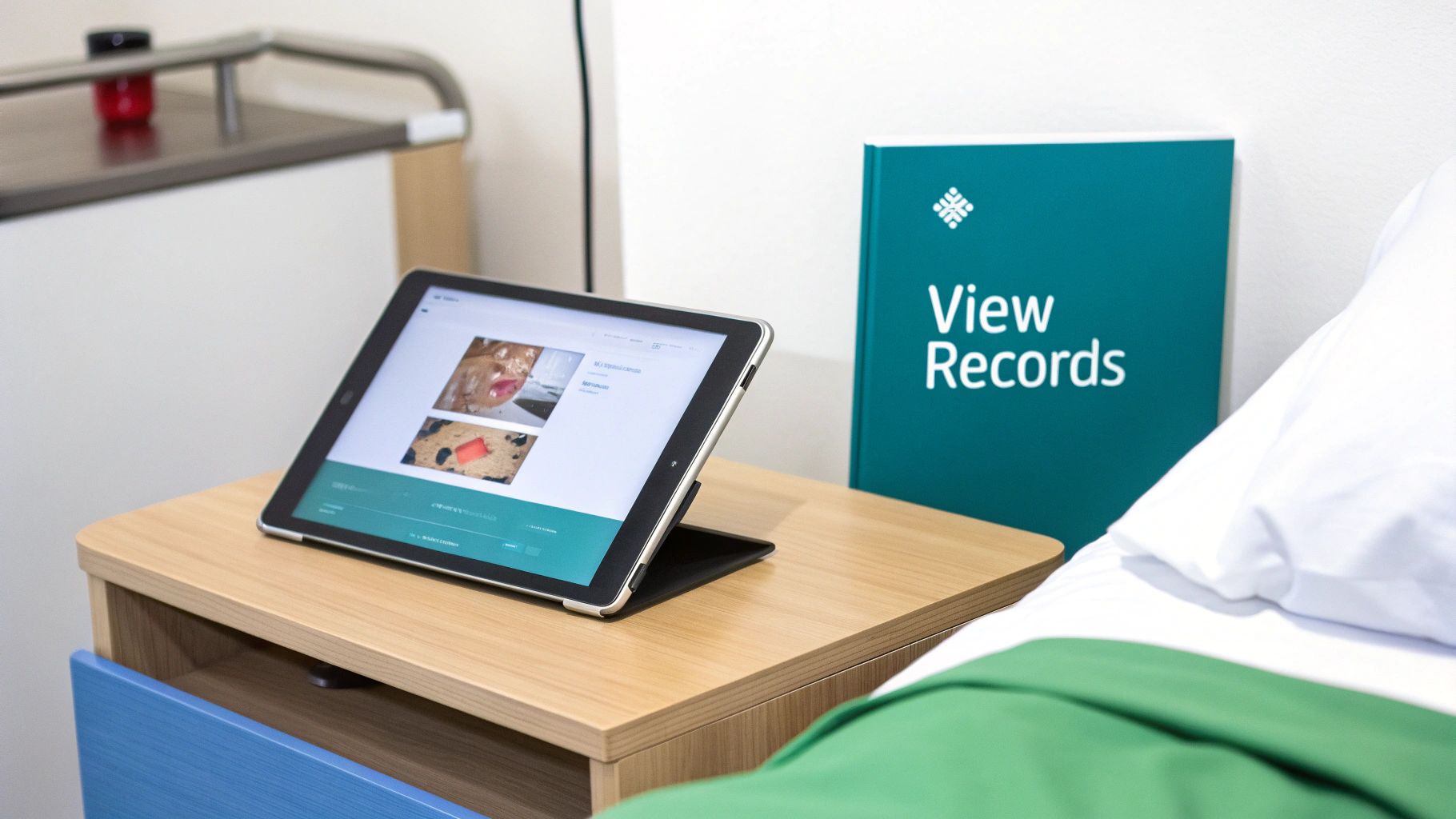
This direct access demystifies the healing process and reinforces the care plan, leading to better adherence and outcomes. For instance, a home health patient can review their wound measurements and photos, connecting their daily self-care activities to tangible results documented by their nurse. Giving patients this level of insight is not just a feature; it is a fundamental shift in the provider-patient relationship, moving from a paternalistic model to one of partnership. Research consistently shows that patients with access to their own health data feel a greater sense of control and are more likely to ask informed questions during consultations.
Key Implementation Steps
Implementing a patient portal effectively requires more than just launching the technology. Focus on a user-centric approach to maximize adoption and impact.
- Prioritize Mobile Accessibility: Ensure your portal is fully functional and easy to navigate on smartphones, as many patients, especially those managing chronic conditions at home, rely on mobile devices. A clunky mobile experience is a significant barrier to adoption.
- Provide Contextual Education: Don't just show raw data. Include simple explanations for test results or what specific healing metrics mean. For example, next to a lab result, link to a short article explaining what the test measures. This turns data into actionable knowledge.
- Integrate Telehealth: Build in a feature for quick video or text-based consultations, allowing patients to ask clarifying questions about the information they see in their portal. This bridges the gap between seeing data and understanding it.
- Offer Robust Support: Pair the portal with dedicated phone or email support to assist patients who may have lower technical literacy, ensuring no one is left behind. This is crucial for achieving equitable engagement across diverse patient populations.
By making health information not only accessible but also understandable, you equip patients to take genuine ownership of their care journey. Efficient documentation is the backbone of this process; a well-structured wound care documentation template ensures that the data populating the portal is clear, consistent, and valuable for the patient.
2. Automated Appointment and Care Reminders
Consistency is a cornerstone of effective healthcare, especially in managing chronic conditions. Automated appointment and care reminders are proactive patient engagement strategies in healthcare that use SMS, email, or app notifications to keep patients on track. These timely touchpoints significantly reduce no-show rates, improve adherence to treatment plans, and ensure continuity of care, which is vital for healing complex wounds.
This proactive communication keeps patients connected and informed between visits. For example, a patient receiving home health services might get a text reminder not only for their next nursing visit but also for their daily wound dressing change, reinforcing the care plan and their active role in the healing process. These reminders function as a digital extension of the care team, providing support and structure in the patient's home environment. The psychological benefit is also significant; patients report feeling more cared for and less anxious when they receive regular, supportive communication.
Key Implementation Steps
A successful reminder system is personalized and interactive, not just a one-way broadcast. Focus on creating a system that anticipates patient needs and simplifies their journey.
- Segment and Personalize: Tailor the timing, frequency, and channel (SMS vs. email) of reminders based on patient preferences and demographics to maximize effectiveness. A younger, tech-savvy patient might prefer an app notification, while an older patient may respond better to an automated phone call.
- Include Actionable Instructions: Go beyond dates and times. Include simple pre-visit instructions like, "Remember to keep your wound dressing dry 24 hours before your appointment," or include a link to directions.
- Enable Two-Way Communication: Allow patients to easily confirm, cancel, or reschedule directly by replying to the reminder. This empowers them and reduces administrative workload, freeing up staff for more complex tasks.
- Use Clear, Simple Language: Avoid clinical jargon in patient-facing communication. A reminder about a "debridement follow-up" is less effective than one for a "wound cleaning check-up." Aim for a 5th-grade reading level to ensure maximum comprehension.
By automating these crucial touchpoints, healthcare providers ensure patients feel supported throughout their care. This consistent engagement is essential for maintaining momentum in long-term treatment plans and achieving better clinical outcomes.
3. Patient Education and Telehealth Consultations
Knowledge is a powerful tool in healthcare. Pairing on-demand educational content with virtual care visits empowers patients to understand their conditions, treatment options, and self-care protocols. This combination is one of the most effective patient engagement strategies in healthcare, especially for complex cases like wound care, where continuity and expert guidance between in-person appointments are critical.
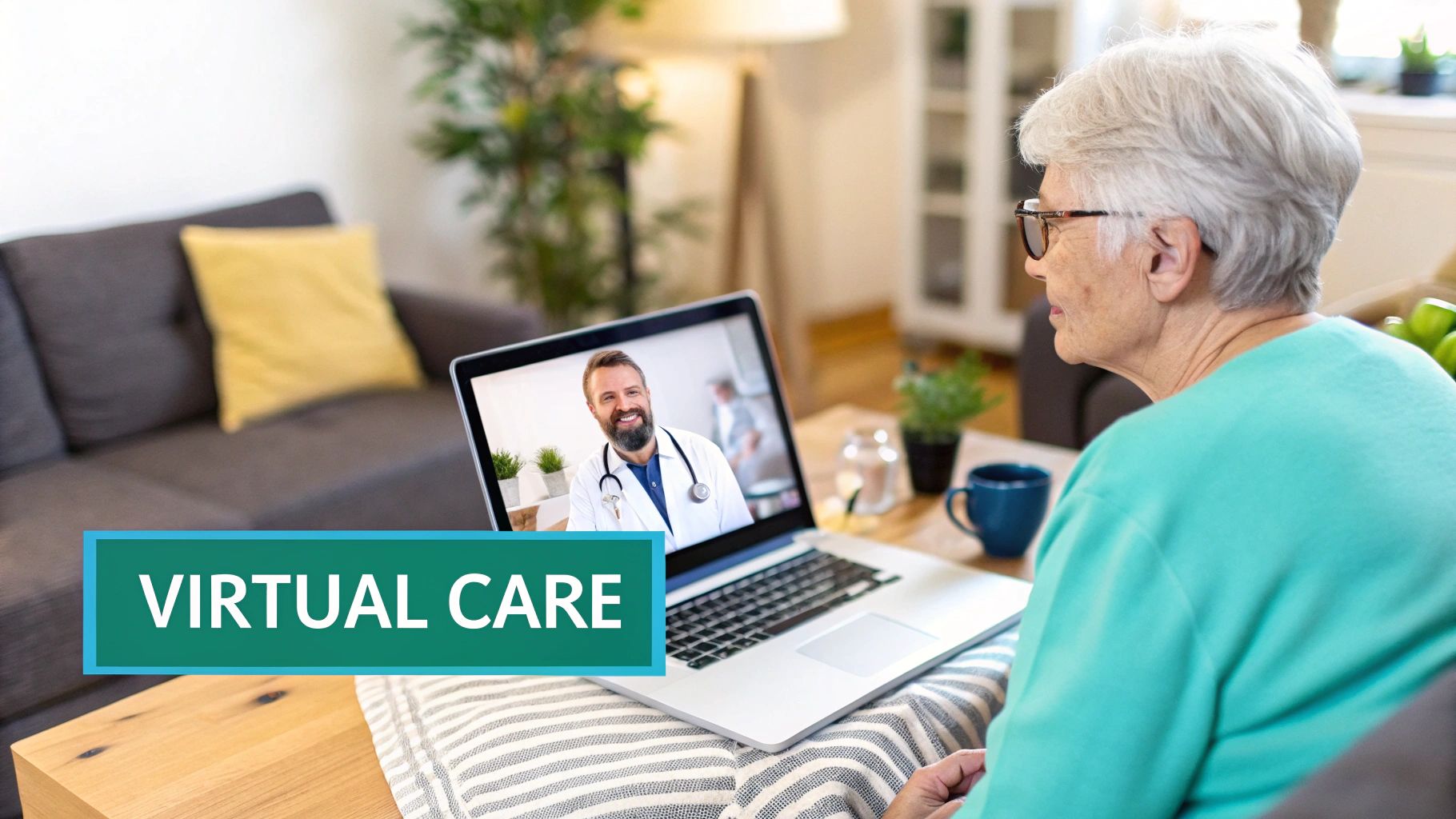
Telehealth consultations bridge care gaps for homebound or geographically isolated patients, allowing clinicians to conduct remote wound assessments and provide timely advice. When a home health nurse can consult a remote wound specialist via video, or a patient can quickly clarify a dressing change procedure, engagement soars and potential complications are averted. This model transforms care delivery from episodic to continuous. Educational content, such as short videos or illustrated guides, can be "prescribed" before a telehealth visit to prepare the patient, making the virtual consultation more efficient and focused.
Key Implementation Steps
A successful telehealth and education program is built on clear protocols and accessible technology. The goal is to make virtual care a seamless and valuable extension of your in-person services.
- Standardize Telehealth Protocols: Develop clear guidelines for virtual wound assessments, including high-quality photography standards, to ensure consistent and accurate evaluations. This standardization is key to maintaining clinical quality in a virtual setting.
- Integrate Educational Content: Link telehealth visits with targeted educational modules. After a virtual consultation, direct the patient to a short video on infection prevention or proper offloading techniques discussed during the call. This reinforces learning and improves retention.
- Train Staff on "Webside Manner": Equip your clinical team with skills for effective virtual communication, ensuring empathy and clarity are conveyed through the screen. This includes making eye contact with the camera, speaking clearly, and actively listening without interruption.
- Offer Hybrid Care Models: Combine virtual visits for routine monitoring and check-ins with in-person appointments for debridement or complex procedures to optimize convenience and clinical effectiveness. This approach offers the best of both worlds.
By integrating these tools, you provide a support system that extends far beyond the clinic walls. This is particularly vital in settings like home health wound care, where patient autonomy and remote support are paramount to achieving positive outcomes.
4. Shared Decision-Making and Treatment Preference Elicitation
True patient engagement moves beyond informing patients to actively involving them in their care journey. Shared decision-making (SDM) is a structured process where clinicians and patients collaborate to make treatment choices. This approach presents evidence-based options, transparently discusses risks and benefits, and formally documents patient preferences and values, honoring their autonomy and improving adherence to the chosen care plan.

This collaborative model is particularly impactful in wound care, where treatment options can significantly affect a patient’s lifestyle. For example, when choosing between different debridement methods or advanced therapies, involving the patient ensures the final plan aligns with their tolerance, daily routine, and personal goals, which directly boosts treatment success and satisfaction. It acknowledges that the "best" clinical option may not be the best option for a particular individual if it doesn't fit into their life. This process builds immense trust and transforms the patient into a true partner.
Key Implementation Steps
Successfully integrating SDM requires a shift from a directive to a partnership-based approach. A structured implementation is key to making this one of your most effective patient engagement strategies in healthcare.
- Utilize Visual Decision Aids: Develop or adopt simple, visual aids (like infographics or short videos) that clearly explain treatment options, outcomes, and side effects, tailored to the patient's health literacy level. These tools facilitate understanding and comparison.
- Allocate Dedicated Discussion Time: Schedule specific time within appointments for these crucial conversations. Rushing this process undermines its purpose and erodes patient trust. Signal to the patient that their input is valued by dedicating time to it.
- Train Teams in Patient-Centered Communication: Equip your clinical staff with skills in motivational interviewing and active listening to effectively elicit and understand patient preferences, goals, and concerns.
- Document Preferences Systematically: Integrate a structured format within the EHR to capture patient values and chosen treatment paths, ensuring the entire care team is aligned and can revisit these preferences as the patient's condition evolves.
5. Wearable Technology, Remote Patient Monitoring (RPM) and Patient-Generated Health Data (PGHD)
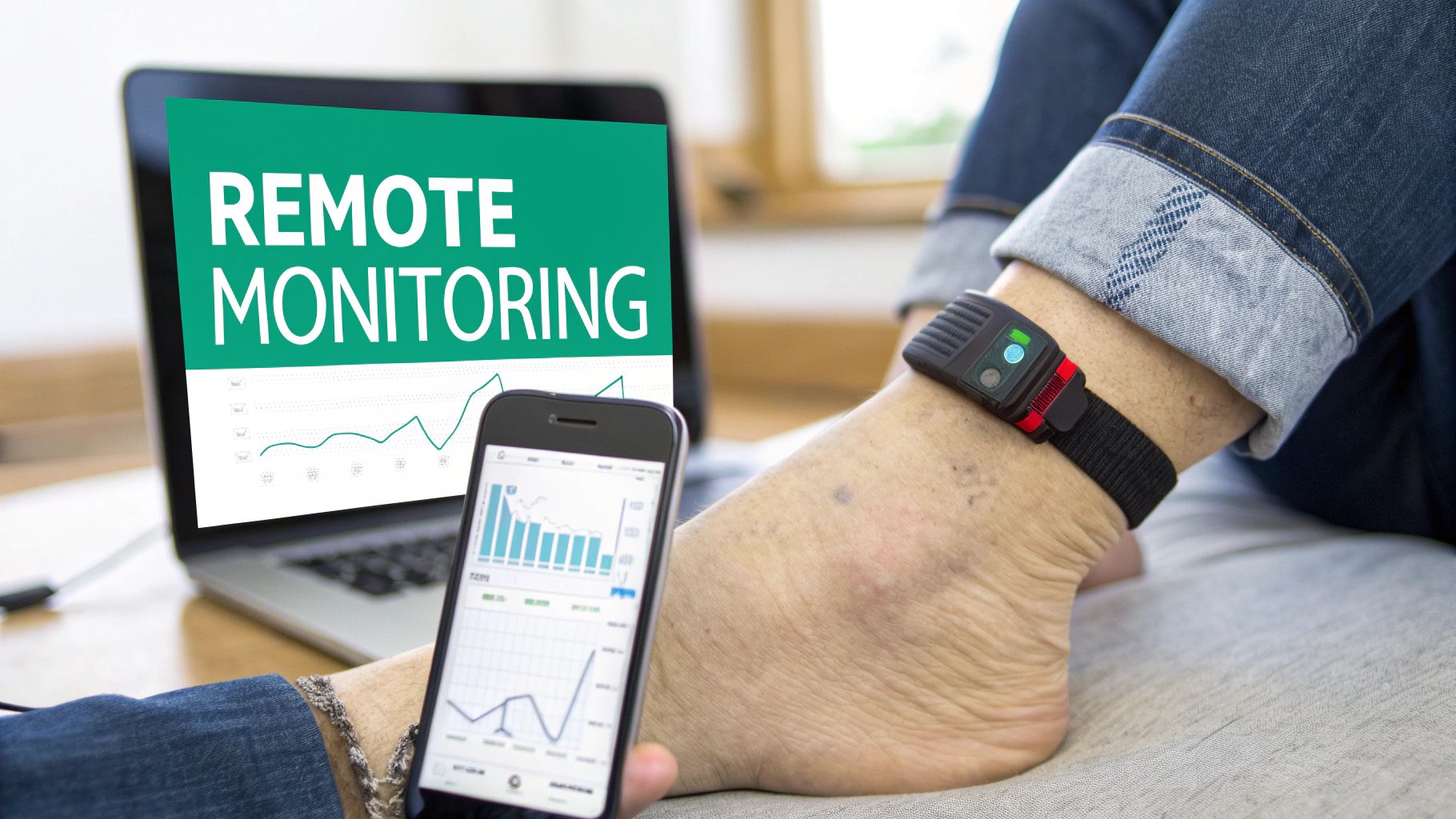
Extending care beyond the clinic walls is one of the most powerful patient engagement strategies in healthcare. Wearable technology, Remote Patient Monitoring (RPM), and the collection of Patient-Generated Health Data (PGHD) create a continuous feedback loop between patients and providers. This approach uses connected devices and patient self-reporting to monitor vital signs, wound status, activity levels, and symptoms from the patient's home, providing a richer, longitudinal view of their health.
This constant stream of data allows for proactive interventions rather than reactive responses. For instance, smart socks like those from Podimetrics can detect temperature changes in a diabetic patient's foot, a precursor to ulceration, enabling clinicians to intervene days before a wound would otherwise become apparent. This strategy transforms patient engagement from an episodic event into an ongoing, collaborative process. The patient becomes an active data gatherer, directly contributing to their own care plan and seeing the immediate relevance of their daily actions.
Key Implementation Steps
Successfully integrating RPM and PGHD requires a clear strategy that balances technology with human-centric workflows to ensure data is both collected and acted upon effectively.
- Start with High-Risk Populations: Focus initial RPM programs on patients who will benefit most, such as those with diabetic foot ulcers or post-surgical wounds, to demonstrate a clear return on investment and refine workflows before scaling.
- Establish Clear Clinical Protocols: Define specific monitoring intervals, alert thresholds for data points like temperature or pain levels, and the exact clinical workflow for responding to an alert. Who gets the alert? What is the expected response time?
- Prioritize Patient Training: Provide thorough, hands-on training for patients on how to use their devices and log data. Simplicity is key; start with high-value metrics like pain scores or photos of the wound dressing to reduce burden and build confidence.
- Integrate Data with Decision Support: Ensure that incoming data from RPM devices feeds directly into your EMR. This data is most valuable when it powers tools that help clinicians make informed decisions, highlighting the benefits of clinical decision support systems.
6. Structured Follow-Up Protocols and Care Escalation Pathways
Effective patient engagement in healthcare hinges on consistency and timely intervention. Structured follow-up protocols and clear care escalation pathways provide a safety net, ensuring patients receive the right level of attention at the right time. These systems define follow-up intervals, escalation triggers, and care transition steps based on wound assessment data and patient risk, preventing crucial details from falling through the cracks. This systematic approach fosters patient trust and security, as they know a clear plan is in place to manage their condition.
When a home health patient’s wound shows signs of infection based on standardized assessment scores like the PUSH tool, the protocol automatically triggers an alert. This ensures a prompt telehealth consultation or an escalation to a specialized wound clinic, averting complications and reinforcing the value of ongoing monitoring. These pathways remove ambiguity from the care process, ensuring every member of the team knows exactly what steps to take when a patient's condition changes, leading to faster, more reliable interventions and improved safety.
Key Implementation Steps
Building effective protocols requires a data-driven and collaborative approach that standardizes care while remaining flexible enough for individual patient needs.
- Base Protocols on Evidence: Build your pathways using established guidelines from organizations like the Wound, Ostomy, and Continence Nurses Society (WOCN) to ensure clinical best practices are embedded in your workflows.
- Define Clear Triggers: Use objective metrics from wound assessments (e.g., increased exudate, changes in wound size, specific pain score thresholds) to create unambiguous triggers for care escalation. This removes subjective guesswork.
- Automate Workflows: Leverage technology to automate follow-up reminders, schedule appointments, and send alerts to care team members when an escalation trigger is met. Automation ensures reliability and efficiency.
- Establish Communication Plans: Define how information is shared between care settings, such as from a home health agency to a hospital's wound center, ensuring seamless transitions and avoiding information gaps.
By creating a predictable and responsive care journey, you empower patients with the confidence that their progress is being closely watched, making them more engaged partners in their own healing.
7. Peer Support and Patient Community Programs
Managing chronic conditions can feel isolating, but shared experience is a powerful motivator. Peer support and patient community programs are essential patient engagement strategies in healthcare that connect individuals with others facing similar health challenges. These structured systems, whether in-person or virtual, create a space for patients to share coping strategies, practical tips, and mutual encouragement. This connection combats the emotional burden of chronic wounds and significantly improves self-efficacy.
When a patient with a diabetic foot ulcer connects with a peer who has successfully managed the same condition, they gain not just information but also hope and a tangible example of success. This shared journey fosters a sense of accountability and provides insights that clinical advice alone cannot offer, leading to better adherence and a more positive outlook on treatment. These communities provide a unique form of validation and practical wisdom that complements formal medical advice, addressing the psychosocial aspects of healing that are often overlooked.
Key Implementation Steps
Building a successful patient community goes beyond simply creating a forum. It requires thoughtful structure and facilitation to ensure it remains a safe, positive, and medically sound resource.
- Partner with Patient Advocates: Collaborate with established advocacy organizations like the American Diabetes Association to recruit and properly train peer leaders who can guide discussions effectively and model positive health behaviors.
- Offer Hybrid Formats: Provide both in-person meetings and virtual options (like private social media groups or dedicated platforms) to accommodate patients with mobility issues or transportation challenges, maximizing accessibility and participation.
- Establish Clear Guidelines: Create and enforce rules for group discussions to ensure conversations are respectful, supportive, and focused on evidence-based information, preventing the spread of misinformation.
- Ensure Clinician Oversight: Have a clinician available to answer complex medical questions that arise, providing a reliable source of expertise and reinforcing the connection to the professional care team. This adds credibility and safety to the community.
8. Incentive Programs and Behavioral Economics Strategies
Motivation is a powerful component of healing. Structured reward systems and behavioral nudges, grounded in behavioral economics, are effective patient engagement strategies in healthcare that encourage positive actions. These programs make desired behaviors, like attending follow-up appointments or adhering to a care plan, easier and more appealing for patients managing complex wounds. By offering small, tangible rewards, providers can foster consistency and build momentum toward clinical milestones.
This approach acknowledges the effort involved in managing chronic conditions. For instance, community health centers have seen improved outcomes by offering modest gift cards for chronic wound care follow-ups, while podiatry clinics use gamified apps to celebrate patient engagement milestones. These incentives act as positive reinforcement, linking patient actions directly to a rewarding outcome. The principles of behavioral economics, such as loss aversion or the power of small, immediate rewards, can be harnessed to overcome common barriers like procrastination or forgetfulness.
Key Implementation Steps
Successfully integrating incentives requires careful planning to motivate without coercing. The goal is to encourage, not to create dependency on the reward.
- Align Incentives with Clinical Goals: Focus rewards on high-priority behaviors that directly impact outcomes, such as appointment attendance, medication adherence, or consistent offloading for diabetic foot ulcers.
- Keep Rewards Modest and Transparent: Use small-value incentives ($10–$50) to avoid any perception of coercion. Ensure the structure is simple and clearly communicated so patients understand exactly what is required to earn a reward.
- Combine Financial and Non-Financial Nudges: Pair tangible rewards with recognition, progress badges, or positive feedback. Celebrating small wins helps build a patient's self-efficacy and internal motivation, which is more sustainable long-term.
- Monitor and Adjust Regularly: Track the program’s impact on engagement metrics. Review effectiveness quarterly to identify what works and adjust the strategy based on data to prevent patients from "gaming the system."
By thoughtfully applying behavioral economics, you can create a supportive environment that gently nudges patients toward better health habits and stronger engagement.
9. Culturally Tailored Care Communication and Health Literacy Approaches
Effective patient engagement hinges on clear, respectful, and understandable communication. Culturally tailored care recognizes that a one-size-fits-all approach to patient education is ineffective, as health beliefs, language, and literacy levels vary widely. This strategy involves customizing communication to align with a patient's cultural background and health literacy, ensuring information is not only received but also trusted and acted upon. This is a critical component of successful patient engagement strategies in healthcare.
When a patient from a collectivist culture receives wound care instructions that also involve family members, adherence improves dramatically. Similarly, providing dressing change videos in a patient's native language, like Spanish or Vietnamese, bridges communication gaps and empowers them to manage their care confidently at home. This respect for individual context builds trust, a cornerstone of any effective therapeutic relationship. Addressing health literacy means simplifying medical jargon, using plain language, and confirming understanding to ensure instructions are actionable for everyone, regardless of their educational background.
Key Implementation Steps
Integrating cultural competence requires a deliberate and organization-wide commitment to understanding the diverse communities you serve.
- Conduct Community Needs Assessments: Identify the primary languages, cultural health beliefs, and common literacy levels within your patient population to guide resource development and staff training.
- Use the "Teach-Back" Method: After explaining a care plan, ask the patient to explain it back in their own words ("To make sure I did a good job explaining, can you tell me how you'll change your dressing tomorrow?"). This simple step verifies comprehension and clarifies any misunderstandings before they lead to errors.
- Provide Multilingual and Simple-Language Materials: Offer all essential educational materials, from brochures to portal instructions, in the patient's preferred language and at a 5th-to-6th-grade reading level, using visuals and clear formatting.
- Train Staff in Cultural Humility: Go beyond basic awareness training. Equip your clinical team with skills in cultural humility, which involves self-reflection and a commitment to understanding and honoring each patient’s unique perspective without making assumptions.
10. Analytics and Patient Engagement Measurement Dashboards
You can't improve what you don't measure. Analytics dashboards are essential patient engagement strategies in healthcare that move beyond intuition to data-driven decision-making. These systems track key metrics like portal logins, appointment adherence, and completion of educational modules, correlating them with clinical outcomes such as healing rates and reduced readmissions. This provides a clear, quantitative picture of what’s working and who might be falling behind.
For example, a wound care network can use a custom dashboard to compare site-level engagement with healing trajectories, identifying high-performing clinics whose successful tactics can be replicated. This approach transforms raw data into a powerful tool for optimizing care across an entire patient population. Dashboards can also identify at-risk patients—for example, those who haven't logged into the portal or have missed multiple follow-ups—allowing care teams to intervene proactively before a negative outcome occurs.
Key Implementation Steps
Effective measurement requires a thoughtful approach to data collection and analysis. Focus on building a system that delivers actionable insights rather than just information.
- Define Clear KPIs: Establish specific, measurable engagement key performance indicators (KPIs) that are directly linked to clinical goals, such as a 15% increase in patient-reported outcomes submissions or a 10% reduction in 30-day readmissions.
- Focus on Actionable Metrics: Track metrics that drive behavior change. Instead of just counting portal logins, measure how many patients use the portal to ask a question or confirm their care plan. This measures active engagement, not just passive access.
- Train Your Team: Provide comprehensive training to clinicians and administrative staff on how to interpret the dashboard data and use the insights to proactively support patients. Data is useless without a team empowered to act on it.
- Review and Refine: Schedule regular monthly or quarterly reviews of the dashboard to identify trends, evaluate the effectiveness of interventions, and make necessary adjustments to your strategies. This creates a cycle of continuous improvement.
By systematically measuring engagement, healthcare organizations can create a continuous improvement cycle, ensuring their patient engagement strategies healthcare efforts are both impactful and efficient.
10-Point Comparison of Patient Engagement Strategies
| Strategy / Tool | Implementation Complexity 🔄 | Resource Requirements ⚡ | Expected Outcomes ⭐📊 | Ideal Use Cases 💡 | Key Advantages ⭐ |
|---|---|---|---|---|---|
| Patient Portals & Digital Health Records Access | Medium–High — EHR integration, security, compliance | Moderate–High — IT, maintenance, certification | ⭐⭐ — transparency, better adherence; 📊 reduces admin burden | Outpatient wound clinics; chronic-care patients who use digital tools | Real-time records, secure messaging, integrated imaging |
| Automated Appointment & Care Reminders | Low–Medium — scheduler integration, consent mgmt | Low — messaging platform, contact data | ⭐ — fewer no-shows (20–40%); 📊 improved protocol adherence | High-volume clinics; patients with missed-visit problems | Scalable, low-cost, reduces staff outreach time |
| Patient Education & Telehealth Consultations | Medium — video platform + content curation | Medium — bandwidth, clinician time, content dev | ⭐⭐ — increased knowledge, access; 📊 fewer travel-related barriers | Rural/homebound patients; follow-up and triage visits | Extends access, supports remote assessment and billing |
| Shared Decision-Making & Preference Elicitation | Medium — decision aids, workflow changes, training | Low–Medium — staff time, training, documentation | ⭐ — higher satisfaction/adherence; 📊 personalized plans | Preference-sensitive choices; chronic wound care planning | Documents values, improves adherence and trust |
| Wearables, RPM & Patient-Generated Health Data | High — device integration, validation, regulatory work | High — devices, platforms, data ops, reimbursement workflows | ⭐⭐ — early detection, granular monitoring; 📊 potential RPM revenue | High-risk (diabetic foot), post-op monitoring, research cohorts | Continuous objective data, proactive alerts, measurable outcomes |
| Structured Follow‑Up Protocols & Escalation Pathways | Medium — protocol design, EHR automation | Medium — training, governance, workflow tools | ⭐ — fewer gaps/readmissions; 📊 standardized care quality | Multi-site care coordination; high-risk wound populations | Consistent escalation, efficient resource allocation |
| Peer Support & Patient Community Programs | Low–Medium — platform + moderation, facilitation | Low — peer leaders, minimal staff oversight | ⭐ — improved self-efficacy and adherence (qualitative) | Chronic wound patients needing psychosocial support | Cost-effective engagement, peer-driven practical tips |
| Incentive Programs & Behavioral Economics | Medium — program design, monitoring, compliance | Medium — funding for rewards, tracking systems | ⭐ — short-term adherence boost; 📊 measurable attendance gains | Underserved populations, low-adherence cohorts | Motivates behavior, measurable engagement improvements |
| Culturally Tailored Communication & Health Literacy | Medium — translation, cultural adaptation, training | Medium — translators, CHWs, adapted materials | ⭐⭐ — reduced disparities, better comprehension; 📊 improved adherence | Diverse-language communities, low-literacy patients | Increases trust, equity, and actionable understanding |
| Analytics & Patient Engagement Dashboards | High — data integration, modeling, governance | High — analytics staff, tools, data pipelines | ⭐⭐ — identifies effective strategies; 📊 ROI and predictive insights | Health systems, QI teams, population-health management | Actionable insights, risk stratification, measures program impact |
Integrating Your Strategy: From Isolated Tactics to a Unified Engagement Ecosystem
The journey toward superior patient outcomes and operational efficiency is paved with meaningful, consistent engagement. We've explored ten powerful patient engagement strategies in healthcare, from leveraging digital tools like patient portals and telehealth to implementing human-centric approaches such as shared decision-making and culturally tailored communication. Each strategy offers a distinct pathway to empower patients, turning them from passive recipients of care into active partners in their health journey.
However, the true power of these strategies is not realized in isolation. Implementing automated reminders without accessible educational content, or collecting patient-generated data without integrating it into shared treatment plans, results in a fragmented and often frustrating experience. The most forward-thinking healthcare organizations understand that these are not just individual tactics to be checked off a list; they are interconnected components of a comprehensive engagement ecosystem.
Key Takeaways: Building Your Cohesive Strategy
The central theme is integration. A patient portal becomes a dynamic hub when populated with educational resources and connected to telehealth services. Remote patient monitoring is most effective when its data informs structured follow-up protocols and escalates care when necessary. The goal is to create a seamless, supportive, and continuous loop of communication and collaboration between patients and providers.
This unified approach accomplishes several critical objectives:
- It reinforces patient activation: Each touchpoint, from an appointment reminder to a post-visit survey, strengthens the patient's role and confidence.
- It streamlines clinical workflows: When engagement tools are integrated, they reduce administrative burdens, not add to them. Data flows from one system to another, providing clinicians with a holistic view without manual effort.
- It drives measurable results: A cohesive ecosystem allows you to track engagement metrics across the entire patient journey, correlating specific actions with clinical outcomes like improved wound healing rates or reduced readmissions.
Actionable Next Steps for Implementation
Transforming your approach from isolated actions to an integrated ecosystem requires a strategic mindset. Begin by auditing your current patient engagement strategies in healthcare. Identify which tactics you are using and, more importantly, where the connections between them are broken. Ask critical questions: Does our patient portal link directly to scheduling telehealth visits? Do our care reminders include links to educational materials relevant to the upcoming appointment?
From there, prioritize one or two key integration points to build upon. For example, focus on connecting your remote monitoring program with your shared decision-making process, ensuring patient-generated data becomes a central part of every care plan discussion. The ultimate aim is to dismantle the silos that separate these powerful tools, weaving them into a single, intuitive workflow for both your team and your patients. Mastering these integrated concepts is no longer a competitive advantage; it is a fundamental requirement for delivering high-value, patient-centered care in a modern healthcare landscape.
Ready to unify your patient engagement strategies and reclaim valuable clinical time? Discover how Ekagra Health AI can automate your documentation, structure your data for powerful analytics, and create a seamless engagement ecosystem. Visit Ekagra Health AI to see how our platform transforms workflows from the bedside to the back office, empowering you to focus on what matters most: your patients.
