
Healing a diabetic wound isn't just about slapping on a bandage and hoping for the best. It's a complex, multi-pronged effort that involves getting blood sugar under control, restoring proper blood flow, fighting off infection, and taking pressure off the affected area. This is not a simple cut or scrape; it's a manifestation of a systemic disease that requires a sophisticated, evidence-based approach to manage effectively.
The real key to success is tackling the underlying systemic problems that diabetes creates. You can't just treat the wound; you have to treat the patient as a whole. This means meticulous debridement, choosing the right dressings, and keeping a close eye on the patient's progress are absolutely non-negotiable for heading off serious complications like amputation or even mortality. This guide is designed for clinicians on the front lines, providing a detailed framework for understanding, assessing, and treating these challenging wounds to improve patient outcomes.
The Reality of a Diabetic Wound
For any clinician in the trenches, a diabetic wound is so much more than a simple break in the skin. It's a clinical landmine with potentially devastating consequences that demand immediate and expert attention. It represents a critical failure point where the body's natural healing mechanisms have been systematically dismantled by the long-term effects of diabetes.
Picture a common scenario we see all the time: a 64-year-old man with type 2 diabetes comes in with a small, seemingly harmless ulcer on the bottom of his foot. He barely even felt it—a classic sign of nerve damage, or neuropathy, which effectively silences the body's natural pain alarm. This lack of sensation is one of the most insidious aspects of diabetic foot disease, allowing significant tissue damage to occur without the patient's awareness.
That one small ulcer is the first chapter in a story that can spiral out of control, fast. Without the right intervention, it becomes an open door for infection, a risk that's magnified by the patient's already compromised immune system. This isn't a rare case; it's a daily reality in wound care clinics across the country, and it underscores the urgency and complexity of managing these conditions.
The Problem by the Numbers
The statistics on diabetic foot ulcers (DFUs) are genuinely startling and paint a grim picture of the global health challenge they represent. Every year, about 18.6 million people around the world develop a DFU, making it one of the most significant and costly complications of diabetes. The sheer volume of cases places an enormous strain on healthcare systems and individual lives.
Worse yet, these ulcers are the precursor to roughly 80% of all lower limb amputations in patients with diabetes. The 5-year mortality rate for someone with a DFU is 30%. If that patient undergoes a major amputation, the rate tragically skyrockets to over 70%. You can read the full research about these DFU statistics to see the data for yourself. These mortality rates are higher than those for many common forms of cancer, including breast and prostate cancer.
These numbers aren't just statistics; they represent lives profoundly impacted by a preventable and treatable condition. They underscore why treating a diabetic wound is a mission-critical intervention. The challenge isn't just the wound itself but a triad of physiological failures working against you:
- Neuropathy: Damaged nerves mean patients can't feel injuries, so they go unnoticed and untreated for far too long. This sensory deficit is the primary initiating factor for most DFUs.
- Vascular Disease: Poor circulation, often due to peripheral artery disease (PAD), starves the wound of the oxygen and nutrients it desperately needs to repair itself. This ischemic environment significantly impairs all phases of healing.
- Impaired Immune Response: High blood sugar cripples the body's ability to fight infection and orchestrates the complex healing cascade. Leukocyte function is diminished, making the patient highly susceptible to polymicrobial infections.
A diabetic wound isn't just a localized injury; it's a systemic failure manifesting on the skin's surface. Effective management requires treating the patient as a whole, not just the hole in the patient. This holistic approach is the only way to achieve sustainable healing and prevent recurrence.
Ultimately, great wound care is about so much more than finding the perfect dressing. It’s about preventing catastrophic infections, saving limbs, and preserving a patient's quality of life. This guide is built to give you the evidence-based strategies you need to meet that challenge head-on.
Why Diabetic Wounds Fail to Heal

To really get a handle on healing diabetic wounds, we first have to appreciate the powerful physiological forces working against us. Think of normal healing as a perfectly coordinated construction project. An injury sounds an immediate alarm, supply lines open up, and a skilled repair crew gets right to work, moving through predictable phases of hemostasis, inflammation, proliferation, and remodeling.
But for a patient with diabetes, that entire project is systematically sabotaged at multiple levels. The body's well-designed system falters, turning what should be a minor injury into a chronic, non-healing wound. Pinpointing these points of failure is the first step toward building a treatment strategy that actually works. It's not just one problem; it's a cascade of issues creating a perfect storm for stalled healing.
Faulty Wiring: Neuropathy Silences the Alarm
The first breakdown happens at the alarm system. Diabetic neuropathy, or nerve damage, is like having faulty wiring in our construction project. It effectively cuts the communication line that would normally signal pain from an injury to the brain. This loss of protective sensation is a hallmark of diabetic foot complications.
Someone without diabetes would instantly feel a blister forming or a cut from a misplaced step. That pain is a critical alert, telling them to stop whatever is causing the harm. For so many patients with diabetes, however, that alarm is completely silent. The sensory nerves are damaged, but so are the motor and autonomic nerves, leading to muscle imbalances, foot deformities (like Charcot foot), and dry, cracked skin that is more susceptible to injury.
Without this sensory feedback, repetitive stress and minor trauma go totally unnoticed. A small pressure spot from ill-fitting shoes can become a full-thickness ulcer before the patient even knows there’s a problem. This lack of awareness is a massive driver behind why diabetic foot ulcers develop in roughly 15% of all patients with diabetes.
Because neuropathy prevents a person from feeling the initial injury, the "construction project" is already severely damaged before the work order is even sent out. This delay gives infection and tissue breakdown a dangerous head start, complicating treatment from day one.
Blocked Supply Lines: Ischemia Restricts Resources
Once an injury happens, the healing process demands a flood of resources. Oxygen, nutrients, and specialized cells all need to travel through the bloodstream to get to the wound site. This is where the second major sabotage comes into play: peripheral artery disease (PAD) and poor circulation.
Imagine the blood vessels are the supply roads to our construction site. In many people with diabetes, these arteries are narrowed or blocked by atherosclerosis—a condition made much worse by chronic hyperglycemia. This creates a state of ischemia, where the wound is literally starved of the materials it needs to rebuild. This lack of blood flow affects both large and small vessels (macro- and microangiopathy).
This resource shortage has several critical consequences:
- Oxygen Deprivation: Cells need oxygen for energy to function. Without it, the cells responsible for building new tissue, like fibroblasts, and fighting infection, like neutrophils, can't do their jobs effectively.
- Nutrient Deficiency: Key building blocks for collagen and new tissue, such as proteins, vitamins, and minerals, simply can't reach the wound bed in the right amounts.
- Impaired Cellular Transport: The delivery of immune cells to fight infection and fibroblasts to start rebuilding is severely slowed, grinding the whole repair process to a halt. The body cannot mount an effective inflammatory or proliferative response.
These blocked supply lines mean the construction site is always short on materials, so no real progress can be made. This poor blood flow is a central reason why healing diabetic wounds is such a tough clinical challenge and why vascular assessment is a critical component of the initial workup.
An Unresponsive Repair Crew: The Compromised Immune System
Finally, even if a few supplies manage to get through, the repair crew itself is often compromised. Chronic high blood sugar has a direct, damaging effect on the immune system, making the "workers"—our white blood cells—far less effective. Hyperglycemia impairs neutrophil chemotaxis, phagocytosis, and intracellular killing.
Key immune cells like neutrophils and macrophages are supposed to clean the wound of debris and bacteria, but they just don't function properly. Their ability to get to the wound, swallow pathogens, and call in other repair cells is seriously impaired. This is compounded by the accumulation of advanced glycation end-products (AGEs), which further disrupt cellular function and promote a pro-inflammatory state.
This dysfunction leads to a prolonged inflammatory state. The wound gets stuck. It can't move on to the rebuilding phase because the initial cleanup was never completed. The repair crew is on-site but disorganized and unresponsive, allowing bacteria to multiply and form biofilms, which cause even more damage. The result is a chronic wound that stays open, infected, and unable to close, turning a routine healing process into a complex clinical battle requiring a multi-faceted therapeutic approach.
Mastering Wound Assessment and Measurement
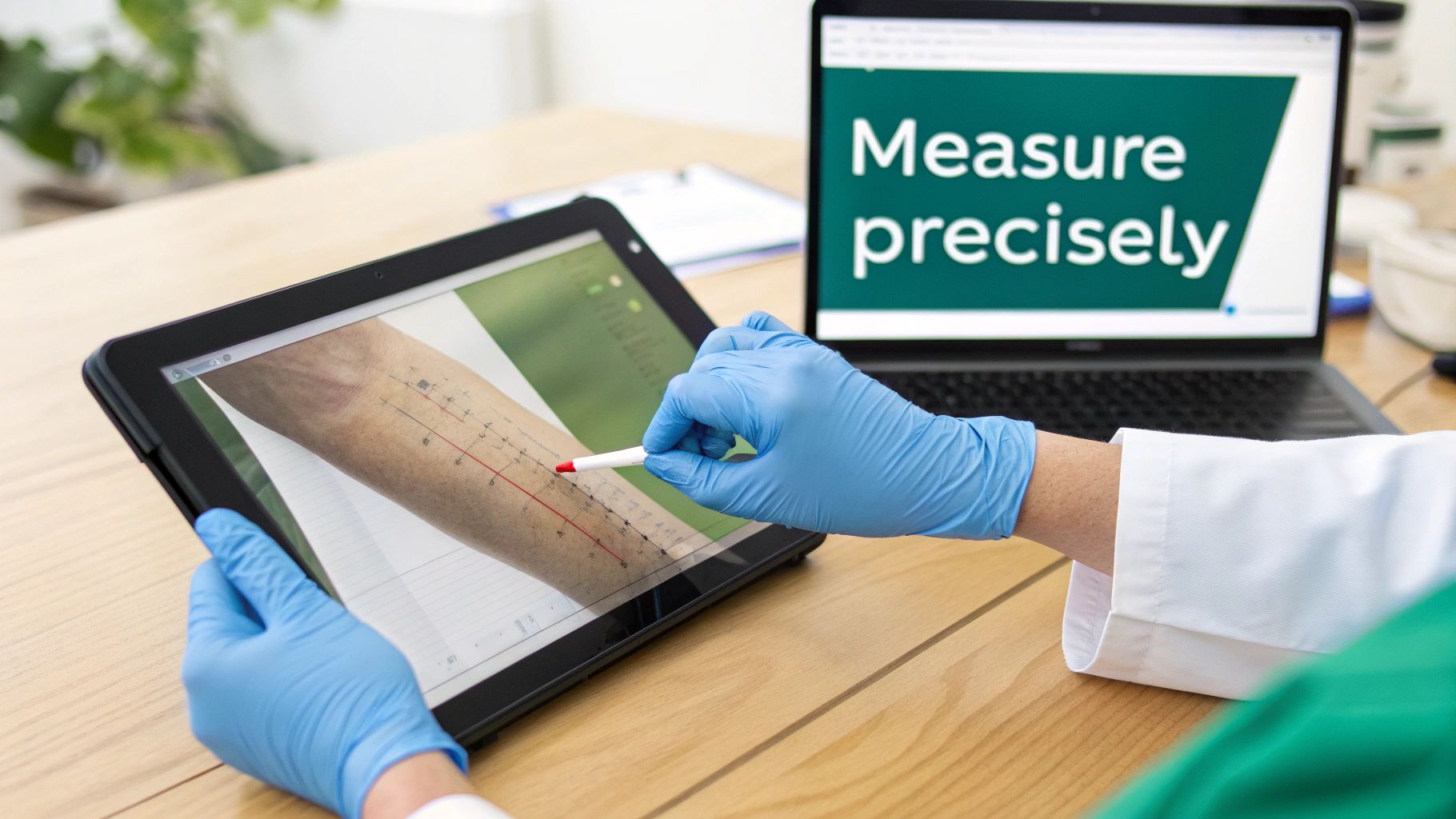
You can't effectively treat what you can't accurately measure. For decades, wound care has been stuck in a cycle of subjective observation—eyeballing dimensions and making educated guesses about tissue types. This old-school approach is riddled with variability, making it incredibly difficult to track the subtle but critical changes that signal healing or decline. It is a barrier to consistent, high-quality care.
To truly move the needle on diabetic wound outcomes, we have to shift from subjective descriptions to objective, data-driven evaluations. It's about creating a consistent language for describing and tracking wounds across the entire care team. When everyone measures and documents the same way, care becomes predictable, and interventions are based on solid evidence, not just intuition. This shift is essential for both clinical efficacy and regulatory compliance.
This isn’t a small problem. The global market for diabetic foot ulcer (DFU) treatment is on track to hit USD 16.19 billion, a figure that highlights the immense clinical and financial burden. With nearly 25% of people with diabetes developing a DFU and 50-60% of those becoming infected, the need for better strategies is urgent. You can explore more data on the DFU market at PrecedenceResearch.com. Improving our assessment methods is a direct pathway to reducing these staggering costs.
The Core Components of a Standardized Assessment
A thorough wound assessment isn't just about grabbing a ruler. It’s a systematic evaluation of several key characteristics that, together, tell the full story of the wound's status. Adopting a structured approach, like the TIME (Tissue, Infection/Inflammation, Moisture, Edge) framework, ensures nothing gets missed and provides a common language for the care team.
A comprehensive evaluation should consistently document:
- Wound Dimensions: Accurately measuring length, width, and depth gives you the data to calculate surface area and volume. This is fundamental for tracking progress or spotting stalled healing early. Consistent measurement techniques are paramount for reliable data.
- Wound Bed Tissue: You need to classify the tissue types you see—like granulation, slough, or eschar—and document them as percentages. This reveals the healing stage and tells you whether debridement is needed. A wound bed shifting from yellow slough to beefy red granulation is a fantastic sign of progress.
- Exudate Characteristics: The amount, color, and consistency of wound drainage are huge clues. They can point to a brewing infection (e.g., purulent, malodorous exudate) or other changes in the wound environment, guiding dressing selection.
- Periwound Skin Condition: The skin around the wound is just as important. Its health tells you about moisture management (e.g., maceration), circulation (e.g., pallor, coolness), and whether an infection might be spreading (e.g., erythema, induration).
Think of a wound assessment like a detailed topographic map. A quick glance gives you the general idea, but a structured survey with precise measurements reveals the true landscape—every peak and valley. That's the level of detail you need to plan a successful journey to closure.
Elevating Measurement with Technology
This is where modern technology really shines. Manual measurements with rulers are a start, but they’re prone to human error and are notoriously inconsistent from one clinician to the next. Digital wound management and AI-powered tools are changing the game by automating and standardizing this entire process, bringing a new level of precision to the field.
For example, platforms from companies like Ekagra Health AI use a simple smartphone camera to capture a wound image. From that single picture, advanced algorithms deliver consistent, reproducible measurements of surface area, depth, and tissue composition. It takes the guesswork completely out of the equation and provides objective data that can be trended over time.
The introduction of this technology brings a stark contrast to traditional methods, revolutionizing clinical workflows.
Traditional vs AI-Powered Wound Assessment Methods
| Assessment Parameter | Traditional Method (Manual) | AI-Powered Method (e.g., Ekagra Health AI) | Clinical Impact |
|---|---|---|---|
| Dimensions (L x W x D) | Ruler-based; high variability between users; prone to error. | Automated digital measurement from an image; highly accurate and repeatable. | Provides objective data to track true healing velocity and identify stalled wounds sooner. |
| Tissue Type Analysis | Subjective visual estimation (e.g., "50% granulation, 50% slough"). | AI-driven colorimetric analysis quantifies tissue percentages automatically. | Removes clinical bias, leading to more consistent debridement decisions and care plans. |
| Data Tracking | Manual entry into EMRs; risk of transcription errors; difficult to visualize trends. | Data is captured and graphed automatically, creating clear healing trajectories. | Enables at-a-glance understanding of progress and supports proactive care adjustments. |
| Consistency of Care | Relies on individual clinician's skill and experience, leading to care variations. | Standardizes the assessment process for all users, regardless of experience level. | Ensures every patient receives the same high-quality, data-driven assessment. |
Ultimately, AI-powered tools provide a level of precision and consistency that was previously unattainable, empowering clinicians to make more informed decisions based on objective data rather than subjective impressions. This evolution is critical for advancing the science of wound care.
This technology offers a few powerful advantages for any team serious about healing diabetic wounds:
- Unmatched Consistency: AI-driven measurements are objective. The software measures the same way every single time, eliminating the "ruler drift" between clinicians and shifts.
- Accurate Healing Trajectories: By plotting precise data points over time, you can see a wound's healing trajectory. Is it on track? Has it stalled? This allows for much earlier intervention, a key predictor of successful outcomes.
- Standardized Care: With a unified data platform, your entire team—from physicians to nurses to home health aides—is working from the same objective information, fostering better communication and continuity of care.
By moving past manual methods, you give your team the ability to make clinical decisions based on hard data. This directly improves the chances of successful wound closure. If you're looking to upgrade your practice, our guide on modern wound assessment tools for nurses is a great place to start.
Evidence-Based Treatment and Healing Strategies
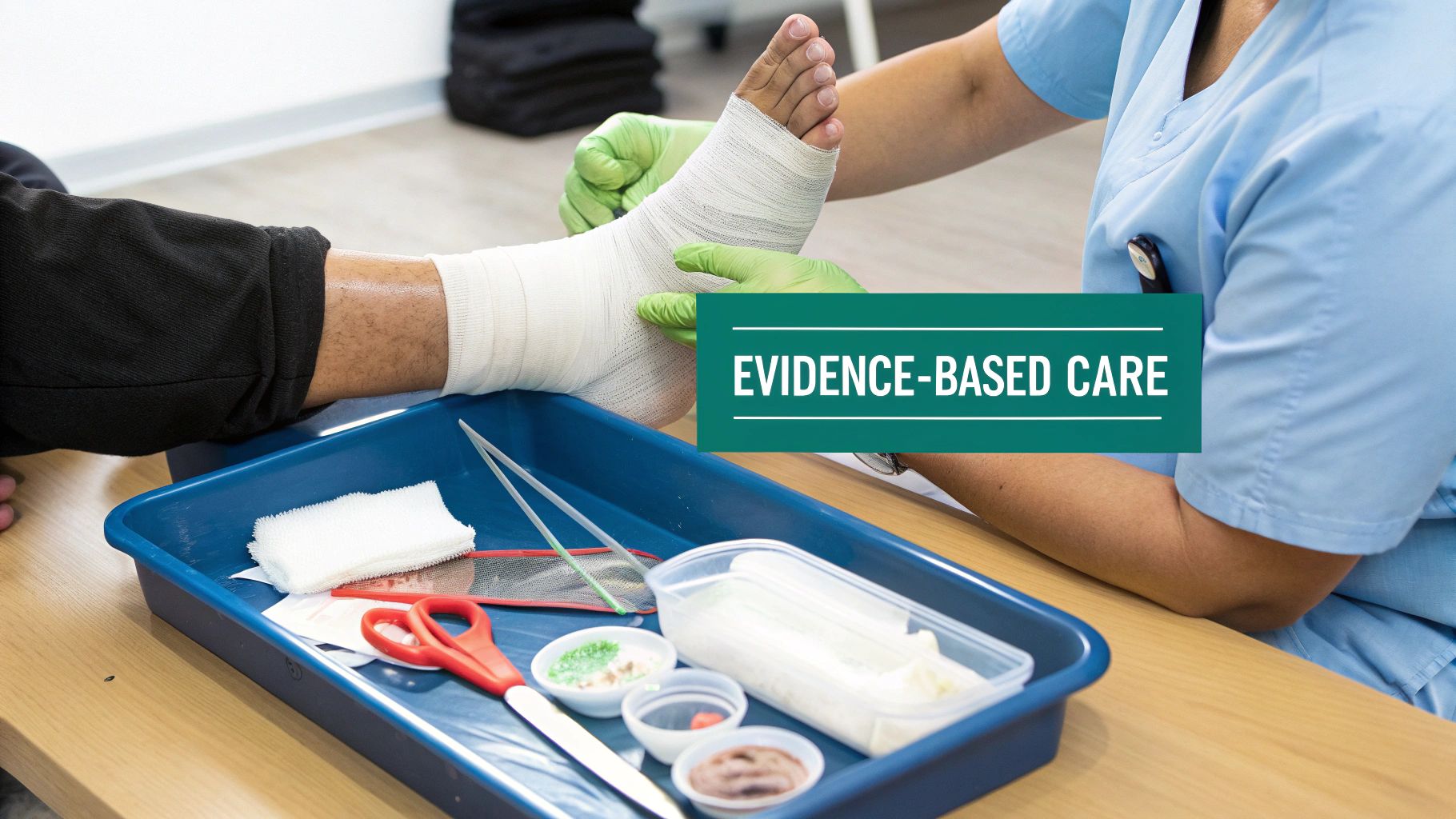
Once you have a solid, data-driven assessment of the wound, it's time to build a treatment plan. Healing diabetic wounds isn't about finding a single magic bullet; it's a systematic process of applying proven strategies that tackle the core physiological roadblocks. This means creating a strong foundation for healing and knowing when to bring in advanced therapies based on clinical evidence and patient-specific needs.
The challenge we face is immense. The global market for DFU therapeutics is expected to climb past USD 6 billion, a staggering figure that highlights the complexity of the problem. Standard care simply isn't enough— 50-60% of these wounds get infected, and a devastating 20% end up in amputation. Even more sobering, 80% of all diabetic amputations begin as a simple, unhealed ulcer. The human and financial costs are astronomical. You can dive deeper into these market trends and clinical challenges from Maia Research.
Building the Foundation for Healing
Before you even think about advanced treatments, every plan must rest on four fundamental pillars. Think of it like preparing a construction site. If you don't get the groundwork right, no amount of sophisticated material or technology will result in a closed wound. These pillars form the standard of care for DFU management.
These core principles aren't just best practices; they are the absolute essentials for creating an environment where the body can finally start its own repair work.
- Debridement: This is the critical first step of clearing out non-viable tissue—the slough and eschar. This dead tissue is a buffet for bacteria, promotes inflammation, and creates a physical barrier that stops healthy new granulation tissue from forming. Sharp surgical debridement is often the gold standard.
- Offloading: For foot ulcers, this is arguably the single most important intervention. Constant pressure on a neuropathic foot makes healing impossible by causing microvascular trauma and ischemia. Offloading—using devices like total contact casts (the gold standard), removable cast walkers, or therapeutic footwear—redistributes that pressure away from the ulcer, giving it a fighting chance.
- Infection Control: You have to be vigilant about managing the bacterial bioburden. This means meticulous cleansing, using topical antimicrobials when appropriate (especially for high bioburden), and deploying systemic antibiotics when infection runs deep, affects bone (osteomyelitis), or starts to spread systemically.
- Moisture Balance: Wounds need a moist environment to heal, but not a wet one. Choosing the right dressing is crucial for maintaining this delicate balance. The goal is to absorb excess fluid (exudate) without drying out the wound bed and damaging healthy, healing cells. The dressing choice will change as the wound evolves.
Mastering these four pillars—debridement, offloading, infection control, and moisture balance—is the absolute bedrock of successful diabetic wound care. Neglecting any one of them is like trying to build a house on an unstable foundation; the entire structure is destined to fail.
Deploying Advanced Wound Therapies
What happens when a wound stalls? If you’ve been diligent with foundational care for a few weeks and see little to no progress (typically defined as less than 50% reduction in area in 4 weeks), it’s time to escalate to advanced therapies. These interventions are designed to actively jump-start the healing process when the body's own mechanisms have run out of steam.
These aren't first-line treatments. They are powerful tools reserved for those tough, complex wounds that refuse to close. Each one serves a specific purpose, from encouraging new tissue to grow to flooding the wound site with oxygen, and their selection should be guided by the wound's specific pathophysiology.
Key Advanced Treatment Modalities
| Therapy Type | Mechanism of Action | Ideal Clinical Application |
|---|---|---|
| Negative Pressure Wound Therapy (NPWT) | Creates a vacuum over the wound bed to remove excess fluid, reduce edema, stimulate perfusion, and promote granulation tissue formation. | Wounds with heavy exudate, post-surgical wounds (e.g., post-amputation), or those needing stimulation for tissue growth and contraction. |
| Cellular and Tissue-Based Products (CTPs) | These are bioengineered "skin substitutes" that provide a scaffold, growth factors, and viable cells to kickstart the healing process and modulate the wound environment. | Clean, granulating wounds that have stalled and need an external biological boost to move toward closure. Requires an adequate vascular supply. |
| Hyperbaric Oxygen Therapy (HBOT) | The patient breathes 100% oxygen in a pressurized chamber, significantly increasing the oxygen carried in the blood to the wound, which promotes angiogenesis and enhances leukocyte killing ability. | Wounds with severe ischemia (e.g., low TcPO2 values) or refractory osteomyelitis where poor oxygen supply is the primary barrier to healing. |
Choosing the right advanced therapy comes right back to your initial assessment. A wound failing to heal because of ischemia is a prime candidate for HBOT. One that's stuck in the inflammatory phase might get the push it needs from a CTP. You can explore this further in our overview of evidence-based wound care practices.
Ultimately, a successful treatment plan is a dynamic one. It starts with an unshakeable foundation of care and relies on continuous, objective reassessment to know exactly when—and how—to escalate to more advanced strategies. This methodical approach gives your patients the best possible chance at healing.
Taming the Paperwork: Smart Documentation and Workflow
Expert wound care is one thing, but getting paid for it is another. Let's be honest: documentation often feels like a time-consuming administrative chore that pulls you away from patients and just adds to the end-of-day burnout. It's a leading cause of clinician dissatisfaction, yet it is absolutely essential for continuity of care and financial viability.
But we need to start thinking about it differently. Instead of a burden, think of your documentation as the backbone of your practice. It’s what proves the value and medical necessity of the care you provide, secures the financial health of your clinic, and ultimately, protects your ability to keep helping patients heal. The real goal is to close the gap between a patient visit and a clean, paid claim, making the process as seamless and efficient as possible.
This gap is where so many revenue cycle headaches begin. A simple documentation error, a missing detail, or an incomplete note can lead straight to a claim denial. That means delayed payments, frustrating rework for your staff, and a real hit to your clinic's cash flow and efficiency. These small administrative hurdles can have a major operational impact over time.
Bridging the Gap Between Care and Claim
The path from seeing a patient to getting reimbursed is loaded with potential tripwires. All your detailed clinical observations—wound measurements, tissue types, debridement details, offloading methods—have to be perfectly translated into structured data, matched with the right ICD-10 and CPT codes, and then sent off in the correct format. One slip-up, and the whole process grinds to a halt.
This is where smart technology can completely change the game. The idea is to build a workflow that captures all the critical details of a patient encounter without bogging you down with hours of typing. It’s less about manual data entry and more about having an intelligent assistant working alongside you, capturing information in real-time.
The best documentation system is one you barely notice. It should capture complex clinical details in the background, letting you keep your focus entirely on the patient, not on a keyboard. This allows for more meaningful patient interaction and less "click fatigue."
This way, all the important nuances of healing diabetic wounds—those subtle shifts in tissue type, the amount of exudate, or the condition of the surrounding skin—get recorded accurately without interrupting the natural flow of patient care.
From Conversation to Claim: The Power of AI
Picture this: you finish with a patient, and within minutes, a fully structured and coded clinical note is sitting in your EMR, ready for a quick review. This isn't science fiction; it's the reality of "voice to claim" automation. This process uses ambient AI to listen to the natural conversation of a patient visit and instantly turn it into the documentation you need, complying with all regulatory standards.
Platforms like Ekagra Health AI are designed to do exactly this. By capturing the ambient conversation during an appointment, the system can:
- Create Structured Notes Automatically: It takes the natural dialogue between you and your patient and generates a detailed, organized clinical chart that meets the stringent requirements for wound care documentation.
- Suggest Accurate Codes: Based on the specifics in the note, the AI suggests the right ICD-10 and CPT codes, which drastically cuts down on errors and compliance risks associated with upcoding or downcoding.
- Slash Administrative Time: We're not talking about a small improvement. This kind of automation can reduce documentation time by up to 70%. That’s time you get back to see more patients, provide more focused, unhurried care, or simply leave the clinic on time.
This level of automation directly attacks the bottlenecks that clog up your revenue cycle. Fewer manual errors mean cleaner claims from the start, which leads to fewer denials and faster payments. A great starting point is to ensure your team has a solid foundation; you can perfect your notes with a good wound care documentation template.
Ultimately, when you weave documentation, coding, and billing into one intelligent workflow, you transform an administrative headache into a strategic advantage. It frees up your team to focus on what they do best: delivering the exceptional care your patients with diabetic wounds depend on.
Partnering With Patients for Proactive Prevention
The biggest win in diabetic wound care isn't just healing the current wound; it's stopping the next one before it ever starts. To achieve real, long-term success, we have to move away from a purely reactive treatment model. Instead, we need to build a proactive, collaborative partnership with our patients, empowering them to take an active role in their own care.
When we empower them with the right knowledge and tools, they transform from passive recipients of care into active guardians of their own health. This partnership is the secret to breaking the devastating cycle of recurring ulceration, which affects a significant number of patients after initial healing. It’s not about handing them a list of rules. It’s about helping them understand the why behind each daily task, so the how becomes a sustainable, ingrained habit.
The Cornerstones of Patient Education
Great patient education boils down to simple, actionable habits that get right to the root causes of diabetic foot ulcers. Think of these as the non-negotiables—the daily routines that shield vulnerable feet from the silent damage of neuropathy and poor circulation. This education must be ongoing and reinforced at every visit.
Your educational toolkit should be built around four critical areas:
- Daily Foot Inspections: This is non-negotiable. Teach patients to do a thorough visual check of their feet every single day, including the bottoms and between the toes. They need to look for blisters, cuts, redness, swelling, or any new changes to the skin. A long-handled mirror can be a huge help for checking the soles. This simple five-minute habit is often the first line of defense and can stop a potential disaster in its tracks.
- Proper Footwear Choices: We need to reframe how patients think about shoes. For them, footwear is a medical device, not a fashion accessory. They need well-fitting, protective shoes that don’t rub or create pressure points. Prescription diabetic shoes with custom inserts are often necessary. And walking barefoot? It's off the table, even around the house, to prevent unnoticed injuries.
- Smart Nutrition and Hydration: Draw a clear line connecting what they eat to how they heal. A diet packed with protein, vitamins (especially C and A), and minerals (like zinc) provides the literal building blocks for tissue repair. Good hydration is just as important, as it supports the healthy blood flow needed to get those nutrients where they need to go.
- Consistent Glycemic Control: Patients have to understand that high blood sugar is the underlying enemy. Keeping blood glucose levels stable, with an A1c target typically below 7%, is absolutely essential for improving immune function and circulation. It creates an internal environment where the body can actually do its job and heal effectively.
The goal of patient education isn't just to dump information; it's to build confidence. A patient who feels capable and in control is far more likely to stick with the prevention plan you've built together, leading to better long-term outcomes.
Extending Care Beyond the Clinic Walls
One of the toughest parts of our job is keeping patients engaged and on-track between appointments. This is where digital health tools can be a game-changer, acting as a bridge that extends your clinical guidance into their day-to-day life and fosters a sense of continuous connection to the care team.
Integrated platforms can send out automated reminders for daily foot checks, medication times, or upcoming visits. They can also house a library of easy-to-digest educational content—think short videos on picking the right socks or quick reads on diabetic-friendly meal prep—that reinforces the conversations you had in the clinic. Telehealth check-ins and remote patient monitoring using smart insoles or temperature sensors can also provide early warnings of potential problems.
This kind of consistent, low-touch engagement keeps prevention top of mind. It's almost like giving them a virtual health coach they can carry in their pocket, offering gentle nudges and reinforcing good habits long after they've walked out your door. This shifts care from a series of isolated appointments to a continuous, supportive journey, building a much stronger defense against future wounds.
Common Questions About Diabetic Wound Care, Answered
When you're in the trenches managing diabetic wounds, the same questions tend to pop up. Let's tackle some of the most common ones I hear from clinicians and practice managers to help solidify the core principles of healing these complex wounds.
How Often Should I Assess a Diabetic Wound?
At a minimum, you need to get your eyes on that wound and formally assess it once a week. That’s the baseline for an uncomplicated ulcer that is progressing as expected. This frequency allows you to track healing velocity and make timely adjustments to the care plan.
But for those tricky, high-risk wounds—maybe one that looks like it's getting infected, is post-debridement, or is being treated with advanced modalities—you need to ramp that up. Checking in every 1 to 3 days isn't overkill in those situations. The key is consistent, documented measurement. It's the only way you'll know if you're making progress or if the wound has stalled out and needs a new plan.
What's the Single Most Important Factor in Healing a Diabetic Foot Ulcer?
If I had to pick just one thing, it would be effective pressure offloading. Hands down. It is the cornerstone upon which all other therapies are built.
All the advanced dressings and fancy therapies in the world won't do a bit of good if the patient is still walking on the ulcer. A neuropathic foot is under constant assault from the body's weight, and it simply cannot heal under that repetitive stress and pressure. You have to get the pressure off with a total contact cast, a removable cast walker boot, or another appropriate device. Adherence to offloading is a major predictor of healing.
Think of it this way: trying to heal a foot ulcer without offloading is like trying to patch a hole in a tire while the car is still driving on it. You have to stop the stress for any repair to actually work. It's a non-negotiable part of the treatment protocol.
When Is It Time to Bring in Advanced Therapies?
You should start thinking about advanced therapies when standard care isn't cutting it after a reasonable trial. The benchmark I use, supported by clinical guidelines, is 2 to 4 weeks.
If you're not seeing a 40-50% reduction in wound size within four weeks of implementing standard care (including proper debridement and offloading), that's a huge red flag. The wound is telling you that the current plan isn't enough to overcome the biological barriers. That's your data-driven cue to start evaluating other options, like Negative Pressure Wound Therapy (NPWT), Cellular and Tissue-Based Products (CTPs), or even Hyperbaric Oxygen Therapy (HBOT), based on a comprehensive patient and wound assessment.
Does Diet Really Make a Difference in Wound Healing?
It makes a massive difference. You can't rebuild a house without bricks, and you can't heal a wound without the right nutritional building blocks. Inadequate nutrition, particularly protein deficiency, can bring the healing process to a screeching halt and is a common, often overlooked, comorbidity.
We need to make sure patients are getting enough of these key nutrients:
- Protein: Absolutely essential for building new tissue (collagen synthesis) and supporting the immune system. Aim for 1.25-1.5 g/kg of body weight per day.
- Vitamin C: You can't make collagen, the scaffolding of new skin, without it. It's a critical cofactor in the hydroxylation of proline and lysine.
- Zinc: This mineral is a workhorse for cell growth, protein synthesis, and tissue repair.
- Arginine: An amino acid that can become conditionally essential during periods of stress, like wound healing, as it's a precursor for nitric oxide and proline.
On top of that, wild blood sugar swings are poison for wound healing. Poor glycemic control torpedoes the immune system and damages circulation. A balanced diet that keeps blood sugar stable isn't just a "nice to have"—it's a non-negotiable part of the treatment plan.
At Ekagra Health AI, we’re focused on building tools that get rid of the annoying friction between providing great patient care and running a successful practice. Our "voice to claim" platform handles the documentation and coding for you, giving your team back up to 70% of their time to focus on patients, not paperwork.
Curious how AI can make your entire wound care workflow smoother? Learn more about how Ekagra Health AI works and join our Early Access program.
