
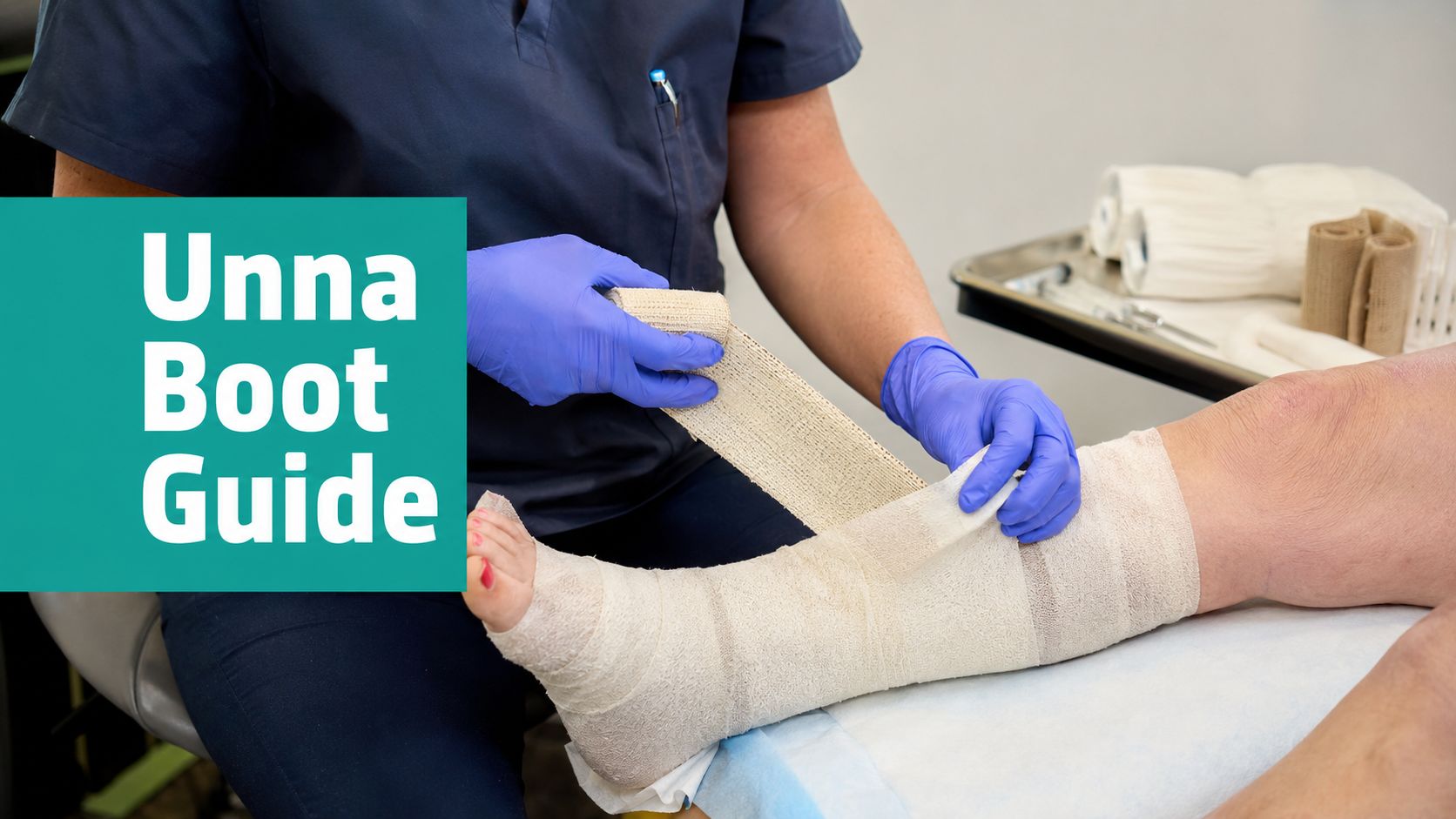
The first thing I check is the foot, not the dressing cart. If the leg is hot, swollen, and draining around the medial ankle, an Unna boot may be exactly the right compression. If the same leg has rest pain, a weak pulse, or a wound pattern that doesn't fit venous disease, putting paste gauze on it is how you create trouble and then spend the next visit documenting damage control.
A true Unna boot is not a soft cover dressing. It is a zinc oxide, gelatin-based compression system first developed in 1885 by Paul Gerson Unna, and that history still matters because the wrap is built to do one thing well, deliver stiff compression during walking and calf contraction. The classic formulation uses an inelastic gauze with about 15% zinc oxide in a glycerin-gelatin paste, then an outer compression layer, which is why it stays relevant for venous stasis ulcers and other venous insufficiency problems (Scientific description of Unna's boot).
Practical rule: if you're using an Unna boot for the wrong physiology, the wound doesn't care how good your wrap looked.
When an Unna Boot Is the Right Call
A patient walks in with lower-leg edema, a shallow medial ankle ulcer, and enough mobility to get the calf pump working between visits. That is the setting where an Unna boot can earn its keep. The wrap delivers therapeutic compression, commonly described around 20 to 30 mmHg, and the mechanism is straightforward, it limits outward calf expansion during ambulation so venous return improves (Western Vascular clinical overview).
The physiology has to fit the dressing
That match is why the device is still used more than 140 years after its invention. It is especially sensible for patients with venous stasis disease who remain mobile, because walking activates the calf pump and the semi-rigid wrap turns that motion into working pressure (Unna's boot historical overview).
A lot of people talk about the Unna boot as if it were only another dressing. It is a real compression system. That distinction matters when the choice is between a passive cover and an intervention that can change edema, exudate handling, and wound trajectory.
The best candidate is usually the patient who can tolerate compression, can ambulate, and has a wound pattern that behaves like venous disease rather than ischemic pain.
At a practical level, that means a venous ulcer with edema, a manageable amount of drainage, and no immediate reason to suspect arterial compromise. If the clinical picture lines up, the Unna boot can serve as a sensible bridge between in-clinic care and the days between visits. If the fit is wrong, the wrap still looks tidy, but it works against the wound.
For broader wound planning, I keep the venous disease framework alongside the rest of the leg ulcer workup, including routine differentiation of etiology and downstream care decisions. A structured resource like leg ulcer wound care pathways fits into that workflow. Documentation also has to be clean, including a compliant record trail that aligns with HIPAA AI with SupportGPT when digital support is part of the charting process.
Patient Selection and Contraindications
The biggest miss I still see is treating every swollen lower leg like it's a venous ulcer. Mixed-etiology disease, arterial insufficiency, neuropathy, infection, and pressure-related breakdown all change the compression decision, and the wrong wrap can turn a manageable wound into a worsening one.
Rule out vascular risk before the paste goes on
A major decision point is whether the patient needs arterial workup first. The evidence base for Unna boots is not a free pass to compress everyone, and the available review data found only moderate evidence of no healing-rate difference versus other venous ulcer treatments, with time-to-heal evidence limited by small, low-quality studies (systematic review). That does not make the wrap useless. It means patient selection has to be deliberate.
If a patient has suspected PAD, rest pain, pain out of proportion, cyanotic toes, neuropathic sensory loss, or a wound that does not fit straightforward venous disease, I want vascular assessment before inelastic compression. Compression should be avoided when ABI is below 0.5, lighter or modified compression may be considered cautiously between 0.5 and 0.8, and standard compression is generally safe at ABI ≥ 0.8 (compression and ABI guidance). The same source also lists active infection requiring drainage, acute DVT, peripheral neuropathy with impaired sensation, and zinc oxide allergy as reasons not to proceed.
Mixed ulcers need a different mindset
Mixed arterial-venous ulcers are where people get complacent. The leg is swollen, so the reflex is compression. If arterial flow is compromised, an inelastic wrap can reduce perfusion instead of helping it.
That is the bedside mistake I would rather prevent than explain later in a denial appeal or a complication note.
A useful documentation habit is to write the wound etiology decision in plain terms. If the wound is venous, say why. If the arterial component has not been excluded, say that too. The record should show that compression choice came after perfusion assessment, not before it, and that the clinical plan fit the actual wound, not just the leg shape.
For teams standardizing compression selection, compression stocking selection guidance can help keep the decision tree straight without turning every visit into guesswork. When charting and patient communication are tied together, HIPAA ready SMS for clinics can also reduce missed follow-up without adding extra friction to the workflow.
Application Technique and Required Materials
Once the patient is a good candidate, the wrap still has to be built correctly or it will underperform. The classic setup uses a 4-inch-wide, 10-yard gauze bandage impregnated with zinc oxide paste (Unna boot description). In practice, the boot is applied from the base of the toes to just below the knee, with the ankle held in 90° dorsiflexion and each layer overlapped by about 50% so the wrap becomes semi-rigid and supports venous return.
The mechanics matter more than the label
Start with a clean, dry lower leg and the wound contact layer the plan calls for. Then place the paste gauze in a spiral or figure-eight pattern with light tension. Keep the turns smooth. Wrinkles become pressure points, and pressure points turn into skin damage over bony prominences, especially the ankle and shin.
A wound-care application guide emphasizes three things that are easy to do badly, light tension, 50% overlap, and wrapping all the way to just below the knee while keeping toes warm, pink, and briskly perfused after application. A clinical procedure guide says the foot should stay at a right angle and the wrap should end about 2 inches below the knee, which is the kind of detail that keeps your documentation and teaching consistent (clinical procedure guide). For teams that need a practical way to match compression choices to wound type, wound dressing selection support helps keep the decision tied to the wound bed instead of habit.
Documentation tip: write the limb position, overlap pattern, distal perfusion check, and patient tolerance in the same note. That tells the next clinician you applied compression, not just a bandage.
Materials that belong at the bedside
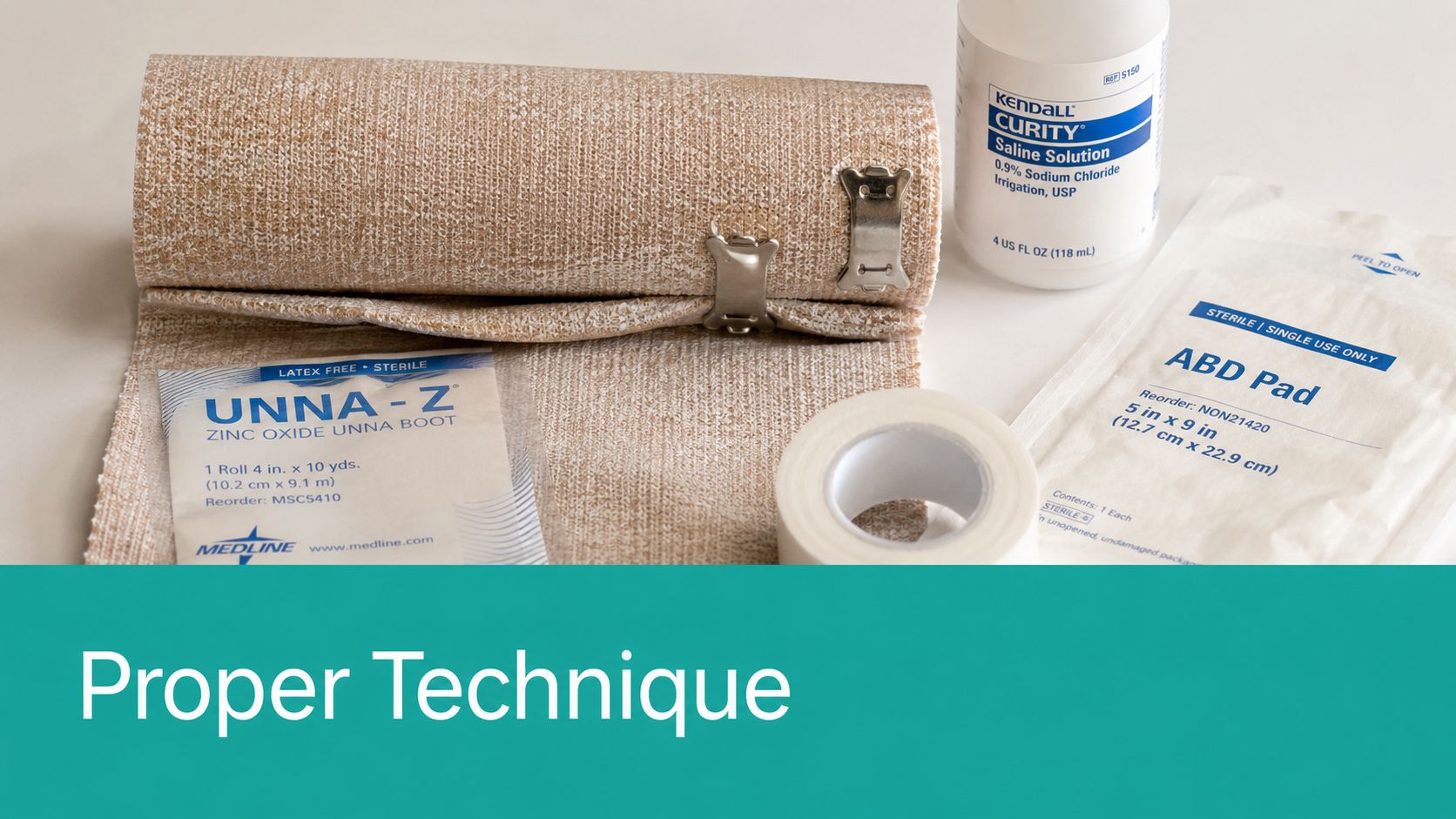
The exact supply list varies a little by facility, but the essentials do not. You need the paste gauze, wound cleanser, a primary dressing if the wound calls for it, something to protect the periwound skin, and a securing outer layer. If the patient has heavy exudate, the choice of contact layer matters, because an Unna boot is not built to manage uncontrolled drainage on its own.
I also document whether the wrap was molded to avoid constriction over the ankle and shin. That one line protects you clinically and helps the next nurse understand what you were trying to achieve. If you also need to keep follow-up communication tight while staying compliant, HIPAA ready SMS for clinics can support that workflow without changing the wound plan.
A final check is necessary. Toes should remain warm, pink, and with brisk capillary refill after the wrap goes on. If they do not, the wrap needs to come off and be corrected, not re-labeled as patient education.
Reassessment Intervals and Failure Indicators
An Unna boot can look stable on day one and be wrong by day three. Venous edema shifts quickly, so the wrap that fit at application may loosen, wrinkle, or lose useful compression before the next scheduled visit. Reassessment is part of the treatment, because the leg changes even when the bandage has not been touched.
What makes a boot fail early
The failure signs are usually practical, not subtle. Heavy exudate can soak through the layers, swelling can fall enough to make the boot slip, drainage can contaminate the outer wrap, and pressure points can break down skin that looked intact at application. If the wrap feels unstable, rough, wet, or suddenly tight, it is no longer doing the job it was placed to do.
I ask staff to look for that shift every time the patient returns. Public guidance commonly places change intervals in the 3 to 7 day range, and a clinical procedure guide says to reapply in the early morning, change when drainage shows on the outside, and, if there is no ulcer present, change weekly unless it slips. The point is not the calendar alone, it is whether the wrap is still controlling edema without creating new injury.
A patient handout from a university health system adds the bedside realities that matter at home. Drainage can be expected, odor may come from the dressing rather than the wound, the boot should stay dry, and patients should raise the leg and avoid staying in one position for more than 30 minutes. Those are the details patients remember, and they are the details that keep a wrap from failing between visits.
Practical rule: if the wrap is wet, loose, rough-edged, or feels too tight, it is no longer a stable treatment plan. It needs a return visit.
Measure what changes, don't guess
I want numbers, not impressions. Baseline and follow-up measurements should show whether edema is falling or the wrap is slipping out of range. A procedural source calls for ankle circumference 10 cm from the heel and calf circumference 30 cm from the heel so the trend is tracked with actual measurements. That kind of documentation helps the next clinician see whether compression is being adjusted or merely repeated.
Patient symptoms count as reassessment data too. Tingling, numbness, severe pain, fever of 100.4°F (38°C) or higher, cyanosis, swelling, or a boot that feels too tight, too loose, wet, damaged, or rough-edged are reasons to stop and look again. I treat those complaints as a change in status, because they often point to pressure, perfusion, or dressing failure before the skin shows a clear problem.
When the wrap keeps failing early, I do not just reapply it and hope for a better outcome. I reconsider the amount of drainage, whether the patient can keep the limb raised, whether mobility is affecting the wrap, and whether the wound still belongs in a compression-based plan at all. Mixed-etiology wounds are where that decision matters most, because an Unna boot can mask an arterial or pressure component long enough to delay the right treatment.
Documentation Requirements and Billing Codes
Good wound care gets paid and bad wound care gets argued. The note has to show the wound type, the reason compression was chosen, and what made an Unna boot the right service on that date. If any of that is missing, denials are usually predictable.
Build the note around medical necessity
Your documentation should include the wound's location, size, depth, drainage character, periwound findings, edema, pain, and vascular assessment. If you've debrided the wound and billed CPT 11042 through 11047, the record needs to support the tissue level, the area treated, and the clinical rationale. If the lesion is a venous stasis ulcer, the ICD-10-CM diagnosis should match that clinical picture, and if Wagner grading applies in a diabetic foot context, document it explicitly rather than assuming someone else will infer it.
A common denial reason is failure to document arterial assessment before compression. Another is vague language about the wrap itself, especially if the note never states compression parameters, limb positioning, or the patient's perfusion after application. A third is missing reassessment. If the chart doesn't show the wound was rechecked at appropriate intervals, the payer sees routine bandaging, not active therapeutic management.
What surveyors tend to look for
Surveyors usually want a clean chain of logic. The wound type should be identified. The reason for compression should be obvious. The measurements should be current. And the note should show that the wrap was applied with the right mechanics, then checked for distal perfusion and patient tolerance.
A practical documentation set usually includes:
- Baseline wound measurements: length, width, depth, drainage, and periwound status.
- Compression rationale: why an Unna boot instead of a different strategy.
- Vascular status: ABI or other perfusion assessment when indicated.
- Application details: toes to below knee, 50% overlap, dorsiflexed ankle, distal circulation check.
- Plan for reassessment: date range for follow-up and criteria for earlier review.
If your team wants the note, coding, and prior authorization pieces to live in one place, EkagraHealth AI is one option that can draft wound notes and map CPT and ICD-10-CM language into the encounter workflow. The value here is consistency, because inconsistent wound documentation is how clean claims turn into avoidable work.
Patient Education and Home Care Instructions
Patients do not need a lecture. They need a short list they can remember when the wrap starts itching, smelling, leaking, or feeling wrong. The instructions are plain, and they matter because an Unna boot has to hold up between visits without turning into a problem.
Tell them some drainage is expected and that odor can come from the dressing rather than the wound itself. Tell them to keep the boot dry. Tell them to raise the leg and avoid staying in one position for long stretches. Those basics may sound simple, but they keep compression doing its job.
Teach the warning signs without ambiguity
Patients and caregivers should call right away if the patient develops new tingling or numbness, pain that is out of proportion, fever, color change in the toes, increasing swelling, or a boot that feels too tight, too loose, wet, damaged, or rough at the edges. I also tell staff to explain that “expected drainage” does not mean “ignore a soaked wrap.” There is a line between normal exudate control and a wrap that is no longer managing the limb well.
In home health and SNF settings, the best teaching is repetitive and concrete. Do not just say “report changes.” Say what change, what it looks like, and who to call. If the patient cannot describe the warning sign, the caregiver has to.
Keep the leg up when resting, walk when able, and call early if the boot changes fit. Waiting until the next visit is how minor problems become rewraps.
A strong home-care handoff also helps the nursing team. Clear symptom triggers reduce avoidable calls that get triaged as routine. That keeps noise down for the clinic and helps prevent the patient from sitting in a compromised wrap too long.
