
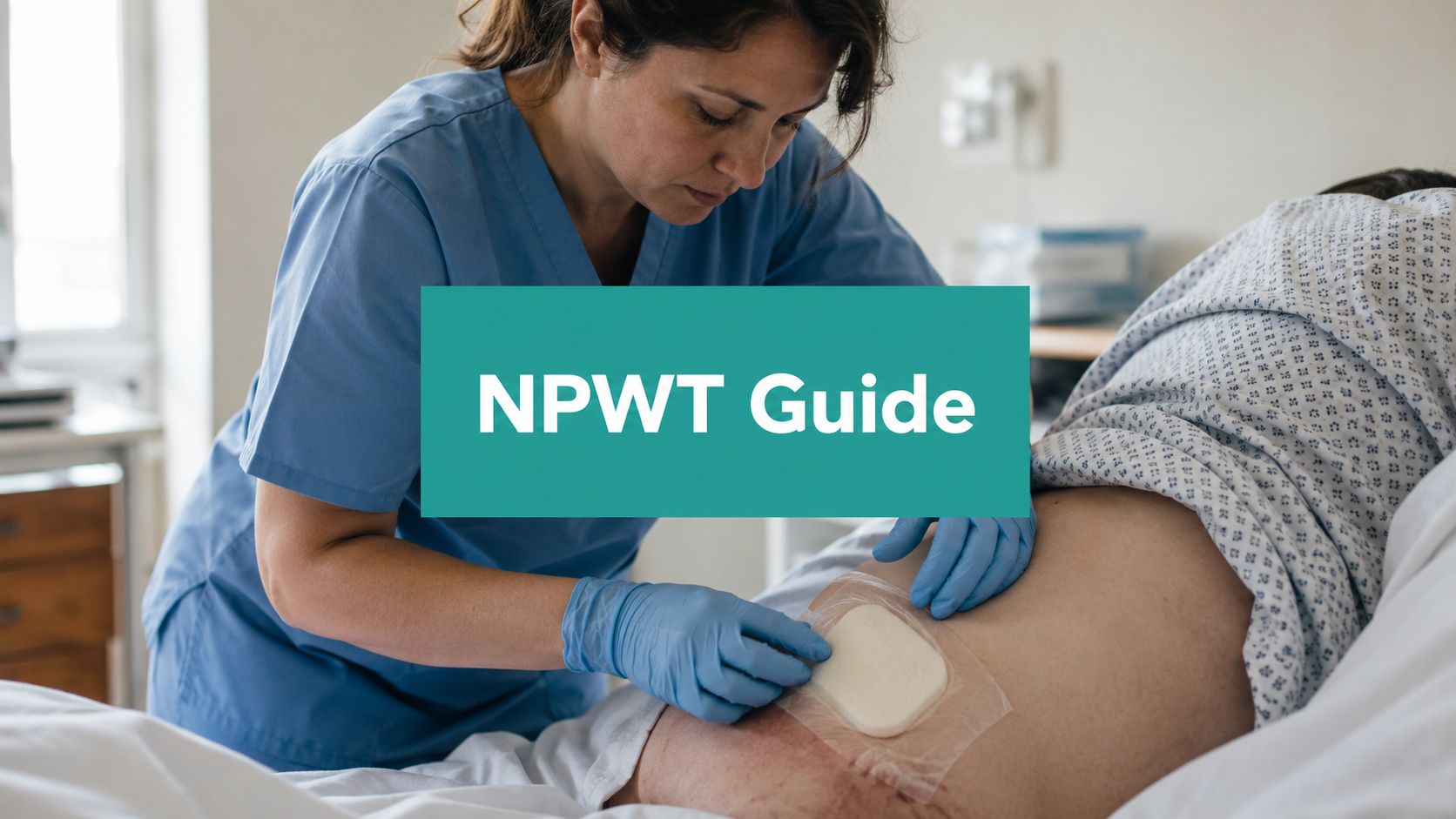
Most bad advice on bed sore negative pressure wound therapy starts with the device. That's backwards.
The key decision is whether the wound and the patient have earned NPWT. If you skip debridement, ignore offloading, fail to control moisture, or can't document progress well enough for continued authorization, the pump becomes an expensive noisemaker attached to a nonhealing pressure ulcer. I've seen newer clinicians reach for NPWT too early because it feels more advanced than dressings. Advanced doesn't mean appropriate.
Used well, NPWT is one of the most useful tools we have for selected Stage 3 and Stage 4 pressure ulcers. Used poorly, it wastes time, irritates periwound skin, creates billing headaches, and delays the treatment plan the patient needed.
When to Actually Use NPWT on a Pressure Ulcer
The marketing version says NPWT is the answer for hard pressure ulcers. The evidence says slow down.
Despite its widespread use, a Cochrane review found that the current evidence for NPWT in treating pressure ulcers is very weak and uncertain. The one usable study reported a risk ratio of 3.00 for complete healing, but the evidence was rated as very low certainty, highlighting a severe data gap (Cochrane review summary on pressure ulcer NPWT evidence). That should change how you talk about this therapy with colleagues, patients, and payers. It's not a magic default. It's a selective tool.
That said, weak evidence isn't the same as no clinical value. NPWT works by creating sub-atmospheric pressure across a sealed wound environment. That negative pressure induces microstrain in the wound bed, helps improve perfusion, and removes exudate and debris through a closed system. When you want a quick refresher on the mechanics, this overview of what a wound vac does in practice is a useful plain-language reference.
The wounds that usually justify it
I reserve NPWT for pressure ulcers that have a real need for volume management and wound bed control, usually when standard dressings aren't doing enough. Typical examples include:
- Clean Stage 3 or Stage 4 ulcers with depth, dead space, or undermining
- Moderate to heavy exudate where moisture control is driving the dressing plan
- Post-debridement wounds that need help building granulation tissue across a complex base
- Patients who aren't good reconstruction candidates because surgery is unlikely to be tolerated well
Practical rule: If the wound still contains necrotic burden, uncontrolled infection, or unresolved pressure and shear, NPWT is not advanced care. It's premature care.
When it's a waste of time
It's usually a poor choice when the main problem isn't the wound surface. Sometimes the underlying problem is ongoing sacral pressure from poor repositioning, incontinence-associated skin damage around the wound, malnutrition, or a care setting that cannot maintain an airtight seal. In those cases, the device gets blamed for a systems failure.
NPWT shines in a narrow lane. The sooner you accept that, the better your outcomes and notes will be.
Patient Selection and Contraindications
Good outcomes start with saying no to the wrong patient.

For the right patient, NPWT can move a pressure ulcer along faster than conventional dressing care. A systematic review reported a median time to complete healing of 29 days in the NPWT group versus 45 days in the control group, a median 16-day reduction. The same source states that, after proper debridement, NPWT can close pressure ulcers in 4 to 6 weeks at about half the cost of surgical reconstruction in suitable cases (clinical discussion of NPWT healing timelines for bedsores).
The patient who usually benefits
The sweet spot is fairly consistent:
- Deep pressure injury with a clean base. Usually Stage 3 or Stage 4, often with a cavity, tunnel, or undermining.
- Wound has already been debrided. Not “debridement planned.” Already done.
- Exudate is enough to justify closed suction management. Serous, serosanguineous, or mixed drainage that is difficult to control with conventional dressings alone.
- The patient can tolerate the system. That includes pain tolerance, caregiver support, and a setting where alarms and leaks will be addressed.
- Surgery isn't the best next step. Frailty, comorbidities, or poor candidacy for reconstruction often push NPWT higher on the list.
Contraindications that should stop you
Newer clinicians encounter problems when they treat the order like clearance.
Do not place NPWT over a wound with untreated eschar or untreated osteomyelitis. Don't place it over malignant tissue in the wound bed. Don't place it when there's an unexplored fistula. Don't place it if the team hasn't addressed pressure redistribution and source control. The device cannot rescue bad fundamentals.
If the wound still needs basic wound care principles more than it needs suction, NPWT is the wrong move.
The bedside assessment that matters more than enthusiasm
Before I approve a plan for bed sore negative pressure wound therapy, I want a clear answer to four practical questions:
Is the wound clean enough?
I want the base described, not guessed. Granulation, slough, exposed structures, undermining clock positions, tunnel depth, odor, and exudate character all need to be in the note.Is the patient perfusing and feeding the wound?
Nutritional status matters. So does the overall medical picture. If the patient is depleted and declining, your dressing choice may be technically correct and still clinically futile.Can the setting support therapy?
In home health and SNF settings, seals fail because of body contours, sweating, incontinence, and rushed dressing changes. If nobody can troubleshoot the system, don't pretend otherwise.Has pressure been removed?
Offloading is not a side note. A sacral NPWT dressing on a patient who remains supine for long stretches is wishful thinking.
Clinical judgment beats brand hype every time.
Wound Bed Prep and Application Technique
If you remember one thing, remember this: you can't put NPWT on garbage and expect granulation.
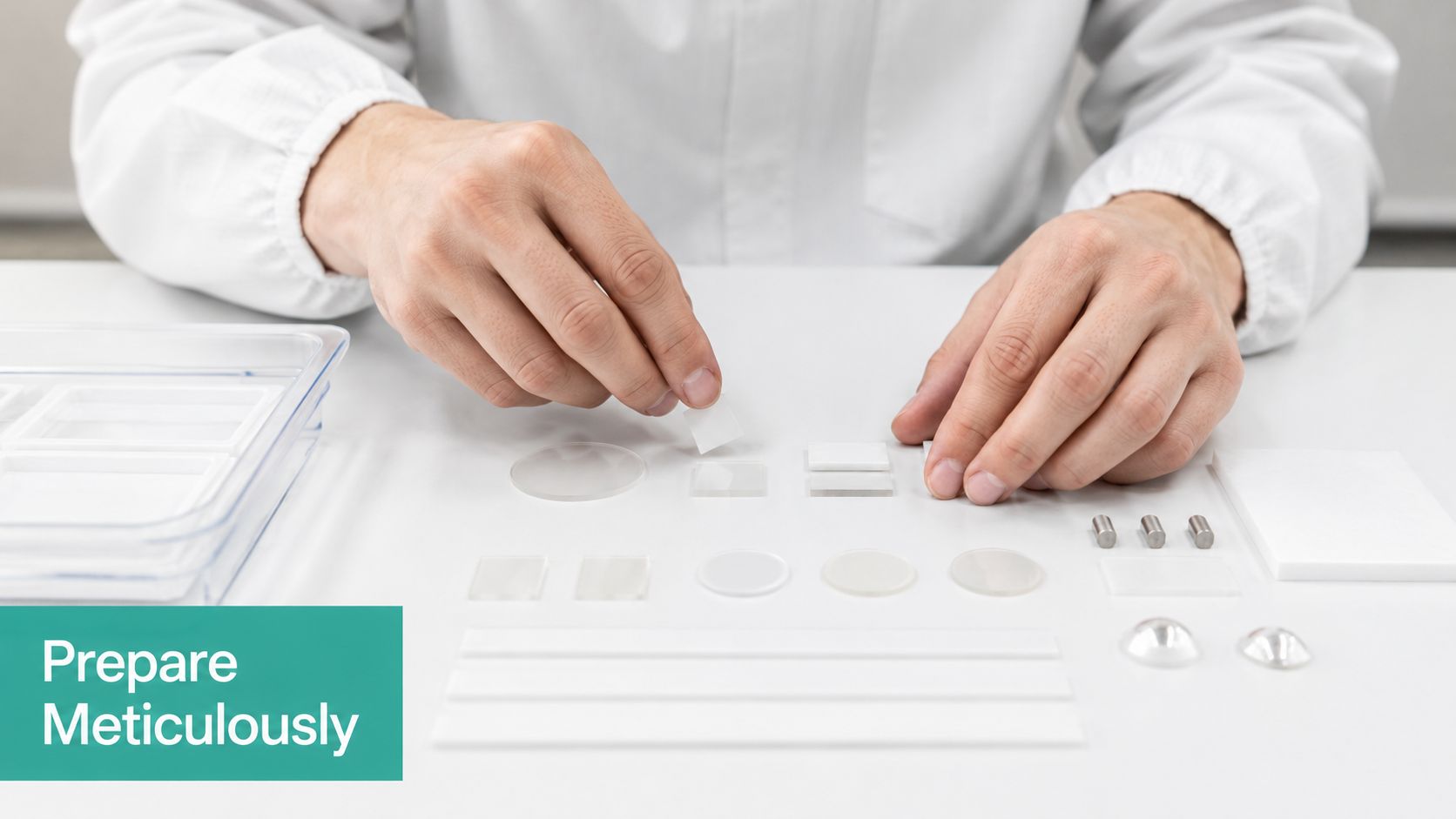
NPWT protocol mandates thorough debridement before application, as untreated eschar or osteomyelitis are absolute contraindications. A common pitfall is inadequate foam packing of undermined areas, which can lead to granulation tissue growth into the foam in up to 15% of cases (DermNet guidance on NPWT contraindications and technical pitfalls).
Start with the debridement note
If you performed debridement, chart it like it matters because it does. In US billing terms, that usually means the appropriate debridement CPT codes 11042 through 11047 when the service meets code requirements. Don't bury the procedure in a vague sentence like “wound cleaned.” Surveyors and payers want to see what tissue was removed, by what method, to what depth, and how the post-debridement wound measurements changed.
Document these elements clearly:
- Tissue removed: slough, fibrin, nonviable subcutaneous tissue, devitalized fascia, or other nonviable material as applicable
- Depth reached: skin, subcutaneous tissue, muscle, or bone, as supported by the procedure performed
- Instruments used: curette, scalpel, scissors, forceps, or other method
- Hemostasis: pressure, topical agent, or other control method
- Post-debridement measurements: length, width, depth, tunneling, undermining, wound bed composition
Build a wound bed the foam can actually treat
After debridement, cleanse the wound, confirm hemostasis, and inspect the geometry. Sloppy technique in these foundational steps kills progress. A pressure ulcer with undermining isn't a flat wound. If you bridge over dead space without filling it properly, negative pressure won't distribute where you need it.
Use a measured approach:
Measure the cavity and all extensions
Record length, width, depth, tunneling, and undermining by clock position. Periwound assessment should include maceration, erythema, callus if present, fragility, and moisture exposure.Choose the filler deliberately
In practice, clinicians often use black foam when they want more aggressive granulation support and white foam when the tissue is more delicate or the wound geometry makes gentler contact preferable. The point is not the color. The point is matching the interface to the wound.Pack, don't cram
Fill tunnels and undermined areas so the therapy reaches them, but don't stuff foam tightly into a cavity. Overpacking creates pressure injury risk and pain. Underpacking leaves untreated recesses.Protect the periwound skin
Fragile sacral skin, moisture-associated skin damage, and adhesive sensitivity will ruin your seal if ignored. Skin prep and drape strategy matter as much as the foam.
For hands-on placement basics, this practical page on wound vac placement technique is a useful companion reference.
A leak around the drape is not a minor annoyance. It changes the therapy.
Seal quality decides whether the order means anything
Most failures aren't dramatic. They're technical. The seal lifts in the gluteal cleft. The bridge kinks. The track pad sits over a body contour that folds every time the patient shifts. Then the device alarms all night and nobody trusts the therapy by morning.
Watch for the common mistakes:
- Missed undermining: foam placed only in the visible crater
- Poor drape contact: especially near moisture, hair, or irregular contours
- Foam fragment risk: always account for what went in and what came out
- Periwound neglect: macerated edges won't hold adhesive well
- Pain ignored at application: pain often tells you the foam is too aggressive, packed poorly, or sitting against sensitive structures
A technically clean application beats a fast one every time.
Pressure Settings and Therapy Modes
The setting isn't arbitrary. If you don't know why you chose the pressure and mode, you're not really managing the therapy.
A commonly cited benchmark is about 125 mm Hg, using an alternating cycle of 5 minutes suction followed by 2 minutes off to support granulation tissue formation while limiting pressure-related tissue injury concerns (clinical review discussing common NPWT settings and cycling). That doesn't mean every pressure ulcer should be treated exactly the same way. It means you should have a reason for deviating.
Continuous versus intermittent
Continuous therapy is the easier starting point when the wound is fresh after debridement, exudate is significant, or the patient is uncomfortable. It tends to be better tolerated and gives you a more stable sealed environment.
Intermittent therapy can be useful when your main goal is stimulating granulation in a wound that's cleaner and more stable. The trade-off is tolerance. Some patients hate the cycling sensation, especially over painful sacral or trochanteric ulcers.
Start with the wound's needs, then adjust for the patient's tolerance. Not the other way around.
Common NPWT pressure settings for pressure ulcers
| Clinical Scenario | Pressure Setting (mmHg) | Therapy Mode | Clinical Rationale |
|---|---|---|---|
| Standard post-debridement Stage 3 or 4 pressure ulcer with manageable tolerance | 125 | Continuous initially | Common benchmark setting. Good starting point when you need stable therapy and exudate control |
| Cleaner wound bed where granulation is the main goal and patient tolerates cycling | 125 | Intermittent, often 5 minutes on and 2 minutes off | Frequently used approach when trying to maximize microdeformation and tissue response |
| Painful wound or patient with poor tolerance to pressure changes | Lower than the standard benchmark, adjusted clinically | Continuous | Practical adjustment when intermittent cycling increases pain or causes nonadherence |
| Complex wound with seal instability or difficult body contour | Often stay near the standard benchmark if tolerated | Continuous | Reduces variables while you solve the technical problem of maintaining therapy |
| Heavily contaminated wound requiring a more advanced strategy | Case-by-case clinical decision | Consider instillation-capable therapy if available in your setting | Used when the wound needs more than simple suction and routine dressing exchange |
Don't chase settings when the real problem is technique
If the canister stays dry, the drape keeps lifting, and the wound edges are macerating, changing the pressure won't fix bad placement. Likewise, if the patient has unresolved pressure and shear, increasing suction won't turn a failing plan into a working one.
More advanced modalities such as instillation-based therapy have a place in selected contaminated wounds, but they're not a shortcut around poor wound bed prep.
Ongoing Management and Complication Troubleshooting
The first dressing application is the easy part. Keeping the therapy on track is where clinicians separate themselves.
For outpatient NPWT on Stage 3 or 4 pressure ulcers, success is often defined by achieving a greater than 40% reduction in wound size within 4 weeks, and weekly assessments are required to confirm progress and justify continued therapy (NPWT recommendations on outpatient progress benchmarks). If you don't know whether the wound is moving toward that benchmark, you're managing by habit.
What to assess at every dressing change
In routine practice, dressing changes are commonly done every 48 to 72 hours unless the wound condition calls for something different. At each change, I want the same core reassessment:
- Wound measurements: length, width, depth, undermining, tunneling
- Wound bed quality: granulation, slough, nonviable tissue, exposed structures
- Exudate pattern: amount, color, consistency, odor
- Periwound condition: maceration, denudement, erythema, adhesive injury
- Seal performance: leak history, alarm frequency, drape failure points
- Pain response: during wear and at dressing removal
Three scenarios you'll run into
The leak alarm won't stop.
Usually this is a drape problem, not a machine problem. Look first at body folds, moisture, ostomy-type contours, and where the track pad sits during movement. Reinforce the weak edge. If the patient is incontinent, solve that workflow or the leak will return.
The periwound is turning white and soggy.
That's maceration until proven otherwise. The seal may be intact but drainage handling isn't. Recheck foam sizing, drape placement, and whether exudate is bypassing the intended pathway. Protect the surrounding skin more aggressively before you lose your landing zone.
The wound looks beefy red in one area and stalled in another.
That often means the foam isn't contacting the whole wound architecture. Reassess the undermining and tunnels. A partial response is still a technical failure if dead space is being ignored.
Unhealthy granulation doesn't always look dramatic. A wound can appear “red enough” and still be stalled because the therapy isn't reaching the problem area.
Know when to stop
If the wound isn't progressing, don't keep renewing NPWT out of inertia. Reassess the basics: pressure redistribution, infection control, nutrition, perfusion, incontinence, debridement adequacy, and whether the original indication still holds. Sometimes the right move is to step away from suction and return to a different local wound care strategy.
Documentation Coding and Avoiding Payer Denials
Plenty of clinicians can apply NPWT correctly. Far fewer can document it in a way that survives prior auth, ongoing medical necessity review, and claim submission.
Many clinicians are unaware of payer policies requiring a documented 30-day therapeutic trial with proof of granulation tissue or wound size reduction to approve continued NPWT. This documentation gap is a primary reason 30% to 40% of claims are initially rejected (BCBST outpatient NPWT policy details and documentation expectations).
That denial pattern isn't just a billing department issue. It starts in the clinical note.
What your note has to prove
For NPWT, vague charting gets punished fast. Your documentation needs to establish all of the following:
The wound qualifies
Stage, location, depth, tissue description, exudate, undermining, and why NPWT is medically necessary instead of standard dressings alone.The wound was prepared appropriately
If debridement was done, support it with the relevant 11042 through 11047 coding logic and the procedure details. Don't use “debrided today” as a substitute for an operative-quality description.The NPWT service itself is coded correctly
In outpatient coding, clinicians often need to think in terms of 97605 through 97608 for NPWT application and management, depending on the specifics of the encounter and surface area. The exact code choice has to match the documented work.Ongoing therapy remains justified
Payers want objective healing evidence during the therapeutic trial. That means measurements, granulation status, wound size trend, and clear weekly reassessment.
The denial reasons I see most often
The pattern is boring, which is good news because boring problems are fixable.
Diagnosis and procedure don't line up
The ICD-10-CM coding doesn't support the wound description, laterality, stage, or setting of care.No objective proof of progress
The note says “improving” but gives no measurements, no comparison to prior visits, and no description of granulation or epithelial spread.Debridement is implied, not documented
That creates a medical necessity problem before the NPWT claim is even reviewed.Prior auth support is incomplete
Missing wound history, missing conservative care history, or missing proof that contraindications were addressed.
A practical coding reference for the diagnosis side is this page on wound vac ICD-10 documentation.
What surveyors and billing teams actually look for
Surveyors don't care that the dressing looked good in the room. They care whether the chart proves necessity, safety, and progress. Billing teams need the same thing. If your revenue cycle staff would benefit from a broader framework for claim follow-up and documentation discipline, this guide for healthcare billing teams is worth passing along.
The fastest way to lose money on NPWT is to treat it like a supply issue instead of a documentation issue.
If you want claims paid, write notes that a stranger can audit. Include wound measurements, periwound assessment, exudate type, response to therapy, debridement details, offloading plan, and the specific reason therapy continues. “Continue wound vac” is not a skilled note.
EkagraHealth AI helps wound care teams document NPWT the way payers expect to see it. It supports point-of-care charting, maps CPT and ICD-10 codes, and helps get clean claims out the door without turning every dressing change into an after-hours paperwork session. For practices tired of fighting denials and rewriting notes, EkagraHealth AI is built for that exact workflow.
