
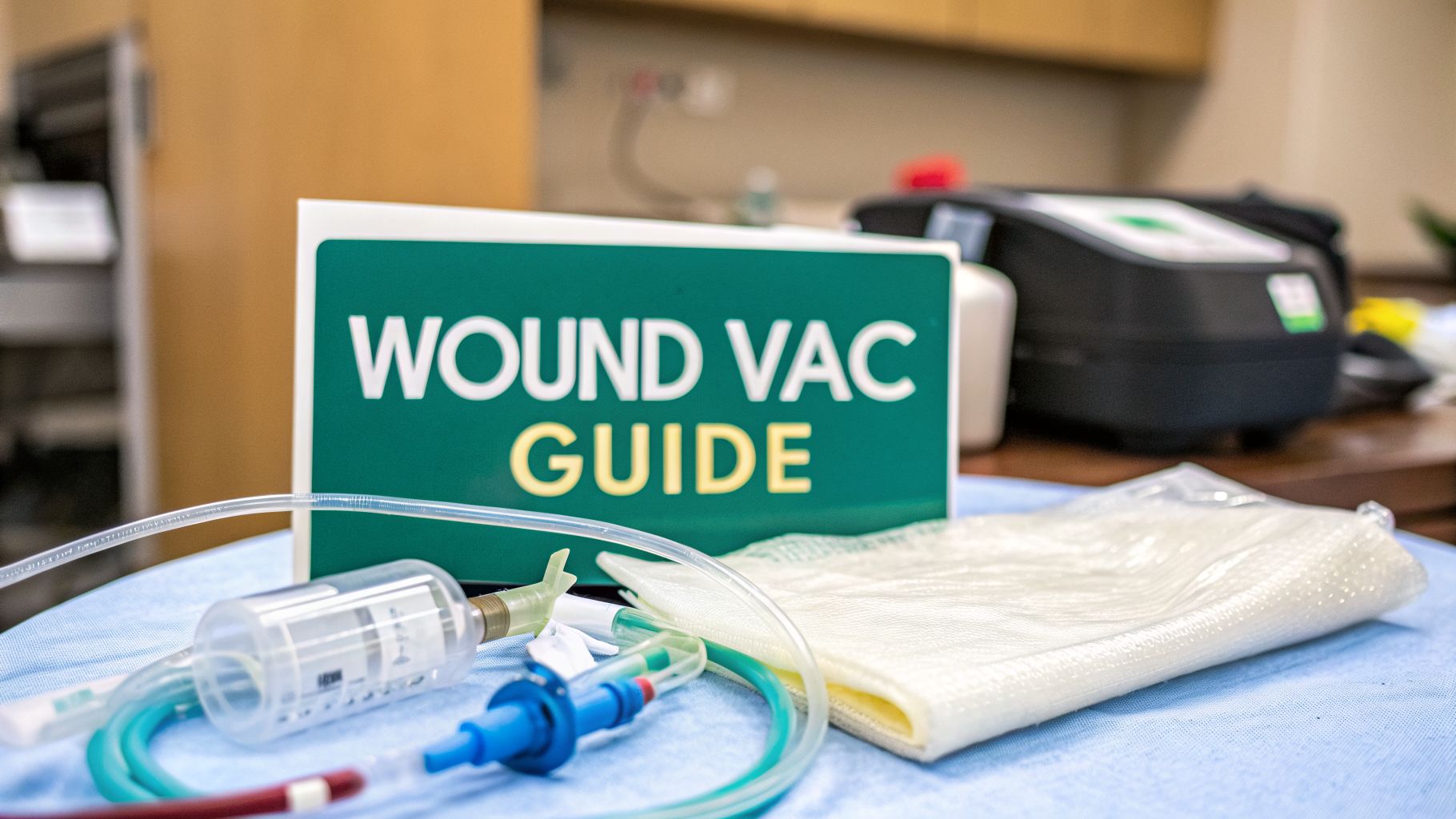
A wound vac is much more than just a fancy bandage. Officially known as Negative Pressure Wound Therapy (NPWT), it’s an active healing system that applies gentle, controlled suction to an injury. Instead of passively covering a wound and waiting for the body to do all the work, a wound vac gets directly involved—pulling out excess fluid, reducing swelling, and even physically drawing the edges of the wound together to speed up the healing process.
This comprehensive guide will explore what a wound vac is, how it works, and its role in modern medicine. We'll delve into its history, the science behind its effectiveness, and the latest technological advancements that are making it an even more powerful tool for clinicians and patients. Understanding this therapy is crucial for anyone involved in managing complex or non-healing wounds, as it represents a significant shift from traditional passive care to active, technology-driven healing.
Understanding the Wound Vac System
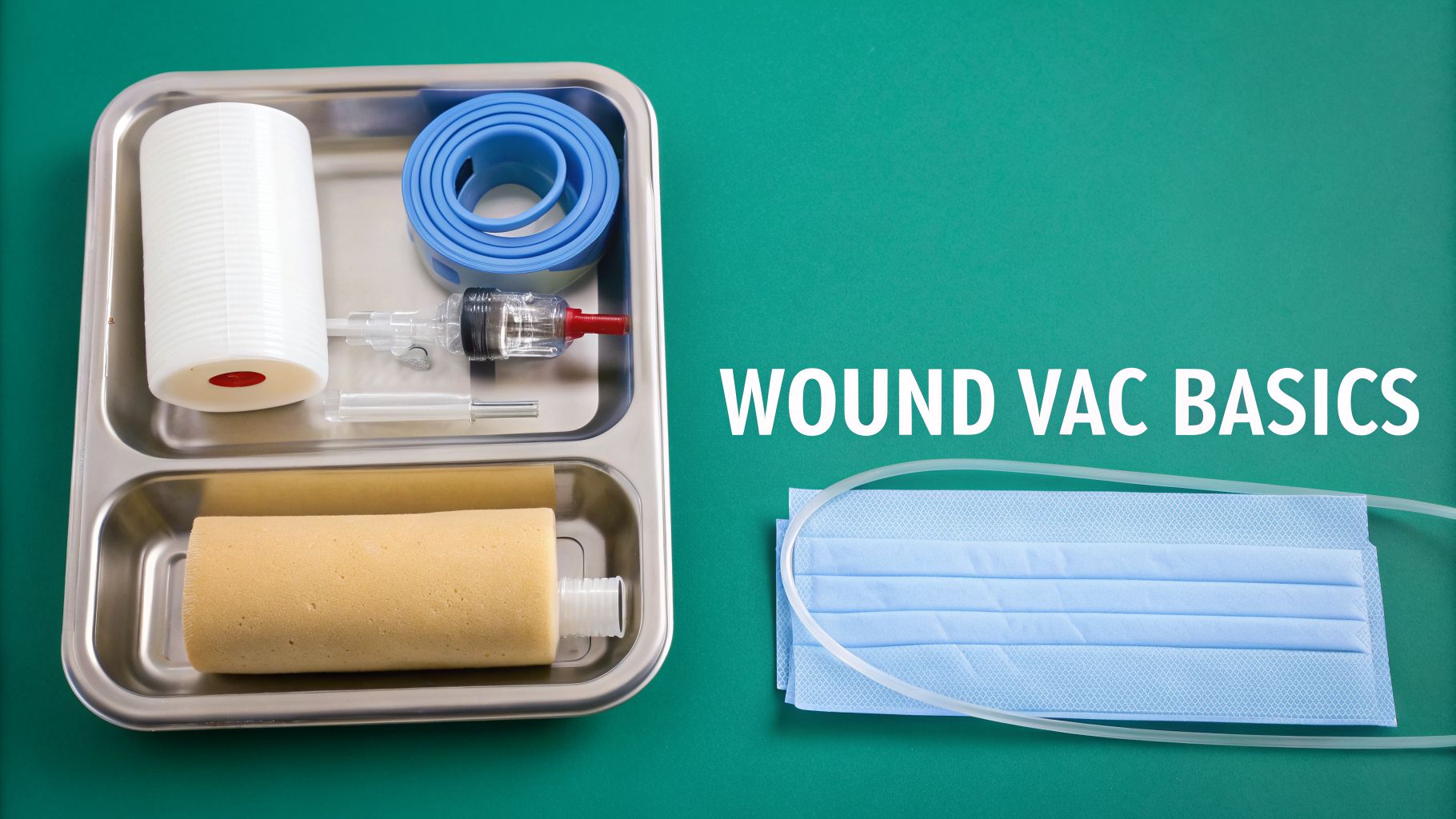
The best way to think about a wound vac is to see it as a shift from passive to active wound management. Traditional dressings are static; they cover and protect. NPWT, on the other hand, creates a dynamic healing environment through three core components that work together seamlessly. This entire setup is classified by the U.S. Food and Drug Administration (FDA) as a class II medical device. This simply means that while it’s more complex than a simple bandage, its risks are well-understood and manageable when used by trained healthcare professionals. The system is designed to create a subatmospheric pressure environment, which is key to its therapeutic effects.
The Three Core Components
So, what makes up a wound vac system? To really grasp what a wound vac is, you need to look at how its three main parts function. Each piece plays a critical role in creating the negative pressure environment and facilitating healing.
- Foam Dressing: This isn't your average sponge. It’s a specialized polyurethane (black foam) or polyvinyl alcohol (white foam) that a clinician cuts to fit perfectly into the wound bed. This porous material acts as the interface between the suction and the tissue, ensuring negative pressure is distributed evenly across the entire wound surface. The choice between black and white foam depends on the wound type; black foam promotes more aggressive granulation, while white foam is denser and less adherent, making it suitable for sensitive areas or tunnels.
- Adhesive Film: A transparent, adhesive drape is carefully placed over the foam, extending onto the healthy skin around the wound. Its job is to create a perfect airtight seal. Without a good seal, the system can't maintain the subatmospheric (negative) pressure needed to work. This seal is the most critical part of the application, as any leak will compromise the therapy's effectiveness.
- Computerized Pump and Canister: A drainage tube connects the foam dressing, through the film, to a small, portable pump. This smart device is what generates the suction, pulling air and fluid out of the wound. The pump is programmable, allowing clinicians to set specific pressure levels (typically between -50 and -125 mmHg) and choose between continuous or intermittent suction. All the drainage, or exudate, is collected neatly in a disposable canister attached to the pump, which often contains a gelling agent to solidify the fluid.
The real genius of the wound vac is in this constant, active removal. By continuously pulling away excess fluid, infectious material, and cellular debris, the system doesn't just clean the wound—it mechanically encourages it to close and rebuild from the bottom up.
An Active Approach to Healing
This suction does far more than just keep the wound clean. When the pump applies negative pressure, it gently contracts the foam dressing. This physical contraction pulls the wound edges closer together, a mechanical benefit called macro-deformation. At the same time, it stimulates the wound bed at a microscopic level, promoting cell growth and blood flow. This concept of actively stimulating the body’s healing mechanisms is part of a larger movement in advanced wound care, which also includes treatments like wound oxygen therapy for particularly stubborn wounds. The end goal is the same: to create a highly controlled, optimized environment that accelerates the growth of new, healthy tissue and helps patients heal faster.
The Evolution of Modern Wound Suction Therapy
Believe it or not, the core idea behind a modern wound vac—using suction to help an injury heal—is thousands of years old. It’s a concept that has been refined over centuries, shaped by everything from ancient rituals to the brutal necessities of the battlefield.
The earliest hints of this practice come from ancient civilizations. Physicians in the Roman era, for instance, used a method called cupping. They would place heated glass cups over a wound, and as the air inside cooled, it created a vacuum. This suction pulled fluids to the surface, a very basic form of what we now call negative pressure therapy. Early records even suggest this simple technique helped cut down on infections and reduce swelling. That fundamental principle kept reappearing over the centuries, with each generation making it a bit more specific.
From Glass Leeches to Battlefield Innovations
The 19th century gave us more deliberate suction devices. In 1821, a British physician named Dr. Francis Fox invented the 'Glass Leech,' which was essentially a suction cup designed to draw out fluids from wounds—mimicking a medicinal leech, but without the bite. A few decades later, in 1890, Dr. Gustav Bier took it a step further. He developed a whole system of different-sized glass cups, tubing, and bulbs to allow for more controlled fluid drainage from various parts of the body. These early devices laid the groundwork by demonstrating the clinical benefits of controlled suction.
The real leap forward, however, was born from the harsh realities of military conflict. The application of negative pressure moved from a general concept to a life-saving medical procedure during the Soviet-Afghanistan War.
In the 1980s, a Soviet surgeon named Dr. Nail Bagaoutdinov was dealing with an overwhelming number of severe, infected battle wounds. In 1985, he devised a clever system using foam dressings connected to a negative pressure unit. It was a crude but incredibly effective wound vac that allowed him to manage these devastating injuries right on the front lines. This was the moment the idea shifted from simple suction cups to a complete wound management system, proving its efficacy in traumatic and highly contaminated settings.
The Birth of the Modern Wound Vac
The final pieces of the puzzle fell into place in a university lab. Building on all this history, researchers at Wake Forest University in the 1990s started to put hard science behind the concept. In 1990, Drs. Louis Argenta and Michael Morykwas tried applying polyurethane foam and a mechanical vacuum pump to a patient's stubborn diabetic bedsores. The results were groundbreaking. The combination of a specialized foam dressing, a completely sealed environment, and a precisely controlled mechanical pump worked wonders. This success led directly to the patenting of the Vacuum-Assisted Closure (V.A.C.) device in 1991.
This journey shows how a simple idea evolved into a cornerstone of modern medicine:
- Ancient Cupping: Established the basic concept of using a vacuum to pull out fluids.
- 19th Century Inventions: Refined suction with tools like the 'Glass Leech' for more targeted use.
- Soviet-Era Battlefield Use: Introduced the critical pairing of foam dressings with negative pressure for severe trauma.
- Wake Forest Research: Systematized the therapy, which led to the first FDA-approved commercial device.
The FDA gave its official approval in 1995, and the technology was brought to market as V.A.C. Therapy, forever changing the world of wound care. By 2010, the therapy had been used on millions of patients around the globe—from helping trauma victims after the Haiti earthquake to even healing a severe wound on a Komodo dragon. This path from an ancient practice to a globally adopted medical standard shows the power of refining a simple idea into an indispensable tool. Today, it’s a vital part of care in outpatient centers and home health, where platforms like Ekagra Health AI help clinicians track progress by seamlessly integrating imaging and documentation. You can discover more insights about the history and development of NPWT on PMC.
The Science of How Negative Pressure Accelerates Healing
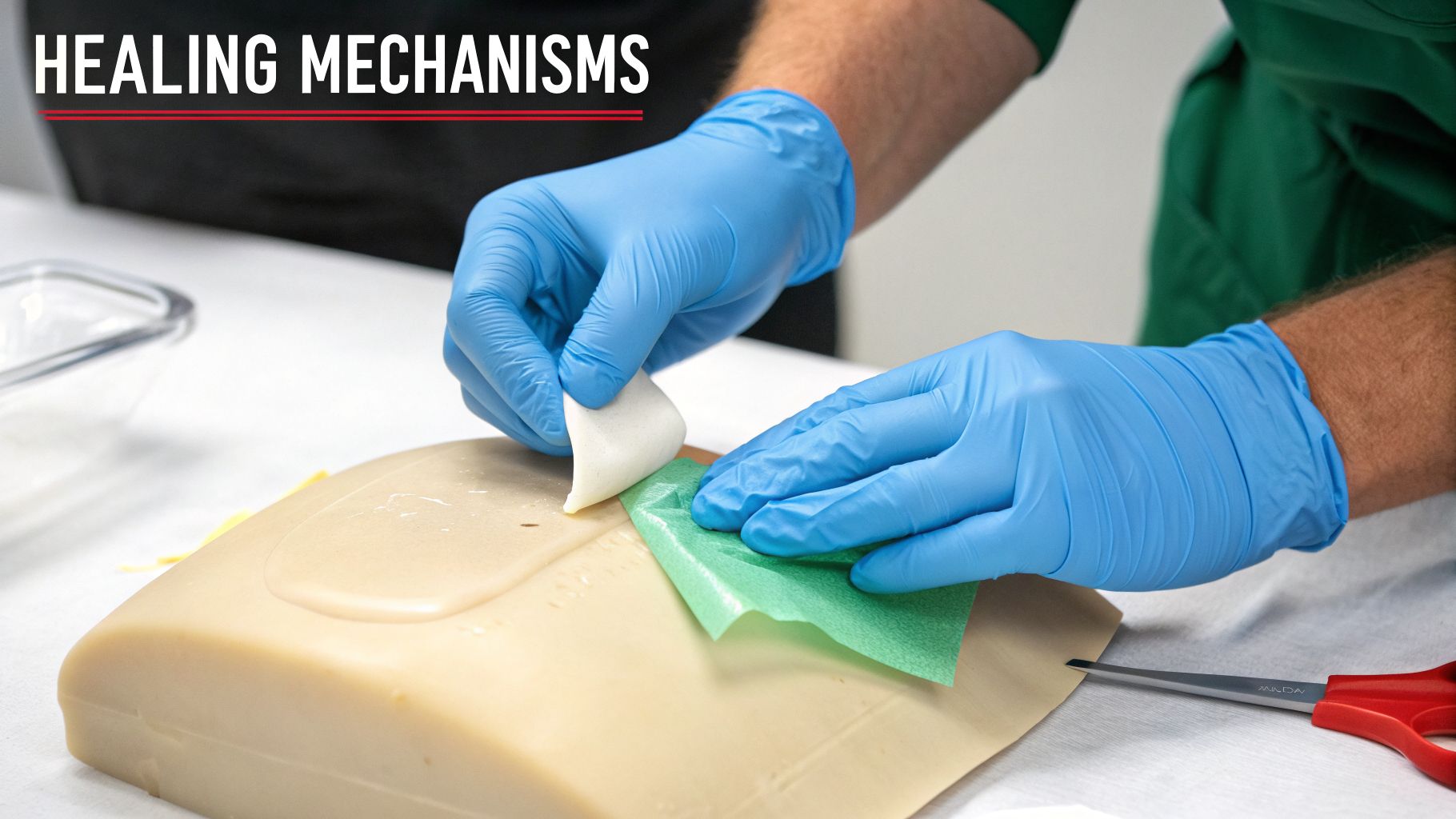
While seeing a wound VAC in action is impressive, the real magic is happening at a biological level. Negative Pressure Wound Therapy (NPWT) isn’t just about simple suction; it’s about using controlled mechanical force to kickstart a cascade of healing responses inside the body. For clinicians, understanding this science is key. It helps us explain the therapy’s value to patients and set realistic expectations. The effectiveness of NPWT really boils down to four main mechanisms, each tackling a different barrier to healing and turning a stagnant wound bed into an active, regenerating environment.
Macro-Deformation: Contracting and Closing the Wound
The most obvious effect of a wound VAC is something we call macro-deformation—the physical contraction of the wound itself. Think of it like gently pulling on the drawstrings of a bag. As the pump applies suction, the foam dressing compresses, pulling the edges of the wound toward the center. This gives NPWT a huge leg up over passive dressings. Research has shown that applying a subatmospheric pressure of 125 mmHg can cause the foam to shrink by nearly 80% of its original volume. This mechanical pull helps physically reduce the wound's size, which means the body has less of a gap to fill and promotes faster closure.
Micro-Deformation: Stimulation at the Cellular Level
While macro-deformation is the big-picture action, micro-deformation is where the real cellular work gets done. The foam dressing's pores create an uneven surface against the wound bed. When the negative pressure kicks in, it creates thousands of tiny stress points that gently stretch and manipulate the cells. This mechanical strain is a powerful signal. It’s like a wake-up call for the cells, telling them to get busy with repairs. Specifically, it:
- Promotes Cellular Proliferation: The stretching triggers cells to divide and multiply, a must for building new tissue.
- Encourages Angiogenesis: It stimulates the growth of new blood vessels, which act as supply lines, delivering vital oxygen and nutrients to the wound.
- Boosts Granulation Tissue: This action accelerates the formation of that bright red, healthy granulation tissue that forms the foundation for new skin.
This cellular-level "workout" is a key reason why NPWT can restart a stalled healing process. It essentially tricks the cells into behaving as if they are in a new, acute injury phase, kickstarting a robust biological response. For a deeper dive into these biological phases, you can learn more about the stages of normal wound healing and how NPWT aligns with them.
Efficient Fluid Removal
Chronic wounds are notorious for producing a lot of exudate—a soupy mix of fluid, dead cells, and bacteria. This fluid, or edema, creates a swampy environment that chokes off healthy tissue, hinders blood flow, and stalls healing by promoting a chronic inflammatory state. A wound VAC acts as a highly effective drainage system. The continuous suction wicks this harmful fluid away from the wound and into the collection canister. The benefit is twofold: it immediately reduces swelling and removes inflammatory agents and bacteria that could otherwise lead to infection. By clearing the way, the system gives healthy cells the clean, optimized space they need to do their job.
Stabilizing the Wound Environment
Finally, NPWT creates the perfect bubble for healing: a controlled, stable, and protected environment. The sealed adhesive dressing locks in the ideal amount of moisture and warmth for cell growth while acting as a barrier against outside contaminants like airborne bacteria. This stable environment also means fewer dressing changes. That’s a big deal, as frequent changes can be painful and disrupt the delicate new tissue that’s forming. Instead of daily disruptions, a wound VAC dressing is typically changed only every 48 to 72 hours, giving the wound a long, uninterrupted period to heal. This reduction in frequency also minimizes patient discomfort and clinician time.
To tie it all together, this table shows how each mechanism directly contributes to better clinical outcomes.
How NPWT Accelerates Healing
| Mechanism | How It Works | Clinical Benefit |
|---|---|---|
| Macro-Deformation | The foam contracts under suction, physically pulling the wound edges closer together. | Reduces the overall size of the wound and provides mechanical closure assistance. |
| Micro-Deformation | Tiny pores in the foam stretch and stimulate cells at a microscopic level. | Triggers cell division, new blood vessel growth, and granulation tissue formation. |
| Fluid Removal | Continuous suction pulls away excess fluid, bacteria, and inflammatory agents. | Decreases swelling (edema), improves blood flow, and lowers the risk of infection. |
| Environment Stabilization | The sealed dressing creates a moist, warm, and protected wound bed. | Prevents outside contamination and reduces the frequency of painful dressing changes. |
By working on these four fronts simultaneously, NPWT creates a powerful, synergistic effect that can dramatically speed up healing, even in the most challenging wounds.
Identifying the Right Candidates for Wound Vac Therapy
A wound VAC is a powerful tool, but it's not the right tool for every wound. The real art of negative pressure wound therapy (NPWT) lies in knowing exactly which patients will benefit—and, just as importantly, which ones to avoid. Getting this call right is everything. It ensures patient safety and gives the wound the best possible shot at healing. This means taking a hard look at both the wound itself and the patient's overall health before you even think about reaching for the foam dressing.
Prime Indications for NPWT
So, when should a wound VAC be your go-to therapy? It really shines with complex wounds that have hit a wall with more conventional treatments. Think of the wounds that are stubborn due to their size, depth, or persistent contamination.
Consider a wound VAC when you're managing:
- Acute Wounds: This is a big one. We're talking about major traumatic injuries like open fractures and degloving injuries, or even messy surgical sites that are too swollen or at high risk for infection to close right away. NPWT helps manage these wounds until they are ready for definitive surgical closure.
- Chronic Wounds: NPWT is a workhorse for stalled, chronic wounds. These are the ones that are stuck and just aren't moving through the healing stages. It’s a game-changer for many diabetic foot ulcers, venous leg ulcers, and pressure injuries (bedsores).
- Surgical Dehiscence: When a surgical incision unexpectedly pops open, a wound VAC is fantastic for cleaning up the wound bed, kicking granulation into gear, and getting it ready for a successful closure down the line. It helps prepare the wound for secondary closure or healing by secondary intention.
- Grafts and Flaps: After placing a delicate skin graft or tissue flap, a wound VAC acts like a gentle, consistent anchor. It secures the graft, pulls out any fluid (seroma or hematoma) that could compromise it, and dramatically improves its chances of taking. It essentially serves as a bolster dressing.
The clinical results really do speak for themselves. Studies have shown wound VACs can accelerate the growth of new granulation tissue by up to 40% faster than standard gauze dressings. In trauma and combat medicine, it's become an essential tool for reducing infection rates and getting wounds closed sooner. For the chronic wounds that affect so many of the 30 million people with diabetes in the U.S., NPWT has been shown to heal 60-80% of stalled ulcers within months. That’s a huge leap from the 20-30% success rate seen with standard care. With over 25 years of data backing its use, it's easy to see why it has become a standard of care. To get the full story on its development, you can read the full research on its history and impact at Wake Health.
For a deep dive into one of the most common applications, be sure to check out our guide on diabetic foot ulcer management.
Absolute Contraindications: When Not to Use a Wound Vac
Just as crucial is knowing when to say no. In certain situations, using a wound VAC isn't just a bad idea—it's downright dangerous and can cause serious harm.
Patient safety is the number one priority. A thorough wound assessment is non-negotiable before starting NPWT to rule out any contraindications that could cause significant harm.
You must avoid using a wound VAC in these scenarios:
- Malignancy in the Wound: Never apply negative pressure to a wound with known cancerous tissue. The suction could potentially encourage the spread of malignant cells.
- Untreated Osteomyelitis: If there's an active bone infection at the base of the wound, it has to be addressed first with debridement and systemic antibiotics. You can't just seal an untreated infection under a dressing; it will only get worse.
- Unexplored Fistulas: A fistula is an abnormal tunnel connecting two parts of the body (e.g., intestine to skin). Applying NPWT over a fistula without knowing exactly where it leads can cause devastating internal damage, such as enteric contents being suctioned out.
- Exposed Vital Structures: This is a hard stop. The foam dressing should never be placed directly over exposed blood vessels, organs, or nerves. The constant suction can easily erode these delicate structures and lead to catastrophic bleeding or trauma. A non-adherent protective layer must be used if these structures are in the vicinity of the wound.
- Necrotic Tissue with Eschar: A wound VAC needs a clean wound bed to work. It's ineffective on dry, black, dead tissue (eschar) and can trap harmful bacteria underneath. The wound must be properly debrided before therapy begins. Adequate blood flow to the wound is also a prerequisite.
How AI Is Modernizing Wound VAC Management
Anyone who's managed Negative Pressure Wound Therapy knows the device is just one piece of the puzzle. The real work involves a mountain of assessments, painstaking documentation, and tricky billing—all areas where human error can creep in and administrative tasks can become overwhelming. Now, intelligent platforms are helping to carry that load, letting clinicians get back to what they do best: caring for patients. This shift is a huge relief for wound care clinics, hospitals, and home health agencies that are constantly bogged down by paperwork. By using artificial intelligence, these tools are smoothing out the entire process, from the initial assessment at the bedside to getting the final claim paid.
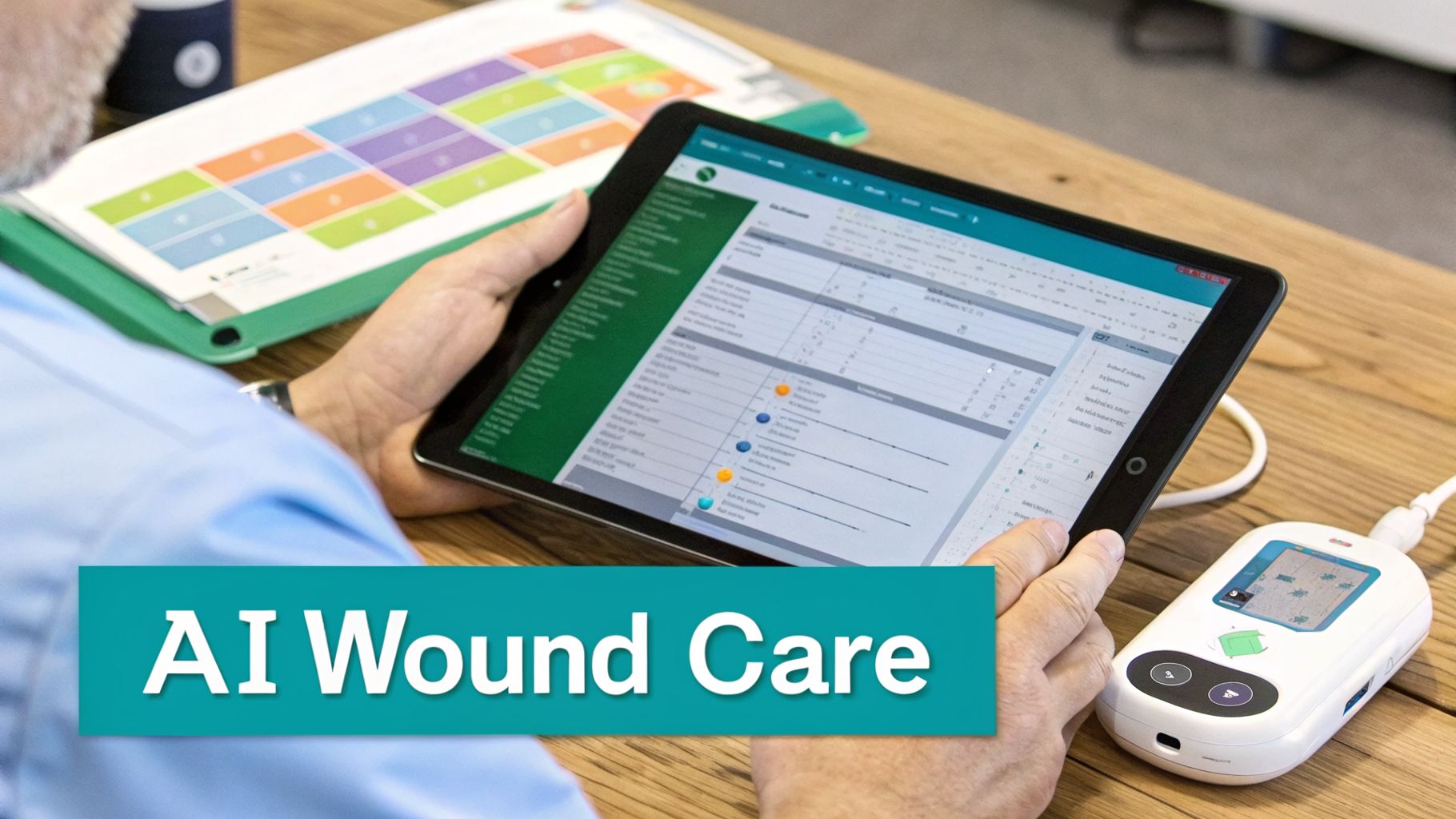
Here's a great example of what this looks like in practice. Instead of digging through charts, a clinician can see a wound’s healing progress at a glance, making it much easier to spot important trends and decide if the current care plan is working.
From Voice Notes to Structured Charts
Picture this: a clinician is in the middle of a wound VAC dressing change. Instead of stopping, taking off their gloves, and typing notes into a computer, they simply describe what they see out loud. This is where AI-driven, voice-first documentation comes in. It acts like a highly trained medical scribe, listening to a clinician's natural speech and instantly slotting that information into a perfectly organized medical chart. No more staying late to finish up tedious data entry. The technology is smart enough to understand complex medical terms. For example, a quick note like, "The wound is 5 by 3 centimeters with 80% granulation tissue and moderate serosanguinous drainage," is immediately translated into the correct data fields in the patient's record.
AI-Powered Image Analysis for Objective Tracking
For years, tracking a wound's progress has been a fairly subjective process, often leading to inconsistent measurements between visits or clinicians. AI-powered image analysis puts an end to the guesswork by providing objective, data-driven measurements every single time. With just a smartphone or tablet, a clinician can snap a picture of the wound. The AI gets to work right away, automatically:
- Measuring Dimensions: It calculates the length, width, and surface area with precision.
- Analyzing Tissue Types: The system identifies and quantifies the exact percentage of granulation, slough, and eschar in the wound bed.
- Tracking Healing Over Time: By comparing images from different appointments, it creates graphs that show the healing trajectory, giving clear, visual proof of what's working and what isn't.
This kind of objective data is invaluable. It takes the ambiguity out of wound assessment and provides a concrete record of how a wound is responding to NPWT. You can explore other advanced wound assessment tools for nurses that work alongside these technologies to get an even clearer picture.
Sorting Out the Revenue Cycle
Billing for wound VAC therapy can be a nightmare. It requires very specific CPT and ICD-10 codes that must perfectly match the wound's condition and the services provided. Getting these codes wrong is a primary reason for claim denials, which directly hits a provider's bottom line. For patients with complex wounds, a private nurse at home can offer fantastic clinical support, but if the billing isn't right, reimbursement becomes a major hurdle. AI platforms cut through this complexity. Using the structured data gathered from voice notes and image analysis, the system suggests the most accurate billing codes for the visit. This drastically cuts down on coding errors and helps generate clean claims that sail through on the first try. The result is a healthier revenue cycle and a lot less time wasted on chasing down payments.
Recent Innovations in Wound Vac Technology
If you think of a wound VAC as just a simple suction device, you haven't been keeping up with the last couple of decades of innovation. Since Negative Pressure Wound Therapy (NPWT) first hit the market in the mid-1990s, it's gone from a single, groundbreaking machine to a whole field of specialized, competitive technology. This isn't just a niche product; it’s a cornerstone of modern wound management. The market growth alone tells you how indispensable this technology has become. By the early 2010s, the U.S. advanced wound care market, where NPWT is a major player, had already climbed to about $4.4 billion. That kind of money reflects a huge demand for better wound healing in every setting, from the ICU to a patient's own living room.
Intelligent Instillation for Infected Wounds
One of the biggest leaps forward has been the development of NPWT with instillation (NPWTi). This isn't your standard wound VAC. It’s a much smarter system that doesn't just suck out fluid; it also periodically rinses the wound with a therapeutic solution, like an antimicrobial or antiseptic liquid. Think of it as an automated "rinse and repeat" cycle for a contaminated wound. The device pauses the suction, delivers a specific amount of fluid to soak the wound bed, and lets it sit for a bit to fight off bacteria. Then, it kicks the vacuum back on to pull out all the contaminated fluid, debris, and exudate.
This approach has been a game-changer, especially for:
- Infected Wounds: It actively washes away and reduces the bacterial load right at the source.
- Wounds with Slough: The fluid helps soften and loosen stubborn, non-viable tissue, cleaning the slate for healthy tissue to grow.
- Complex Post-Surgical Wounds: It gives clinicians an extra line of defense against infection in wounds that are at high risk.
The V.A.C. Instill®, which came out back in 2002, was one of the first systems to prove this concept. Studies showed that combining suction with topical solutions could dramatically lower bacterial counts, making it a go-to tool in podiatry and vascular surgery for tough, infected wounds.
This dual-action approach—cleansing and contracting—marks a major step forward. It allows clinicians to actively manage bioburden while simultaneously leveraging the mechanical benefits of negative pressure, turning the tide on wounds that would otherwise stall.
The Rise of Portable and Single-Use Devices
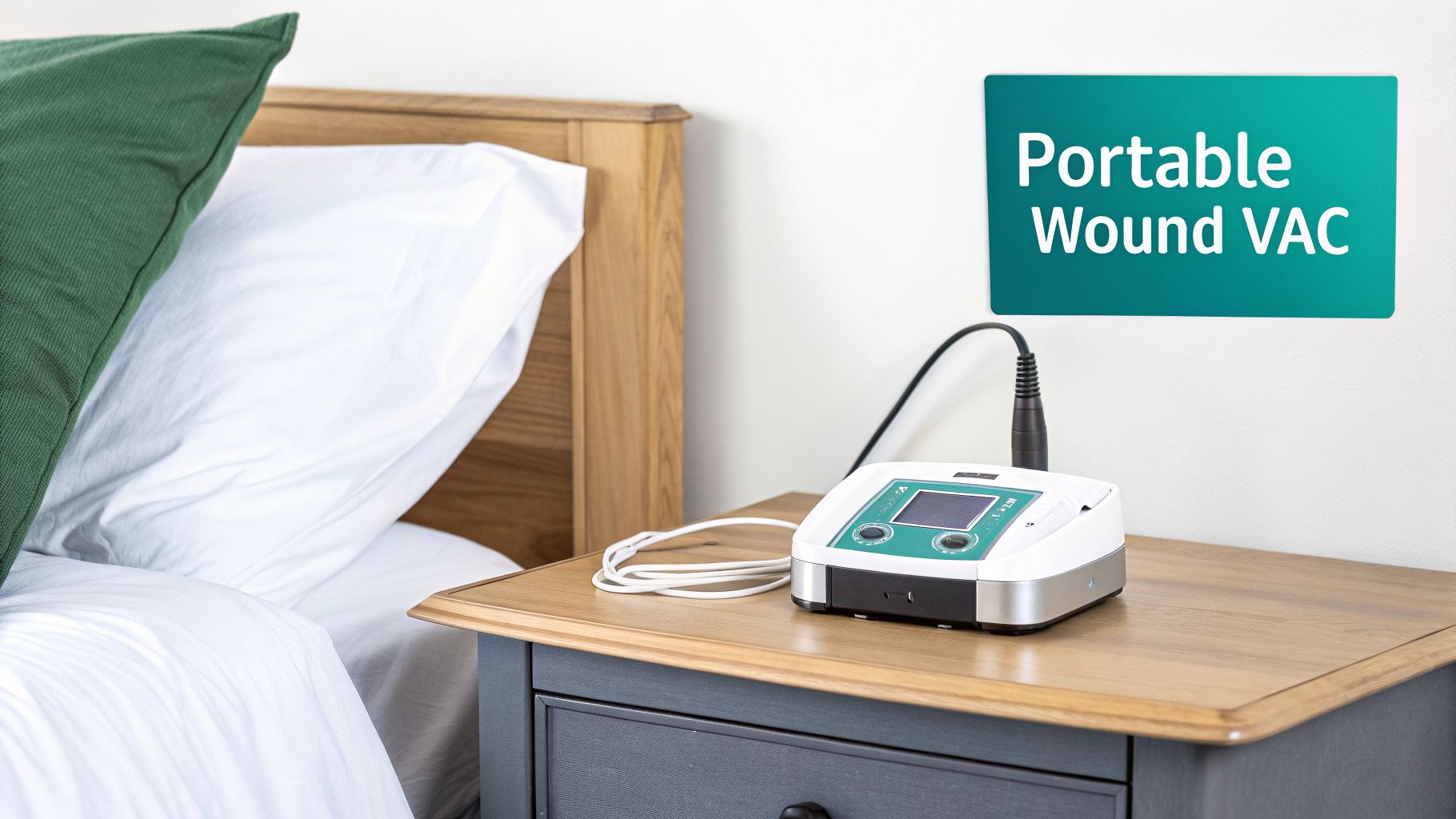
The other major trend has been a move toward smaller, more practical devices. The first-generation wound VACs were often clunky machines that kept patients tethered to a bedside. For anyone trying to recover at home, it was a real limitation. Today’s devices have completely flipped that script. The arrival of single-use, portable wound VACs has made therapy incredibly convenient. These small, lightweight units mean patients can go about their daily lives with minimal hassle. It’s a huge win for patient morale and mobility, and it allows healing to happen on the patient's terms. This shift has been fantastic for home health agencies. It empowers nurses to manage complex wounds without hauling around heavy equipment or forcing patients to make constant trips to the clinic. As early patents expired, market competition heated up, driving companies to create more user-friendly and affordable options for everyone.
Today, we have incredibly sophisticated systems like the V.A.C. Ulta™ with Veraflo™, introduced in 2011, which offers precise, automated delivery of topical solutions. This progress, combined with the rise of integrated tools like Ekagra Health AI that can automate tedious documentation and billing, shows how technology is making NPWT more powerful and efficient than ever. You can read more about the evolution of wound vac therapy on PMC to get a deeper clinical perspective.
Common Questions About Wound Vac Therapy
Even with a good grasp of the science behind a wound vac, patients and clinicians alike always have practical, day-to-day questions. Getting straight answers is crucial for setting the right expectations, keeping the patient comfortable, and making sure Negative Pressure Wound Therapy (NPWT) really works. Let's walk through some of the most common questions that come up to clear the air about what it's really like to use this treatment.
Is Wound Vac Therapy Painful?
This is usually the very first thing patients ask. The idea of putting a vacuum on an open wound sounds pretty intense, but the therapy itself is rarely painful. Most people just feel a gentle, steady pulling or maybe a light tingling sensation. That said, there are two specific times when a patient might feel some discomfort:
- Initial Application: When the device first kicks on, the foam dressing quickly contracts under the suction. This can cause a strange, noticeable sensation that typically fades away in just a few minutes once the body adjusts.
- Dressing Changes: The most likely point for any real pain is during the dressing change itself—when the old foam is removed and the wound bed is cleaned. We can get ahead of this by having the patient take prescribed pain medication about 30 to 60 minutes before the scheduled change.
How Often Is the Dressing Changed?
One of the biggest perks of a wound vac is that you don't have to change the dressing nearly as often as with traditional wound care. This gives the wound bed a better chance to heal without constant disruption and is a lot more convenient for everyone involved. Typically, dressings are changed every 48 to 72 hours, which works out to about two or three times a week. The exact schedule is always up to the clinician, who will base it on the wound's condition, how much it's draining, and the specific type of foam being used. For example, a wound with signs of infection might need more frequent changes.
Can I Shower with a Wound Vac?
The short answer is yes, patients can usually shower, but you have to be careful. The absolute priority is to keep the dressing and the pump itself completely dry. Taking a bath and submerging the wound is a definite no-go. To shower safely, the pump needs to be disconnected for a short time. The tubing is clamped off, and the end can be tucked securely under the clear adhesive drape. Many kits even come with special waterproof covers designed to go over the whole site. After the shower, it's vital to pat the area completely dry before reconnecting the pump.
Maintaining an airtight seal is the single most important factor for NPWT success. If the adhesive dressing gets wet and starts to peel, the vacuum will be lost, and the therapy will be ineffective.
What Are Signs of a Problem?
Thankfully, modern wound vacs are smart. They have built-in alarms to let you know when something needs attention. It's important for patients and caregivers to understand what these alarms mean and what other warning signs to look out for. Here are the most common signs of a problem:
- A Leak Alarm: This is the most frequent alert you'll encounter. It simply means air is sneaking in under the dressing's seal, and the pump is working too hard to maintain pressure. You can often fix this by running your finger along the edges of the clear drape to press it down and reseal it.
- A Canister Full Alarm: This one is straightforward—the drainage collection canister is full and needs to be replaced.
- Changes in Drainage: If you suddenly see a lot more drainage, the color changes to bright red blood, or you notice a foul odor, it could signal a problem like new bleeding or an infection.
- Increased Pain or Redness: If the skin around the wound becomes more painful, swollen, or red, it might point to a developing infection.
If you can't resolve an alarm on your own or notice any of these more serious signs, you should contact your healthcare provider right away.
Managing the detailed documentation, coding, and billing for wound vac therapy can be a significant administrative burden. Ekagra Health AI helps simplify this process with an AI platform that can turn a clinician's voice notes into a fully structured chart, ensuring claims are accurate and complete. To see how you can cut down on documentation time and strengthen your revenue cycle, explore our solutions at Ekagra Health.
