
In wound care, documentation isn't just a record; it's the critical link between high-quality patient care and financial viability. Incomplete or poorly constructed SOAP notes frequently lead to rejected claims, compliance risks, and hours of administrative rework. This guide moves beyond theory to provide eight detailed, billing-ready soap notes examples tailored to common wound care scenarios, from diabetic foot ulcers to post-operative infections.
We will break down the anatomy of each note, revealing the specific details that justify medical necessity, support accurate coding, and create an audit-proof record. You will learn how to transform your charting from a time-consuming chore into a powerful tool for improving outcomes and accelerating reimbursement. To truly automate your documentation process and reclaim valuable time, consider solutions that that can efficiently transcribe meeting audio to text, transforming spoken patient information directly into a format ready for SOAP note structuring.
This collection is designed for immediate application, showing you precisely what to include, what to avoid, and how to articulate the patient's story in a way that satisfies both clinical and financial requirements. Let's dive into the examples.
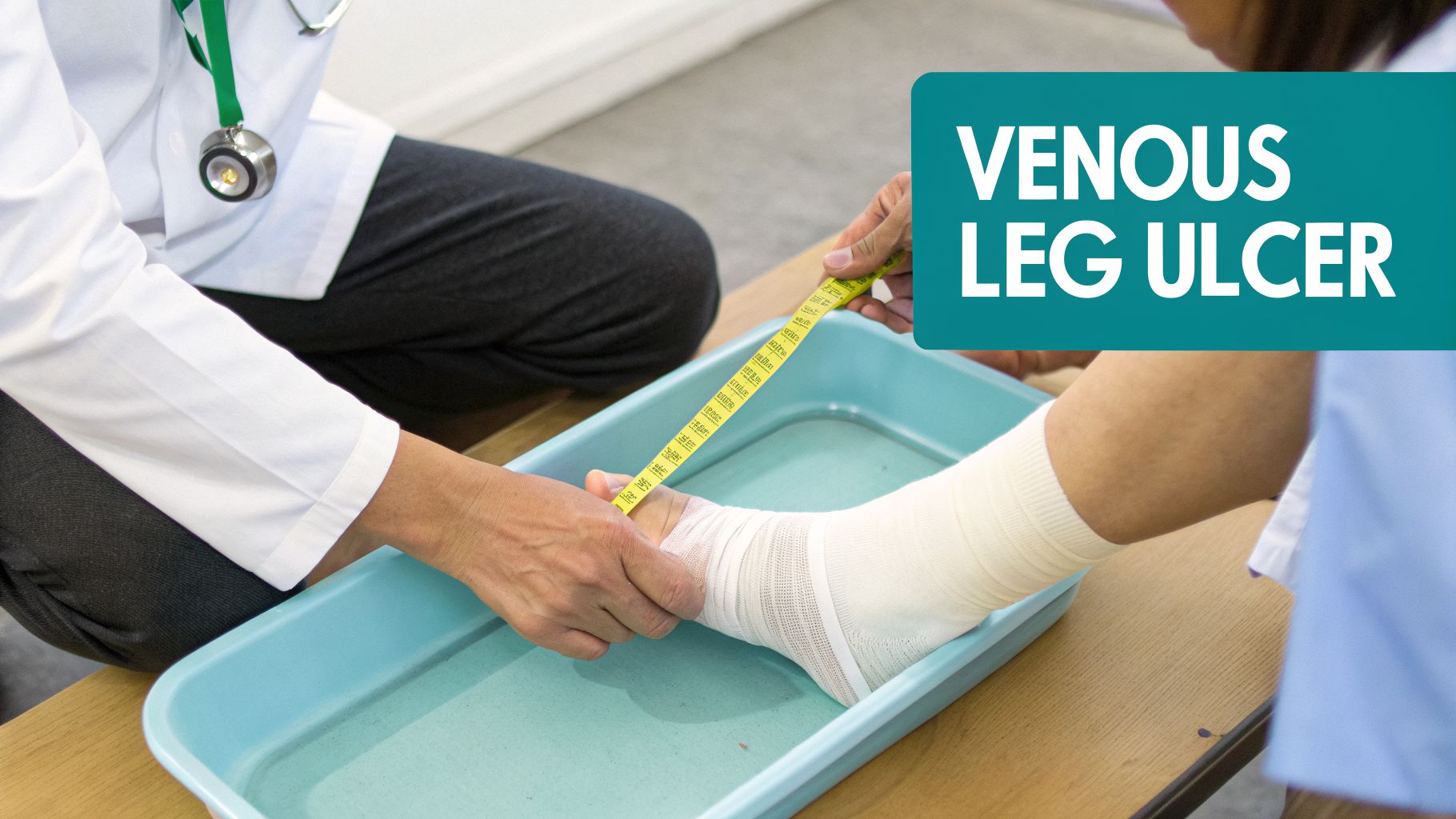
1. Chronic Venous Leg Ulcer Assessment SOAP Note
Chronic venous leg ulcers (VLUs) present unique documentation challenges due to their long healing trajectories and the need for consistent, multi-faceted care. A specialized SOAP note for this condition goes beyond basic wound measurements. It creates a detailed narrative that justifies ongoing treatment, tracks the efficacy of interventions like compression therapy, and provides a clear basis for billing and reimbursement over many weeks or months. This is one of the most essential soap notes examples for any clinic managing chronic lower extremity wounds.
Strategic Breakdown
This type of SOAP note is indispensable in outpatient wound centers, home health settings, and vascular clinics. Its strength lies in its specificity. Instead of a generic "wound improving" statement, it details changes in periwound skin (like reduced lipodermatosclerosis), fluctuations in lower extremity edema measured in centimeters, and patient adherence to a prescribed compression plan.
Key Insight: For chronic conditions like VLUs, the SOAP note serves as a longitudinal record. Each entry must build upon the last, demonstrating medical necessity and justifying the care plan to payers. Without this detailed progression, claims for long-term services can be denied.
Actionable Takeaways & Tips
To make your VLU SOAP notes robust and audit-proof, focus on quantifiable data and patient-centric details.
- Standardize Measurements: Use consistent wound measurement tools and photo angles for every visit. This creates an objective record of progress or decline. Explore various wound assessment tools for nurses to find the best fit for your workflow.
- Document Compression in Detail: In the Assessment, specify the type and class of compression used (e.g., "Class III, 30-40 mmHg multilayer short-stretch bandage"). Note the patient's tolerance and any adjustments made.
- Track Vascular Status: Regularly document Ankle-Brachial Index (ABI) results to confirm adequate arterial flow, a prerequisite for safe compression. Note the date and value in the Objective section.
- Connect Plan to Education: In the Plan, explicitly link patient education on leg elevation and compression adherence to the treatment goals. This reinforces medical necessity for insurance authorizations.
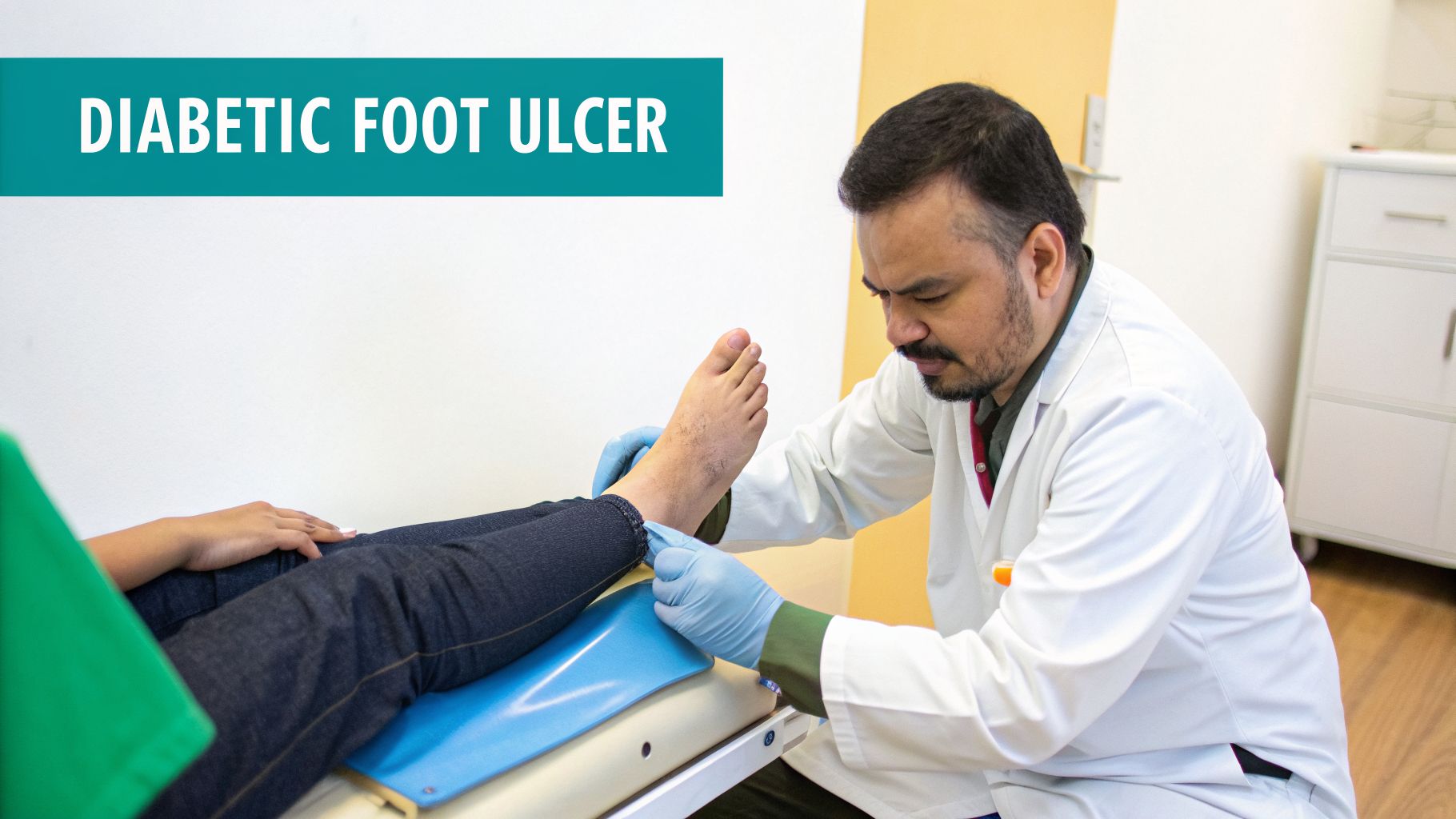
2. Diabetic Foot Ulcer (DFU) with Infection Risk SOAP Note
Documenting a diabetic foot ulcer (DFU) requires meticulous attention to neuropathy, vascular status, and signs of infection, which can escalate rapidly. A SOAP note for a DFU must do more than just describe the wound; it needs to build a compelling case for off-loading, glycemic control, and vigilant infection surveillance. This documentation is central to amputation prevention programs and is one of the most critical soap notes examples for podiatry, endocrinology, and primary care settings.
Strategic Breakdown
This note is essential for hospital wound centers, podiatry practices with high-volume DFU clinics, and home health agencies. Its power is in connecting the wound's status directly to systemic factors like glucose control and peripheral neuropathy. Instead of a simple "wound is present," the note should quantify neuropathy using a Semmes-Weinstein monofilament test, classify the ulcer with a standardized system like Wagner, and note recent HbA1c levels.
Key Insight: For DFUs, the SOAP note is a risk-mitigation tool. Each entry must justify the high level of care required by demonstrating the patient's compounded risk factors (neuropathy, poor circulation, hyperglycemia). This detailed narrative supports the medical necessity for advanced treatments, frequent follow-ups, and specialized off-loading equipment.
Actionable Takeaways & Tips
To create a defensible and clinically effective DFU SOAP note, focus on standardized classification and correlating systemic and local findings.
- Use Standardized Classification: Consistently use a wound classification system like the Wagner Ulcer Grade Scale in the Assessment. This provides a clear, objective way to track progression or regression over time for billing and clinical review.
- Document Neuropathy Baseline: In the Objective section, record the results of a sensory test (e.g., "Patient unable to detect 5.07 Semmes-Weinstein monofilament at 8/10 sites on plantar foot"). This establishes the medical necessity for protective measures and patient education.
- Link Glycemic Control: When available, include the most recent HbA1c value in the Subjective or Objective section. In the Assessment, connect poor glycemic control (e.g., HbA1c > 8.0%) to delayed healing, justifying coordination with the patient's endocrinologist.
- Justify Off-loading: Detail the type of off-loading device prescribed (e.g., "Total Contact Cast," "Charcot Restraint Orthotic Walker") and the patient's adherence. This documentation is crucial for justifying the cost of durable medical equipment (DME).
3. Post-Operative Surgical Site Infection (SSI) Monitoring SOAP Note
Documenting the care of a post-operative surgical wound requires a sharp focus on infection surveillance. A SOAP note tailored for Surgical Site Infection (SSI) monitoring moves beyond simple incision checks. It creates a precise, day-by-day record of the wound's healing status, drain outputs, and patient response, which is crucial during the high-risk period immediately following surgery. This format is one of the most important soap notes examples for acute care and outpatient surgical settings to prevent complications and justify interventions.
Strategic Breakdown
This type of SOAP note is a cornerstone for hospital surgical floors, outpatient clinics managing post-op visits, and home health agencies. Its value lies in its structured approach to identifying early signs of infection. Instead of a vague "incision looks okay," the note documents specific details like the color and amount of drainage, the presence and spread of erythema (redness), and the patient's systemic symptoms like fever.
Key Insight: For SSI surveillance, the SOAP note functions as a legal and clinical tool for demonstrating adherence to infection control protocols. Clear, objective documentation justifies decisions like starting or stopping antibiotics, removing a drain, or performing a wound culture, protecting both the patient and the facility.
Actionable Takeaways & Tips
To create SSI monitoring SOAP notes that are effective for patient care and risk management, concentrate on clear, standardized data.
- Use Standard Definitions: Document signs and symptoms using established criteria, such as the NHSN (National Healthcare Safety Network) definitions for superficial, deep, and organ/space SSIs. This standardizes your assessment.
- Detail Drain Management: In the Objective section, specify the type of drain (e.g., Jackson-Pratt, Hemovac), its location, and the exact output volume and character (e.g., "75 mL serosanguinous fluid over 24 hrs").
- Track Antibiotic Therapy: Clearly state the antibiotic name, dose, and the current day of the prescribed course (e.g., "Keflex 500 mg QID, Day 3 of 7"). This prevents missed doses or premature discontinuation.
- Document Functional Status: Note any pain or physical limitations impacting the patient's mobility or ability to perform daily activities. This information is vital for planning physical therapy and determining a safe return to work.
4. Pressure Injury (Bedsore) Stage Assessment SOAP Note
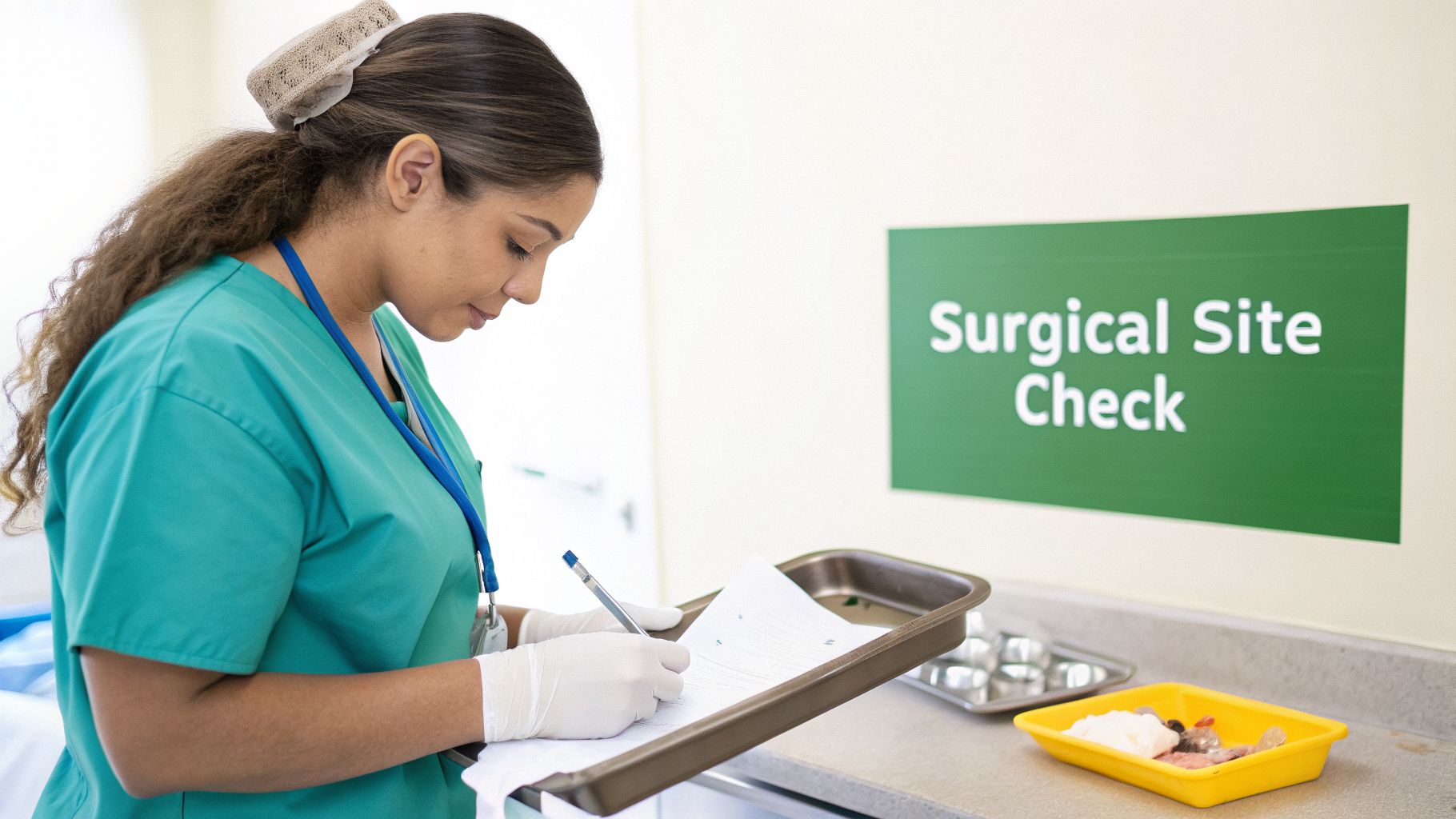
Accurate documentation of pressure injuries (formerly known as pressure ulcers or bedsores) is a high-stakes task, especially in settings scrutinized by regulators like CMS. A specialized SOAP note for this condition is crucial for staging accuracy, demonstrating preventative care, and defending against claims of facility-acquired injuries. This detailed format provides a clear, defensible record for skilled nursing facilities (SNFs), hospitals, and home health agencies, making it one of the most vital soap notes examples for managing at-risk populations.
Strategic Breakdown
This SOAP note's purpose extends beyond treatment; it's a tool for accountability and risk management. For example, a hospital wound care team uses it to manage a Stage III sacral ulcer on an immobile patient, while an SNF uses it to document that a new Stage II injury on a resident's heel was present on admission. It precisely defines the injury's characteristics according to NPUAP guidelines, tracks interventions, and justifies the care plan.
Key Insight: In pressure injury management, the SOAP note is a critical legal and regulatory document. It must prove that all reasonable preventative measures were taken and accurately stage any existing injuries. Vague documentation can lead to significant financial penalties and survey deficiencies.
Actionable Takeaways & Tips
To create pressure injury SOAP notes that withstand scrutiny, focus on precision, prevention, and clear measurements.
- Define with Precision: Use the exact NPUAP staging definitions (Stage I-IV, Unstageable, Deep Tissue Injury) in your Assessment. Avoid ambiguous terms like "red area."
- Document Prevention in the Plan: Explicitly list all pressure relief measures. Document the schedule for turning and repositioning, the type of support surface in use, and any nutritional interventions like protein supplementation.
- Measure Thoroughly: In the Objective section, record wound dimensions. For deeper wounds, use a sterile probe to measure and document any undermining or tunneling, noting the depth and location using a clock-face analogy (e.g., "3 cm of undermining from 12:00 to 3:00").
- Leverage Photography: Take consistent photographs with a staging marker and measuring guide at each assessment. This visual evidence provides undeniable support for your written documentation.
5. Traumatic Wound (Lacerations/Abrasions) Emergency Care SOAP Note
In fast-paced emergency or urgent care settings, documenting acute traumatic wounds requires both speed and precision. A SOAP note for a laceration or abrasion is built for rapid assessment, prioritizing the critical details needed for immediate treatment decisions, safe closure, and clear discharge planning. It focuses on the mechanism of injury, contamination risk, and neurovascular integrity to ensure patient safety and mitigate liability. This format is a cornerstone among soap notes examples for any acute care provider.
Strategic Breakdown
This SOAP note variant is critical in emergency departments, urgent care centers, and occupational health clinics. Its value comes from its ability to capture a complete medico-legal picture in minutes. It documents not just the wound's dimensions but also the tetanus status, the presence of foreign bodies, and the full neurovascular exam distal to the injury, all of which are essential for determining the correct level of care and defending against future claims.
Key Insight: For acute traumatic wounds, the SOAP note serves as a point-in-time record that justifies the closure technique and demonstrates the standard of care. Documenting a thorough neurovascular exam before anesthesia is administered is a non-negotiable step to protect both the patient and the clinician.
Actionable Takeaways & Tips
To create a defensible and effective traumatic wound SOAP note, focus on objective findings and the specific materials used.
- Photograph Pre-Intervention: When possible, take a photo of the wound before cleansing or anesthetizing. Including a ruler for scale provides undeniable evidence of the initial presentation.
- Be Specific with Closure: In the Plan, detail the exact closure method and materials (e.g., "Closed with 8 interrupted 5-0 Ethilon sutures"). This is vital for follow-up care and billing.
- Standardize Neurovascular Exams: Use clear, standard notation in the Objective section to record findings, such as "2+ radial pulse, brisk capillary refill <2 seconds, sensation intact to light touch in all distal nerve distributions."
- Document Discharge Instructions Clearly: The Plan must include explicit instructions for wound care, signs of infection to monitor for, and a specific timeline for suture or staple removal. This confirms the patient was properly educated.
6. Burn Wound Management and Healing Progression SOAP Note
Documenting burn injuries requires a specialized approach due to their complexity, dynamic nature, and extended healing timelines. A SOAP note for burn management must capture details far beyond simple wound dimensions, addressing factors like depth, total body surface area (TBSA), and the progression from acute injury to scar maturation. This note serves as a critical communication tool in trauma centers, burn units, and rehabilitation facilities, guiding multidisciplinary care over weeks or months. Its precision makes it a vital example among specialized soap notes examples for high-acuity care.
Strategic Breakdown
This SOAP note template is essential for regional burn centers, intensive care units, and specialized outpatient clinics managing post-burn complications. Its value is in its ability to track the multi-stage wound healing process unique to burns. Instead of a simple progress update, it documents changes in eschar, graft viability, and pain levels before and after interventions, providing a clear justification for surgical decisions and intensive pain management protocols.
Key Insight: For burn injuries, the SOAP note is a medico-legal and clinical diary. Each entry must justify the high level of care, from initial resuscitation and debridement to grafting and long-term scar therapy. Inconsistent or vague documentation can compromise patient care continuity and create significant reimbursement challenges for costly procedures.
Actionable Takeaways & Tips
To create a comprehensive and defensible burn wound SOAP note, focus on standardized assessments and functional outcomes.
- Standardize TBSA Calculation: Consistently use a Lund-Browder chart for TBSA calculations, especially in pediatric patients, as it is more accurate than the Rule of Nines. Document the TBSA percentage in the Objective section at each major assessment.
- Document Debridement Readiness: In the Assessment, note the state of the eschar (e.g., "adherent," "separating at borders," "soft with purulence"). This detail is crucial for timing surgical debridement and supports the medical necessity for the procedure.
- Track Graft Viability: For post-grafting notes, record daily observations of the skin graft's color, adherence, and blanching response in the Objective section. Use percentages to describe take (e.g., "95% viable graft take with pinpoint areas of non-adherence").
- Justify Pain Management: Document pain scores (e.g., on a 1-10 scale) before, during, and after wound care. Linking high pain scores in the Subjective section to the administration of analgesics in the Plan demonstrates the necessity of the pain management regimen.
7. Wound Care in Complex/Multi-Morbidity Home Health SOAP Note
Documenting care for homebound patients with multiple comorbidities and wounds presents a significant challenge. The home health SOAP note must be efficient for the visiting nurse yet detailed enough to capture the complexity of the patient's condition, justifying skilled nursing care under strict productivity standards. This note structure is designed to balance comprehensive assessment with the time constraints inherent in home health, making it one of the most practical soap notes examples for this demanding setting.
Strategic Breakdown
This SOAP note template is critical for home health agencies managing elderly patients with overlapping conditions like venous and diabetic wounds, post-surgical complications, or palliative care needs. Its value comes from its ability to efficiently organize complex information. Instead of a single narrative, it compartmentalizes data about multiple wounds, caregiver capabilities, and systemic factors impacting healing, like polypharmacy or limited mobility.
Key Insight: In home health, documentation must prove that care is not merely "custodial." Each SOAP note needs to explicitly link skilled nursing interventions-like wound assessment, dressing changes, and patient education-to specific medical necessities driven by the patient's complex health status. This detailed connection is vital for passing audits and securing reimbursement.
Actionable Takeaways & Tips
To create effective and compliant home health wound care notes, prioritize structure and objective evidence.
- Prioritize and Segment: Before the visit, review the patient’s chart to prioritize the most critical wounds. Document each wound separately within the Objective section for clarity and easy tracking over time.
- Document Caregiver Involvement: Explicitly state the caregiver's ability and willingness to participate in care. Note what education was provided and their demonstrated understanding (or lack thereof), which justifies continued skilled nursing visits.
- Assess Systemic Barriers: In the Assessment, note medications that could impair healing (e.g., steroids, anticoagulants). This demonstrates a higher level of clinical reasoning.
- Standardize Documentation: Use time-stamped photos and consistent measurement tools for every visit. A clear wound care documentation template ensures that each nurse captures the same essential data points, creating a reliable record of the wound's trajectory.
8. Wound Care Post-Skin Graft or Flap Surgery SOAP Note
Documenting the progress of a skin graft or flap requires a highly specialized approach that differs significantly from standard wound care. The early post-operative period is critical for success, and a detailed SOAP note must track both the recipient site for viability and the donor site for healing. This specific documentation creates a clear timeline that substantiates the medical necessity of close follow-up and justifies interventions to prevent complications like hematoma, seroma, or graft failure. It is one of the more surgically-focused soap notes examples essential for reconstructive and burn care settings.
Strategic Breakdown
This SOAP note template is vital in burn centers, plastic surgery clinics, and home health settings where patients are recovering from graft or flap procedures. Its value comes from the dual-site tracking and precise terminology. Instead of a general "graft looks good," it requires detailed observations on graft adherence, color (e.g., "dusky," "pink," "violaceous"), and the status of any bolsters or staples. This level of detail is critical for early detection of potential failure.
Key Insight: For skin grafts and flaps, the SOAP note is a high-stakes communication tool. An ambiguous description can lead to a missed sign of ischemia or infection. Each entry must clearly state the viability assessment of the graft and the healing progress of the donor site, providing an undeniable record for clinical decisions and billing for post-operative care.
Actionable Takeaways & Tips
To create defensible and clinically effective post-graft SOAP notes, focus on standardized, objective observations for both surgical sites.
- Separate Donor and Graft Sites: In both the Objective and Assessment sections, create distinct subsections for the "Recipient/Graft Site" and the "Donor Site." This prevents confusion, as their pain levels, healing stages, and potential complications are entirely different.
- Use Standardized Viability Terms: In the Assessment, use accepted clinical terms like "100% viable," "partially viable with dusky edges," or "non-viable central portion." This provides a clear, universally understood status report.
- Document Bolster Integrity: If a bolster dressing is in place, describe its condition in the Objective section. Note if it is "intact, dry, and well-adhered" or if there is any "serosanguinous drainage from under the edge," specifying the amount and character.
- Quantify Donor Site Healing: Describe the donor site with a specific measurement, such as "80% epithelialized with small open areas." This is more objective than "healing well" and tracks progress more effectively over time.
8 Wound Care SOAP Notes Comparison
| Template | Complexity 🔄 | Resources ⚡ | Expected Outcomes ⭐ | Ideal Use Cases 💡 | Key Advantages 📊 |
|---|---|---|---|---|---|
| Chronic Venous Leg Ulcer Assessment SOAP Note | Moderate–High — detailed edema, compression, and wound metrics; clinician expertise required. | Ruler/circumference tape, ABI tools, trained wound clinicians, repeat visits. | Consistent healing trends; authorization-ready documentation; improved reimbursement. | Outpatient wound clinics, home health for venous ulcers, post‑vascular follow‑up. | Standardized tracking; captures CPT/ICD codes; enables data trending for renewals. |
| Diabetic Foot Ulcer (DFU) with Infection Risk SOAP Note | High — neuropathy, vascular, infection assessment and multi‑discipline input. | Monofilament, vascular studies, glucose/HbA1c data, podiatry/endocrine involvement. | Early infection detection; reduced amputations; better value‑based metrics. | Podiatry clinics, hospital wound centers, amputation prevention programs. | Supports complex CPT coding; integrates glucose/off‑loading documentation. |
| Post-Operative Surgical Site Infection (SSI) Monitoring SOAP Note | Moderate — frequent surveillance, drain and incision integrity focus. | Frequent visits or telehealth, drain monitoring supplies, surgical escalation pathways. | Reduced SSIs and readmissions; faster escalation to surgery when needed. | Hospital post‑op floors, surgical outpatient clinics, home health post‑discharge. | Standardized surveillance; supports NHSN/Joint Commission reporting; cost reduction. |
| Pressure Injury (Bedsore) Stage Assessment SOAP Note | Moderate — staging subjectivity requires training and consistent technique. | Pressure‑relief devices, photography, nutritional labs, staff education. | Improved staging accuracy; prevention documentation; regulatory compliance. | SNFs, hospitals, home health, LTACs handling immobile patients. | Enables CMS compliance; supports higher‑acuity coding and outcome trending. |
| Traumatic Wound (Lacerations/Abrasions) Emergency Care SOAP Note | Low–Moderate — rapid point‑of‑care assessment under time pressure. | ED supplies, imaging as needed, closure materials, tetanus vaccine access. | Faster patient throughput; clear medicolegal and follow‑up documentation. | Emergency departments, urgent care, occupational health clinics. | Efficient POC documentation; supports repair/anesthesia CPT codes. |
| Burn Wound Management and Healing Progression SOAP Note | High — TBSA/depth calculations, graft monitoring, multi‑system implications. | Lund‑Browder/Rule of Nines tools, burn specialists, ICU/nutrition support, graft care resources. | Accurate TBSA/depth tracking; graft planning; ICU/therapy justification. | Regional burn centers, trauma hospitals, specialized wound centers. | Supports intensive coding; predicts graft needs; tracks infection and graft viability. |
| Wound Care in Complex/Multi‑Morbidity Home Health SOAP Note | Moderate — multi‑wound consolidation with home environment constraints. | Portable measurement/photos, caregiver education materials, variable connectivity. | Consolidated billable visits; early complication ID; reduced hospitalizations. | Home health agencies, rural care, palliative and complex multi‑morbidity patients. | Efficient multi‑wound documentation; caregiver compliance records; continuity of care. |
| Wound Care Post‑Skin Graft or Flap Surgery SOAP Note | High — frequent visits and nuanced graft/flap viability assessment. | Frequent clinic or home visits, color imaging/photography, specialist training, dressings/bolsters. | Early graft failure detection; reduced re‑grafting; informed rehab planning. | Burn centers, surgical reconstruction clinics, wound centers, post‑op home health. | Standardizes graft viability tracking; supports complex surgical CPT/ICD capture. |
Automate Your Documentation, Reclaim Your Time
Moving from theory to practice is the most critical step in mastering wound care documentation. Throughout this guide, we've dissected a variety of soap notes examples, from initial venous leg ulcer assessments to complex post-surgical site monitoring. Each example was structured to highlight a fundamental principle: clarity, specificity, and justification are the cornerstones of effective, audit-proof charting. We've seen how precise measurements, detailed wound bed descriptions, and clear connections between assessment and plan not only improve patient outcomes but also directly support accurate coding and reimbursement.
The key takeaway is that a strong SOAP note tells a complete story. It captures the patient's experience in their own words (Subjective), translates clinical observations into quantifiable data (Objective), synthesizes this information into a clear diagnosis (Assessment), and lays out a defensible, evidence-based course of action (Plan). Ignoring any one of these components creates gaps that can lead to claim denials, continuity of care issues, and increased administrative burden.
Bridging the Gap from Good to Great Documentation
To truly elevate your documentation, focus on these actionable steps:
- Quantify Everything: Replace vague terms like "some drainage" or "getting better" with specific measurements and descriptions. For instance, state "scant serosanguinous drainage from the superior wound margin, measuring 2 cm in length." This level of detail is non-negotiable for justifying care levels to auditors.
- Justify Your Plan: Explicitly link your planned interventions to your assessment findings. If you're ordering a new dressing, your note should clearly state why the previous one was insufficient based on exudate levels, periwound condition, or patient comfort. This creates a clear, logical trail for anyone reviewing the chart.
- Embrace Consistency: Use a standardized format for every note. This not only makes your own charting process faster but also ensures that any colleague, coder, or auditor can quickly find the information they need without having to decipher unique documentation styles for each patient visit.
- Integrate Systemic Factors: Go beyond just the wound. A comprehensive SOAP note includes relevant comorbidities, nutritional status, and social factors (like caregiver availability) that directly impact healing. Mentioning that a diabetic patient's HbA1c has risen provides crucial context for slower-than-expected wound improvement.
Ultimately, the goal is to make documentation a byproduct of excellent patient care, not an obstacle to it. While mastering these manual techniques is essential, the future points toward more efficient workflows. Automating the creation of these detailed notes frees you from the keyboard and allows you to focus on the patient encounter itself. To streamline your process while adhering to strict privacy regulations, exploring solutions like HIPAA-compliant document generation software can provide a secure framework for managing patient records and communications. This shift doesn't just save time; it restores the human connection at the heart of medicine. By perfecting your approach to crafting soap notes examples like the ones we've reviewed, you build a foundation for higher-quality care and a more sustainable practice.
Ready to eliminate up to 70% of your documentation time and move from patient voice to a coded claim in minutes? Discover how Ekagra Health AI uses ambient voice technology to automatically generate the detailed, billing-ready SOAP notes you need. See how our AI-powered wound analysis and automated coding can help you focus on healing, not typing, by visiting Ekagra Health AI today.
