
Chronic wound care isn't just about dressings and debridement. It's the complex, long-term management of wounds that stubbornly refuse to heal. It demands a deep dive into root causes, a command of advanced treatments, and—critically—painstaking documentation to get patients on the road to recovery and ensure the clinic gets paid for its work. This is one of the most significant and growing challenges in modern healthcare, impacting millions and driving billions in healthcare costs annually. As a pillar of clinical practice, understanding its nuances is essential for any healthcare provider in this field.
This comprehensive guide is designed for clinicians on the front lines. We will delve into the pathophysiology of non-healing wounds, explore systematic assessment frameworks, review modern treatment strategies, and uncover how emerging technologies like AI are revolutionizing workflows, improving patient outcomes, and securing financial stability for practices. By the end, you'll have a robust, evidence-based roadmap for mastering the complexities of chronic wound care in a high-competition, keyword-rich landscape where expertise is paramount.
The Reality of Chronic Wound Care Today
For those of us on the front lines, "chronic wound care" means more than a set of clinical tasks. It's an incredibly demanding field that pushes clinicians, patients, and entire healthcare systems to their limits. With millions of patients affected in the U.S. every year, the scale of the problem is immense, and the burden falls squarely on those providing the care.
If you're a wound care nurse, podiatrist, or vascular surgeon, you know the daily reality. It's a relentless cycle of high-stakes clinical decisions and an avalanche of administrative work. Every patient brings a unique puzzle, combining medical, social, and economic challenges. The complexities extend far beyond the wound itself. We're not just treating a person's physical ailment; we’re also racing against the clock to meet healing benchmarks set by payers while justifying every single decision, supply, and minute of our time. This pressure can be immense, requiring not just clinical skill but remarkable resilience.
The Weight of Inefficient Workflows
Let's be honest: traditional wound care workflows are broken. They’re fragmented, clunky, and drain our most precious resource—time. Picture a typical patient visit. Your attention is split. You're trying to provide compassionate, focused care, but a part of your brain is already storyboarding the detailed novel you’ll have to write in the EHR later. You're mentally juggling debridement choices, dressing options, and the arcane coding requirements needed to get paid for your work.
The real problem is that our clinical expertise often takes a backseat to administrative demands. We spend hours on manual charting, repetitive data entry, and battling with confusing coding systems. All of this pulls us away from what truly matters: patient interaction and critical thinking.
This inefficiency isn't just frustrating; it has real-world consequences. Those hours spent catching up on paperwork after a long day lead directly to burnout, a pervasive issue in healthcare. A simple documentation error can easily trigger a costly claim denial, putting financial pressure on the entire clinic. It creates a vicious cycle where the pressure to be fast directly conflicts with the need to be precise. It also highlights the importance of strong healthcare patient engagement solutions to keep patients on track between visits, which adds another layer of coordination to our already packed schedules.
A Path Toward a Better Standard
The daily grind of outdated processes makes one thing perfectly clear: the way we're working isn't sustainable. Clinicians are drowning in tasks a machine could do in seconds, and clinics are left with a revenue cycle that’s dangerously vulnerable to human error and payer scrutiny. The demand for high-quality chronic wound care is increasing, and our old methods are failing to keep pace.
The good news is that modern technology, particularly advancements in artificial intelligence and data analytics, offers a real way out. This guide will walk you through how we can start addressing these specific pain points. It’s about more than just new software; it's about reclaiming our time, creating financial stability, and ultimately, elevating the standard of care for every single patient. We can build a workflow where our clinical skill—not our administrative burden—is what drives healing. This evolution is not just desirable; it is necessary for the future of our specialty.
Why Some Wounds Refuse to Heal
Most of the time, the body’s ability to heal itself is nothing short of incredible. A simple cut sets off a perfectly orchestrated cascade of events—inflammation, proliferation, and remodeling—that methodically repairs the damage. When this acute healing process works as intended, it’s a biological marvel, a testament to millions of years of evolution.
But what happens when that finely tuned system breaks down? This is the core challenge of chronic wound care. A chronic wound is, simply put, a wound that gets stuck. It fails to move through the normal healing stages in a predictable or timely way. As a rule of thumb, if a wound hasn't shown significant progress in 30 days, we start treating it as chronic.
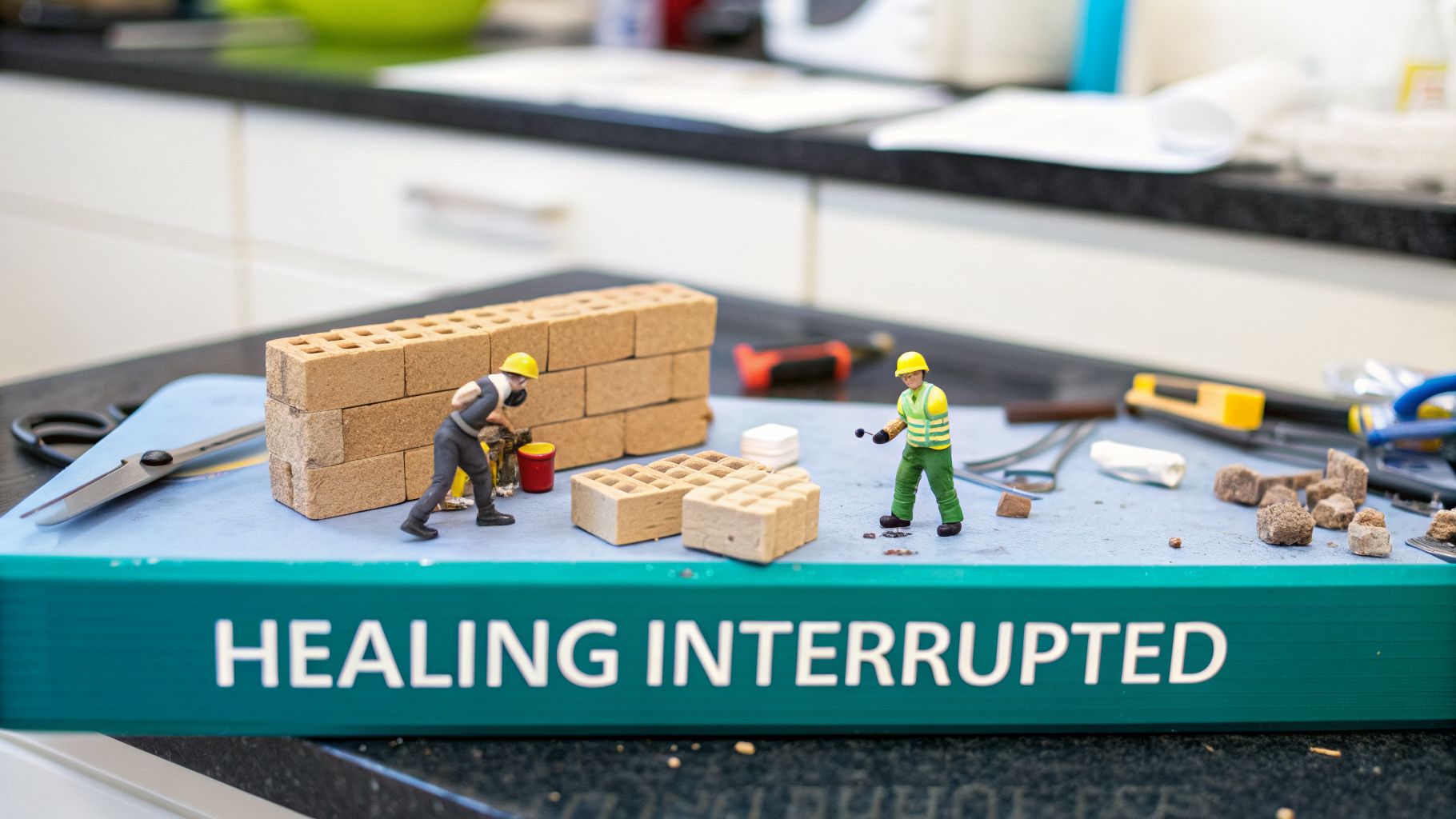
Think of normal healing like a well-run construction project. An injury happens, and the body’s response system immediately sends in a cleanup crew to clear debris (inflammation). Right behind them, supply trucks deliver oxygen and nutrients, and a team of skilled cellular workers starts rebuilding. It all runs on a tight schedule, with clear phases and objectives.
A chronic wound, on the other hand, is a construction site where everything has gone wrong. The supply lines are cut, the workers are exhausted, the foreman has lost the blueprints, and the whole area is stuck in a state of demolition and chaos. The project is perpetually delayed, over budget, and showing no signs of completion.
The Interrupted Healing Cascade
So, what throws a wrench in the works? The shift from an acute, healing wound to a chronic, stalled one isn't random. It's caused by specific underlying problems that trap the wound in the initial inflammatory phase. This prolonged inflammation, meant to be a short-term cleanup, becomes destructive. It prevents the wound from ever getting to the rebuilding stage.
The "worksite" essentially becomes a swamp of cellular debris, inflammatory cytokines, and proteolytic enzymes, making it impossible for healing to proceed. Key cells like fibroblasts and keratinocytes either can't function or become senescent, failing to perform their regenerative duties.
Several factors, both systemic and local, can hijack the process.
- Systemic Factors: These are big-picture health issues that affect the entire body. Conditions like diabetes, peripheral artery disease (PAD), chronic kidney disease, and autoimmune disorders compromise the "supply chain" by messing with blood flow, oxygen delivery, and the immune response. Malnutrition, particularly protein deficiency, robs the body of the essential building blocks for repair.
- Local Factors: These are problems directly within the wound bed. A persistent bacterial biofilm, repetitive pressure, or excessive moisture (maceration) can all stop the cellular "construction crew" in its tracks. Ischemia, or inadequate blood supply to the wound tissue, is a primary local barrier.
This interruption is the heart of the matter in chronic wound pathophysiology. The body is desperately trying to heal, but the very tools it needs—oxygen, nutrients, and healthy cells—can't get to the site, or the environment is just too hostile for them to function.
This is a massive issue in healthcare. Chronic wounds affect an estimated 6.5 million patients in the U.S. each year. Diabetic foot ulcers alone will impact roughly 15% of all people with diabetes at some point, turning a manageable disease into a devastating complication that is the leading cause of non-traumatic lower-limb amputations. You can explore more wound care statistics to get a sense of the true scale and financial impact of this growing epidemic.
Major Types of Chronic Wounds
To treat a chronic wound effectively, you first have to understand where it came from. While many types exist, most of what we see in the clinic falls into three major categories, each with its own distinct origin story.
1. Diabetic Foot Ulcers (DFUs)
These ulcers are the result of a perfect storm created by diabetes. Neuropathy (nerve damage) robs the foot of sensation, so a patient might not even feel a small cut, blister, or pressure spot from ill-fitting shoes. At the same time, peripheral artery disease can choke off blood flow, starving the tissue of oxygen and nutrients needed for repair. To top it off, high blood sugar weakens the immune system's ability to fight infection, leaving the door wide open for bacteria to colonize and form biofilms.
2. Venous Leg Ulcers (VLUs)
Typically found on the lower leg or "gaiter" area, these wounds are caused by chronic venous insufficiency. When the valves in the leg veins fail due to genetics, past blood clots, or other factors, blood pools instead of returning to the heart. This creates intense venous hypertension that damages surrounding capillaries, causing fluid, proteins, and red blood cells to leak into the tissue. The result is chronic inflammation, hemosiderin staining (the characteristic browning of the skin), and eventually, skin breakdown.
3. Pressure Injuries (Bedsores)
As the name suggests, these injuries develop from prolonged pressure over a bony area like the tailbone, hips, or heels. The constant pressure squeezes blood vessels shut, cutting off oxygen and nutrients to the skin and underlying tissues. If that pressure isn't relieved in time, the tissue simply dies, creating an open wound. Sheer forces, where skin layers slide against each other, and friction can exacerbate the damage. These are particularly common in immobile, elderly, or neurologically impaired patients.
By getting to the root cause—whether it’s a faulty circulatory highway, an overwhelmed immune system, or relentless external force—we can do more than just put a dressing on a wound. This foundational knowledge allows us to develop a care plan that addresses the source of the problem, finally clearing the path for healing to begin.
Mastering Wound Assessment and Documentation
Once you’ve figured out why a wound isn’t healing, the real work begins: evaluating it accurately and consistently. In chronic wound care, vague observations like “it looks better” or “it’s getting smaller” just don’t cut it anymore. We operate in a world that demands proof, and that means we need hard data to guide our clinical judgment and justify the care we provide.
Think of it this way: a detective wouldn't just tell a jury they have a "hunch" about a suspect. They present concrete evidence—fingerprints, measurements, photographs, and a clear timeline of events. It’s the same for us. We need to build a solid, evidence-based case for every wound, visit by visit.
The TIME Framework for Structured Assessment
To get that evidence, we need a system. One of the most practical tools in our arsenal is the TIME framework. It’s a straightforward acronym that acts as a mental checklist, making sure you hit every crucial point during your assessment of the wound bed and its surrounding tissue. It helps standardize the approach across different clinicians and clinics.
T (Tissue): What do you see in the wound bed? Is it that healthy, beefy red granulation tissue we love to see? Or is there yellow slough (a mix of fibrin, exudate, and debris) or black, leathery eschar (necrotic tissue) that needs to be debrided? You’ll want to document the percentage of each. Is the tissue friable, bleeding easily with gentle touch?
I (Infection/Inflammation): Are there classic signs of infection—pain, spreading redness (erythema), warmth, or purulent drainage? Or is the wound just stuck in a prolonged inflammatory state without an active infection? Look for subtle signs too, like a foul odor, bridging between wound edges, or a sudden increase in pain or exudate, which may indicate a biofilm presence.
M (Moisture): Is the wound bone dry (desiccated) or soaking wet (macerated)? The amount and type of exudate, whether it’s serous (clear), sanguineous (bloody), serosanguinous (pinkish), or purulent (pus-like), is a critical piece of the puzzle that tells you exactly which dressing to choose.
E (Edge): Look at the wound perimeter. Are the edges actively migrating inward, a great sign of epithelialization? Or are they rolled (epibole), stalled, or showing signs of undermining (a pocket of dead space under the skin edge) or tunneling (a channel extending from the wound into deeper tissue)? The wound’s edge tells a story about its progress or lack thereof.
Using a framework like TIME moves your assessment from subjective opinion to objective fact. That consistency is the bedrock of excellent chronic wound care.
Accurate, objective data does more than just guide your next clinical move. It creates a robust, defensible record that tracks healing over time and provides the concrete evidence payers require for reimbursement.
The Power of Automated Measurement
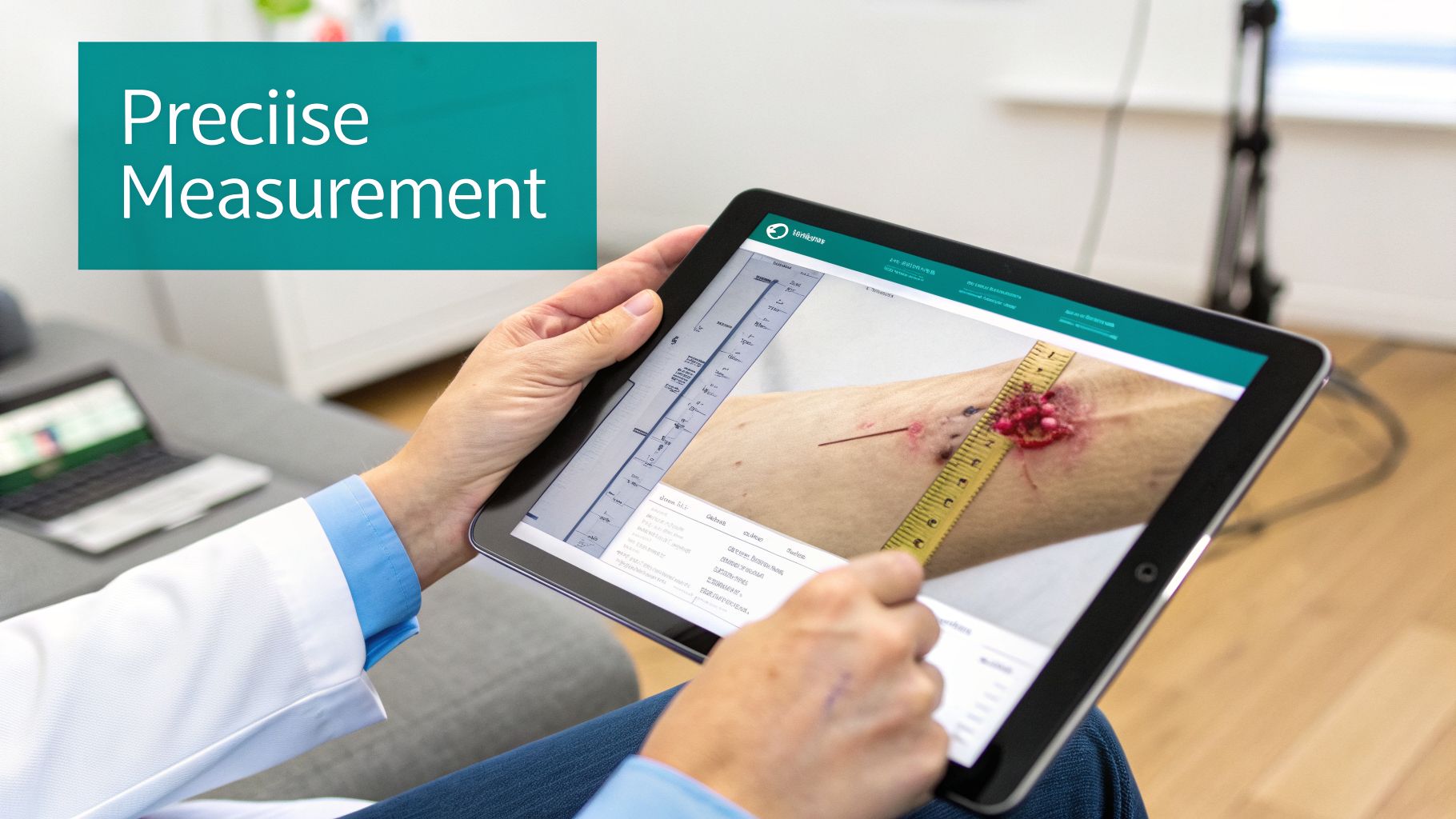
Even with a solid framework, we're still human. My measurement of 4.5 cm might be your 4.8 cm. It seems like a small difference, but over time, these little inconsistencies can make it tough to truly know if a wound is healing, stalling, or getting worse. This is where AI-powered image analysis changes the game.
Newer platforms can take a simple photo of the wound and instantly provide precise, objective measurements for length, width, and surface area. This completely removes the guesswork and human variability, ensuring every measurement is consistent from visit to visit. Some systems can even calculate the percentage of different tissue types—a level of detail that’s nearly impossible to eyeball accurately. For any clinician looking to sharpen their evaluations, exploring these advanced wound assessment tools for nurses is a worthwhile step.
This steady stream of reliable data lets you see, with undeniable clarity, if your treatment plan is working or if it's time to pivot. It creates a powerful visual and numerical history of the wound's journey.
Nailing Documentation and Coding for Reimbursement
Of course, the most meticulous assessment in the world won't help you if it's not documented and coded correctly. This is a massive stumbling block for many clinics, and it’s a direct path to frustrating claim denials and lost revenue. Good documentation isn't just about keeping records; it’s about getting paid for your expertise.
Every detail you capture matters. Your notes have to paint a vivid picture that justifies the treatment you’re providing. Be sure to include:
- Precise Measurements: Always document both pre- and post-debridement dimensions.
- Tissue Types: Specify the percentages of granulation, slough, and eschar.
- Exudate Levels: Describe the amount (scant, moderate, copious) and character of the drainage.
- Periwound Condition: Note any maceration, erythema, induration, or signs of dermatitis around the wound.
- Patient's Pain Level: Document pain associated with the wound or procedures.
- Interventions: Clearly state what you did (e.g., "sharp debridement of 50% of the wound bed") and why.
This level of detail is what supports your billing codes. You absolutely must use the right ICD-10 codes to reflect the wound's complexity and the correct CPT codes for the procedures performed. A classic mistake is billing a generic ulcer code when a more specific one—including details like location, laterality, and severity—is available. Payers see that as a red flag, and it’s a primary reason for denials.
When you pair meticulous assessment with precise documentation and coding, you create a clean claim that has every reason to be paid the first time.
Applying Modern Treatment Strategies
Once you have a solid assessment, it's time to turn that data into a decisive care plan. Effective chronic wound care isn't about just slapping on a dressing and hoping for the best. It's a dynamic, hands-on strategy that manages the wound environment, bolsters the body’s own healing mechanisms, and adapts as the wound changes. The ultimate goal is simple: create the perfect conditions for the healing process to finally kick back into gear.
This whole process starts with meticulous wound bed preparation. Think of it like cleaning up a messy construction site before the real work of rebuilding can begin. Once we've cleared away the barriers, we can choose the right therapies tailored to the wound's specific needs.
Increasingly, this level of care isn't confined to the clinic. Specialized advanced wound care at home is becoming a crucial part of the picture, putting the patient's convenience and recovery front and center. This approach not only empowers patients and their families but also ensures expert care continues long after they've left the clinic.
An If-This-Then-That Guide to Debridement
Debridement—getting rid of nonviable tissue like slough and eschar—is often the first and most important thing you'll do. That dead tissue is a magnet for bacteria and forms a physical wall that stops new, healthy tissue from growing. The trick is picking the right tool for the job.
- If you see thick, leathery eschar, then sharp debridement is usually your fastest route. A skilled clinician with a scalpel or curette can precisely cut away the dead tissue, clearing the way for healing. This is the gold standard for rapid removal of necrotic tissue.
- If the wound has soft, stringy slough, then enzymatic debridement is a fantastic option. These topical ointments use natural enzymes (like collagenase) to dissolve necrotic tissue while leaving healthy granulation tissue untouched. It's a more selective, though slower, method.
- If the patient can't tolerate a sharp procedure, then autolytic debridement becomes your go-to. This gentle method uses moisture-retentive dressings to amplify the body's own enzymatic processes, letting it break down dead tissue over time.
- If you're dealing with a large amount of debris and slough, then mechanical debridement methods like wet-to-dry dressings or pulsed lavage can help physically lift and remove it. Note: Wet-to-dry dressings are largely considered non-selective and can be painful, so they are used less frequently in modern practice.
Choosing the Right Advanced Wound Dressing
After you've cleaned up the wound bed, your focus shifts to maintaining that pristine environment. This is where a bit of "if-this-then-that" logic for dressing selection really comes in handy.
The name of the game is moisture balance. A wound that's too dry will stall out. One that's too wet will damage the surrounding skin. Your job is to pick a dressing that manages exudate perfectly.
To help guide your selection, think about what each dressing is designed to do. This table breaks down some of the most common advanced options.
| Choosing the Right Advanced Wound Dressing | |||
|---|---|---|---|
| Dressing Type | Primary Function | Best For (Wound Type) | Avoid When |
| Foams | Absorb moderate to heavy exudate | Wounds with significant drainage, like venous ulcers | Dry wounds or those with minimal exudate |
| Alginates | Absorb heavy exudate; form a gel | Heavily draining wounds, infected wounds, cavity wounds | Wounds with little to no drainage |
| Hydrocolloids | Maintain a moist environment; promote autolysis | Wounds with light to moderate exudate, such as pressure injuries | Heavily draining or infected wounds |
| Hydrogels | Donate moisture to the wound bed | Dry wounds needing rehydration, painful wounds | Wounds that are already producing heavy exudate |
Picking the right dressing is more art than science sometimes, but understanding these fundamentals will put you on the right track nearly every time.
Moving Beyond Dressings to Advanced Therapies
For those stubborn, complex wounds that just aren't responding, it’s time to call in the heavy hitters. When used correctly, these advanced therapies can jump-start the healing process in ways that dressings alone can't.
One of the real workhorses here is Negative Pressure Wound Therapy (NPWT), which you probably know as a wound VAC. By applying a specialized foam dressing connected to a vacuum pump, NPWT physically pulls excess fluid out, shrinks swelling, promotes perfusion, and stimulates new granulation tissue by drawing the wound edges closer together.
When you're facing significant tissue loss, bioengineered skin substitutes and cellular and tissue-based products (CTPs) like amniotic skin grafts can be game-changers. These products act as a scaffold, providing a matrix and growth factors that encourage the body's own cells to migrate into and begin rebuilding. We're seeing them used more and more for deep diabetic foot ulcers and stubborn venous ulcers that have failed other treatments.
There's no doubt that the demand for these solutions is booming. The global chronic wound care medications market is expected to hit $7.28 billion by 2026 and is on a trajectory to reach $13.38 billion by 2035. You can see a full breakdown in this chronic wound care market analysis. This incredible growth speaks directly to the urgent clinical need for better, faster ways to heal these challenging wounds.
At the end of the day, success comes from a holistic approach. Advanced therapies are powerful, but they must be paired with foundational support like proper nutrition, effective offloading to relieve pressure, and management of underlying comorbidities like diabetes and vascular disease. By weaving all these strategies together, you can build a truly robust, evidence-based pathway that gives every wound its best possible chance to heal.
How AI Changes the Game in Clinical Workflows
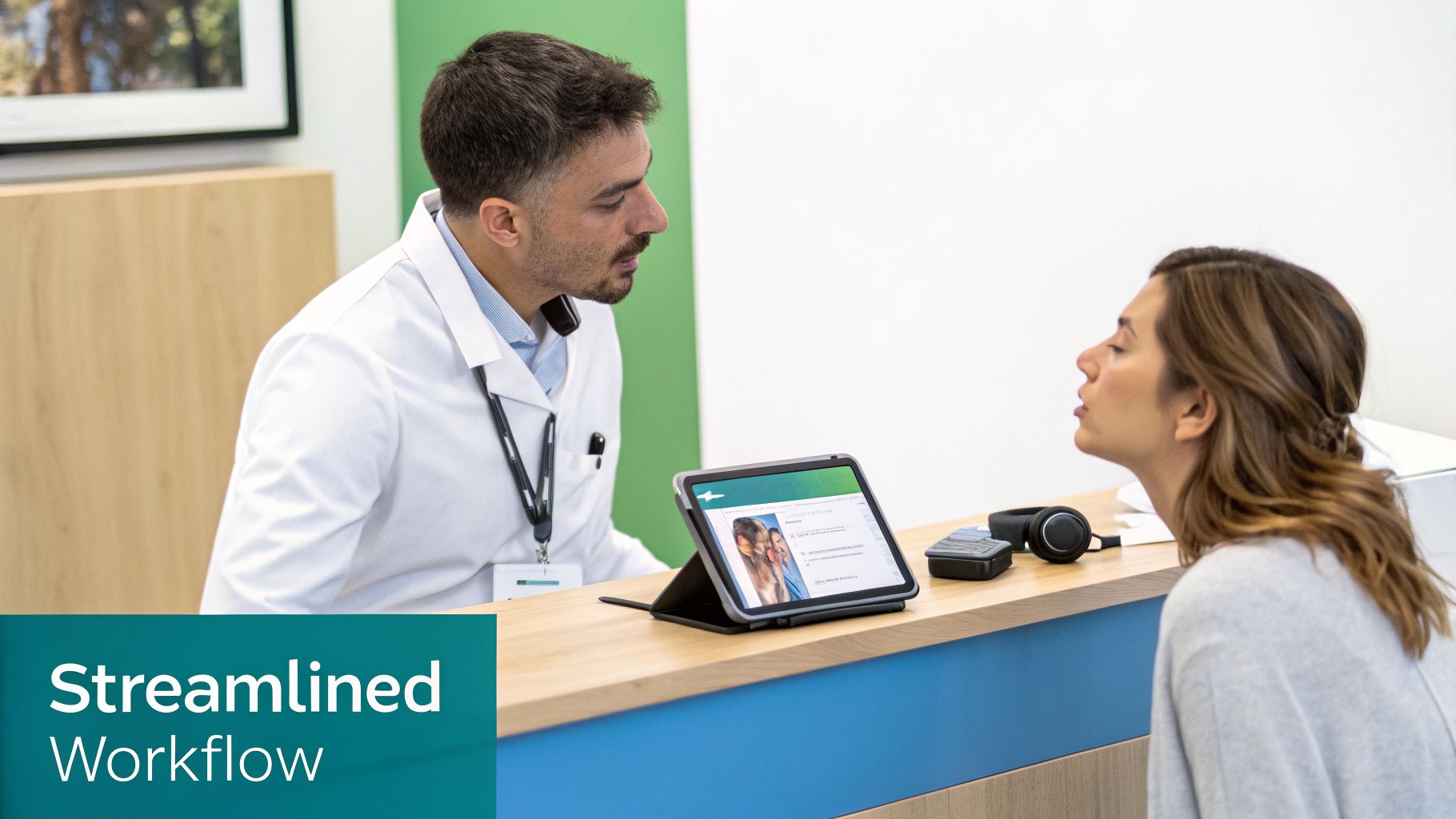
Ask any wound care clinician what their biggest headache is, and you’ll likely hear one answer: the paperwork. The reality is that the administrative side of the job can easily overshadow the hands-on clinical work. We spend hours manually plugging patient encounters into the EMR, trying to translate a complex, human interaction into a series of structured fields and billing codes.
This isn't just frustrating; it's a primary driver of burnout. It’s also where costly mistakes happen, leading to delayed or denied reimbursements.
Think about a typical visit. You've just finished debriding a complex venous ulcer and spent time educating the patient on their new compression therapy plan. But your work is far from over. Now you face another 20-30 minutes of clicking, typing, and searching for the right ICD-10 and CPT codes. When you multiply that by a full day of patients, it's no wonder documentation feels like the main event.
This old way of working is simply not sustainable. A single typo or a forgotten modifier can get a claim kicked back, creating even more administrative work. There has to be a better way—and now, there is.
The New Workflow With Ambient AI
Picture this: instead of dividing your attention between the patient and the computer screen, you focus entirely on the person in front of you. An ambient AI system, running quietly on a tablet or phone, captures the natural flow of conversation during the appointment. It hears the patient describe their symptoms, listens to your assessment, and documents the treatment plan as you discuss it.
This is where the magic really happens. The AI doesn’t just make a recording; it actually understands the context of the conversation.
By processing the natural, unstructured dialogue from the visit, the AI platform can automatically assemble a complete, structured clinical note. It fills out the EMR fields, drafts a coherent summary, and presents it all for your quick review and signature. A task that used to eat up half an hour can now be completed in just a few minutes.
The time savings are staggering. For many clinicians, this can reduce their documentation burden by up to 70%. That’s hours back in your day—time you can reinvest in patient care, continuing education, or simply catching your breath.
From Image Capture to Automated Coding
This intelligence extends far beyond voice-to-text. When you take a photo of the wound with your device, the AI's computer vision gets to work instantly, pulling objective, standardized data from the image.
- Automated Measurements: The system calculates the wound’s exact length, width, surface area, and perimeter, removing the guesswork and inconsistency of manual measurements.
- Tissue Analysis: It can also identify and quantify the percentages of different tissue types within the wound bed, such as granulation, slough, or eschar.
All of this crucial data is automatically woven into the patient's chart note, building a rich, evidence-based record with almost no manual effort. Finally, the system analyzes the entire encounter—the procedures you performed, the wound's characteristics, and the diagnoses—to suggest the most accurate CPT and ICD-10 codes for billing.
This automated coding assistance is a massive advantage for the financial stability of any practice. By accurately mapping the full clinical picture to the right codes, the AI produces clean claims that sail through the reimbursement process. This powerful link between better documentation and a healthier revenue cycle is truly changing what’s possible in wound care. To get a closer look at the mechanics, you can read more about the benefits of clinical decision support systems.
By taking on these manual burdens, AI gives clinicians back their most valuable asset: time to focus on healing.
The Financial Case for Smarter Wound Care
Let's talk about the money. In chronic wound care, clunky and outdated processes aren't just a source of clinical frustration—they're a quiet drain on your organization's financial health. For any clinic owner or administrator, seeing the hard numbers behind these inefficiencies is the first step toward building a practice that’s not just clinically effective, but also financially sound.
The costs tied to stalled wounds are staggering. The global market for chronic wound care hit $12.54 billion in 2023 and is on track to more than double to $26.05 billion by 2033. Right here in the U.S., we're spending a jaw-dropping $28.1 billion to $96.8 billion every year to manage these wounds, with Medicare footing a huge portion of the bill. As you can discover in recent wound care trend reports, this isn't some distant forecast; it's shaping budgets right now.
The Hidden Costs of Old Workflows
What do these massive figures mean for your practice on a Tuesday afternoon? It comes down to the high cost per episode for common wounds like diabetic foot ulcers or venous leg ulcers. These costs are driven up by long healing times, the constant need for expensive supplies, and frequent, time-consuming provider visits.
Layer outdated documentation and coding on top of that, and the financial picture gets even worse. Every minute a provider spends manually typing notes or clicking through clumsy EMR fields is a minute they can't spend with a patient. This administrative drag puts a hard ceiling on your clinic’s capacity and its revenue.
Think about it: a single coding mistake or a poorly documented claim can trigger an immediate denial. That doesn't just delay a payment—it kicks off a time-consuming, expensive appeals process that eats away at your administrative resources and your bottom line.
Calculating the ROI of an AI Platform
This is exactly why the investment in an integrated AI platform isn't just a 'nice-to-have'—it’s a financial necessity. The return on this investment isn’t some vague, future benefit. It shows up as measurable improvements in the financial metrics you track every day. Adopting this kind of technology is a direct strategy for plugging financial leaks and creating a much more resilient revenue cycle. If you're looking for ways to strengthen your clinic's finances, you might find our guide on what revenue cycle management is in medical billing helpful.
Let's break down the direct impact:
- Increased Provider Capacity: By automating documentation and slashing administrative time by up to 70%, you free up your providers to do what they do best: see patients. Adding just one or two more patient visits per provider each day can translate into tens of thousands of dollars in new annual revenue.
- Reduced Claim Denials: An AI-powered coding assistant acts as a second set of expert eyes, ensuring claims are right the first time. It accurately maps the full clinical encounter to the correct codes, dramatically cutting down on the simple errors that lead to denials and payment headaches.
- Optimized Treatment Pathways: The platform's data gives you a powerful bird's-eye view of what's working. By tracking outcomes, you can see which treatments are delivering the best results most cost-effectively, allowing you to standardize those best practices across the entire clinic.
By moving to a smarter wound care model, clinics can finally shift from a reactive stance to a proactive one. This doesn't just establish them as centers of clinical excellence; it makes them high-value, efficient partners for payers in an increasingly competitive healthcare market.
Answering Your Questions About AI in Wound Care
Bringing any new technology into the clinic naturally brings up a lot of questions. As AI tools become more common in chronic wound care, it’s fair to wonder how they actually work and what real-world difference they make. Let's walk through some of the most common questions we hear from clinicians and practice managers.
How Does AI Standardize Wound Measurements?
We've all been there: two clinicians measure the same wound and get two slightly different numbers. It's the nature of manual measurement. AI-powered image analysis gets rid of that guesswork. From a single photo taken with a phone or tablet, the software’s computer vision instantly calculates the wound's length, width, surface area, and even the percentage of different tissue types.
The result is a perfectly consistent and trackable record of healing or decline. Every measurement is objective and defensible, creating a data-driven foundation for every treatment decision you make.
This means you can finally measure progress with undeniable accuracy from one visit to the next, no matter who is seeing the patient.
Is Implementing an AI Documentation System Difficult?
It's a common concern, but the answer is no. Modern platforms aren't like the clunky EMR rollouts of the past. They're designed to fit right into your existing workflow, often using simple, voice-driven interfaces that feel as natural as dictating a note.
You talk, the AI listens. It does the tedious work of structuring the note, pulling in the wound measurements, and suggesting potential codes—all in the background. This makes the learning curve incredibly short, and clinical teams often start seeing major time savings right away.
How Does Automated Coding Improve Reimbursement?
Chronic wound care coding is a minefield. It’s complex, and a small manual error can easily lead to a denied claim or missed revenue. An AI system acts as an expert coder, instantly analyzing your entire encounter note. It looks at the wound’s characteristics, the procedures you performed, and the patient's diagnoses to find the most specific and accurate codes.
This process ensures that every claim you submit fully reflects the complexity of the care you provided. By generating a "clean claim" on the first pass, the system slashes denial rates, gets you paid faster, and strengthens the financial foundation of your practice.
Ready to see how AI can take your chronic wound care workflow from voice to claim in just minutes? Ekagra Health AI offers a unified platform that reduces documentation time, standardizes assessments, and accelerates reimbursement.
Discover how our clinician-designed system can bring new efficiency and accuracy to your practice by visiting https://ekagrahealth.ai.
